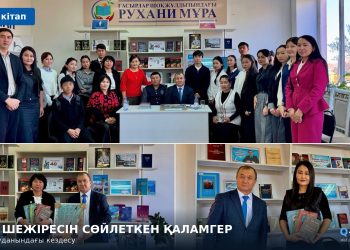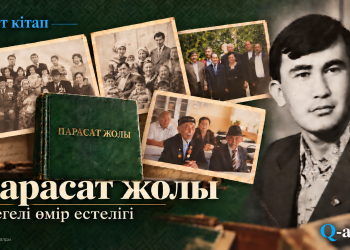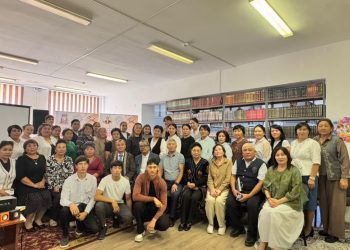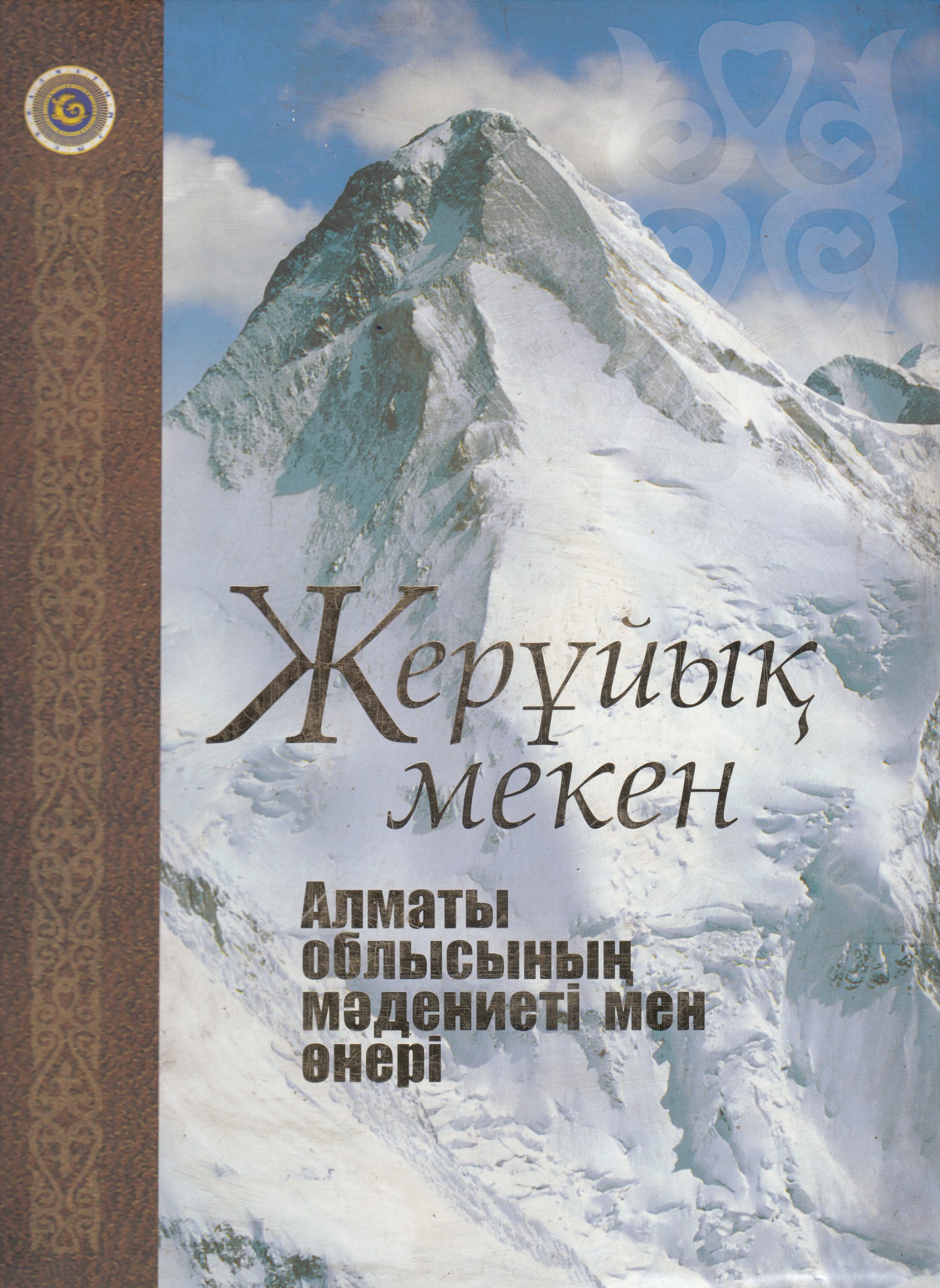
Knowing the history of one’s native land means more than simply learning about the past. It also means appreciating the spiritual character, culture and arts of the region, as well as the people who have devoted their efforts to the development of their homeland. This is where the educational and moral value of local history lies. From this perspective, the book-album «Zheruiyq Meken», published in 2014 by the «Taimas» Publishing House in Almaty, is a valuable work that documents an entire period in the cultural and spiritual life of Zhetisu.
Посмотреть эту публикацию в Instagram
When the book was published, what are now Almaty Region and Zhetisu Region were part of a single Almaty Region. Therefore, the cultural space of the larger region at that time is presented as a whole in the book. Later, the former Almaty Region was divided into two parts, and Almaty Region and Zhetisu Region became separate administrative territories. However, the change in administrative boundaries did not divide the shared history, cultural continuity and spiritual unity that had developed over centuries. After all, spiritual heritage cannot be divided by lines drawn on a map.
For this reason, today it would be insufficient to view «Zheruiyq Meken» merely as a book about the cultural life of the former Almaty Region. It is a shared historical and cultural heritage of present-day Almaty and Zhetisu Regions, and a chronicle that preserves the spiritual character of the entire Zhetisu region during a particular period of its history.
The value of the book is especially evident in the breadth of material it covers. It brings together information about aitys performers and written poets from the Zhetisu region, writers, journalists, visual artists, actors and other cultural figures, presenting their names alongside photographs. The cultural history of a region cannot be fully understood without the people who emerged from its social and cultural environment. A poet’s verses, a writer’s work, a journalist’s articles, an artist’s creations and an actor’s performances all reflect the spiritual atmosphere of their time.
From this perspective, the names presented in the book are not simply reference information. They form a valuable record of the individuals who contributed to the spiritual life of Zhetisu during a particular period and whose names deserve to be passed on to future generations. Over time, some names may gradually fade from public memory. The names, biographical information and photographs preserved in the book, however, help ensure that these people remain part of history.
The content of «Zheruiyq Meken» is not limited to individual figures. The book provides extensive information about the history of 20 museums that existed in Almaty Region at the time, one regional theatre and five theatres holding the honorary title of «People’s Theatre», as well as an art gallery, a centre for the protection of historical and cultural heritage, the regional philharmonic society, and folk music and dance ensembles. Their achievements over the years and their contribution to the development of art and culture are supplemented with photographs, archival documents and historical records.
All of this adds considerably to the documentary value of the book. A museum is a repository of collective memory, while a theatre is a reflection of spiritual life. A philharmonic society represents the development of professional performing arts, while an art gallery preserves the history of visual art. A centre for the protection of historical and cultural heritage helps maintain the connection between the past and the present. Folk music and dance ensembles, meanwhile, preserve the continuity of national artistic traditions and provide an opportunity for local talent to be recognised. Bringing together the histories of such institutions and ensembles in a single volume means preserving the cultural memory of an entire region.
This is also where the distinctive nature of the book-album format becomes apparent. Sometimes a single photograph can convey more than a lengthy text. The appearance of an old building, a moment captured from the life of an artistic ensemble, a stage performance, the image of a well-known figure or several lines from an archival document may, over time, become an invaluable historical record. In «Zheruiyq Meken», texts, photographs and archival materials are presented alongside one another, allowing readers not only to learn about the period but also to sense the atmosphere of the time.
This is why the value of the book will continue to grow with time. Many of the facts included in it in 2014 as ordinary features of everyday life are now beginning to acquire historical significance. Institutions change, people come and go, the members of creative groups change, and the appearance of some buildings may also be transformed. Yet the photographs and documents preserved on the pages of the book remain silent witnesses to the past. A book cannot stop time, but it can preserve the traces time leaves behind.
The educational significance of «Zheruiyq Meken» can also be seen in this respect. Young people who learn which poets and writers, journalists and artists, actors and cultural figures came from their native region can find inspiration in their lives and work. Learning about the history of a local museum, theatre or cultural institution helps people understand that cultural heritage does not emerge on its own; behind it lies the dedicated and persistent work of many people.
Patriotism is not created by slogans alone. It begins with knowing the history of one’s homeland, respecting its people and valuing its cultural heritage. For this reason, books of this kind are not merely sources of information. They are also important educational tools that help foster a sense of love and attachment to one’s native land among younger generations. «Zheruiyq Meken» is also a valuable resource for students and researchers working in art history, cultural studies, journalism, history and local history. Bringing scattered regional information together in one volume creates valuable opportunities for further research.
The title of the book itself carries a deep meaning. In the Kazakh worldview, «Zheruiyq» refers to an ideal, blessed and prosperous land – a place where people can live in peace and abundance. Zhetisu is not only a region known for its natural beauty; it is also a spiritual space shaped over centuries by its history, culture, arts and remarkable people. Therefore, the title «Zheruiyq Meken» naturally resonates with the main idea of the book.
Another distinctive feature of the work is its role in introducing Zhetisu to the outside world. At the time the book was published, it was presented as a gift to guests visiting the region from more than forty countries. Thus, «Zheruiyq Meken» became more than a book intended for readers within Kazakhstan; it became a cultural gift through which foreign guests could discover the culture and arts of Zhetisu.
Sometimes a single book can speak on behalf of an entire region. For a foreign visitor, this publication was not simply a beautifully designed album, but a window into the cultural world of Zhetisu. The poets and writers, theatres and museums, artistic ensembles, historical documents and photographs featured on its pages revealed the spiritual character of one region of the Kazakh land.
A journey comes to an end, and an official meeting may gradually fade from memory. A gifted book, however, can be kept for many years. It may be read not only by one person but also by another reader at a later time. In this way, information about Zhetisu can reach different parts of the world. In this sense, every copy of «Zheruiyq Meken» that travelled to more than forty countries can be regarded as a silent cultural ambassador of Zhetisu.
Today, Almaty Region and Zhetisu Region are two separate administrative territories. Yet the poets and writers, journalists and artists, actors, museums and theatres, philharmonic society and folk ensembles presented in «Zheruiyq Meken» remain the shared heritage not of a single administrative structure, but of the spiritual culture of Zhetisu as a whole. Their common history and culture continue to connect these two regions.
Therefore, it would be insufficient to regard «Zheruiyq Meken» simply as a book-album published in 2014. It is a historical record that preserves the cultural character of an entire era; a biographical and cultural heritage that brings together the names of artists, writers and cultural figures from Zhetisu; and a chronicle that documents the history of cultural institutions and creative ensembles through archival materials. At the same time, it is a part of the shared spiritual memory of present-day Almaty and Zhetisu Regions, as well as a cultural gift through which Zhetisu was introduced to representatives of more than forty countries.
The true value of a work of local history lies in its relevance to future generations. If a young researcher finds useful information in this book, if a student discovers the cultural history of their native region, and if younger generations find inspiration in the work of people who came from their own land, then the purpose of the book has been fulfilled.
This is where the greatest value of «Zheruiyq Meken» lies. Administrative boundaries may change, but the roots of history, the continuity of artistic traditions and the spiritual unity of the people remain. Preserving this unity on the pages of a book – together with the names of individuals, cultural institutions, photographs and archival records – is the greatest value of «Zheruiyq Meken», a value that only grows with the passage of time.
The fact that this article is being presented as part of the «Kazhet Kitap» project is also significant. The aim of the project is to reintroduce readers to the works published over the years by local historian and journalist Kazhet Andas and to bring their content, historical and documentary significance, educational value and cultural importance to today’s audience. Each book is regarded as a form of spiritual heritage that preserves the record of a particular period, the history of the land and its people, and collective memory. «Zheruiyq Meken» is one of these important works, documenting an entire era in the cultural and artistic life of Zhetisu.
УДК 908 БК 26.89
© Андас Қ., 2014
© «Таймас» баспа үйі, 2014
© Айымбет Н., безендіру, 2014
ISBN 978-601-264-127-1
https://kazneb.kz/kk/catalogue/view/1171108
Kazhet Andas,
local historian and journalist.
The video by: Aisulu Bauyrzhanqyzy and Amina Sayahatqyzy,
correspondents of the “Q-Andas” information agency.
Translated by: Amina Sayahatqyzy.