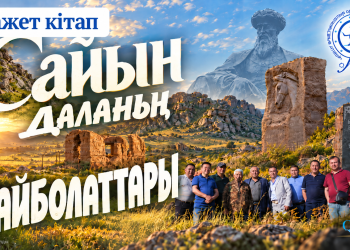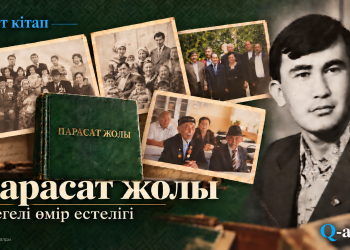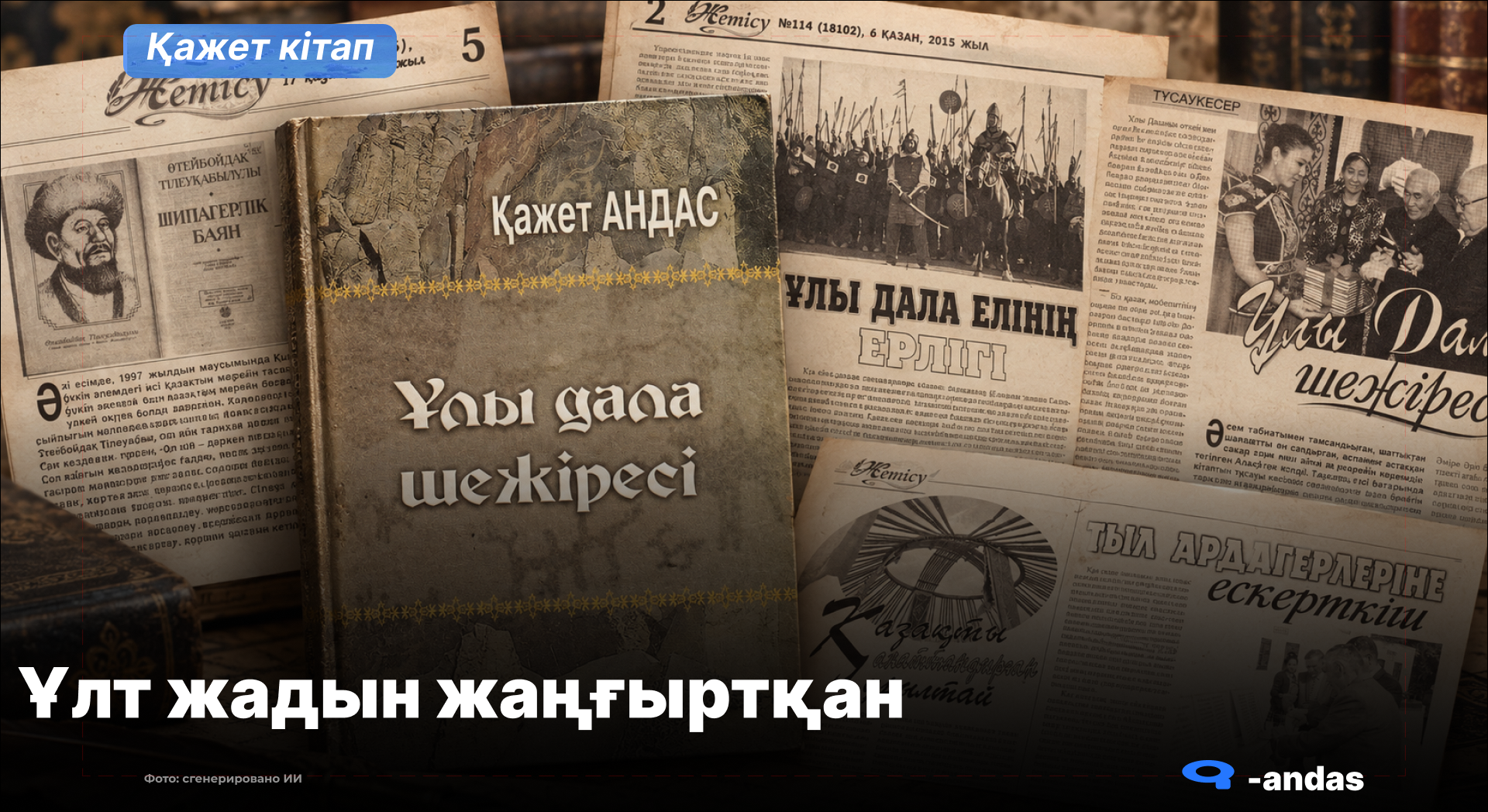
Reading books does more than broaden a person’s intellectual horizons; it is also a vital spiritual force that shapes a nation’s historical consciousness. Works devoted to a people’s past, traditions of statehood and national aspirations play a particularly important role in helping younger generations understand their national identity. From this perspective, The Chronicle of the Great Steppe, a collection of selected studies by journalist and local historian Kazhet Andas, is a work of historical and educational value that reflects the content and objectives of the Reading Nation project.
Archival documents and scholarly works are among the principal sources for studying Kazakh history. However, not every event experienced by our people, nor every aspect of their heroic traditions and national aspirations, has been fully preserved in written records. A significant part of the nation’s history continues to live in folk legends, genealogies, oral literature and local historical narratives. Although the scholarly interpretations of foreign researchers are valuable, they may not always fully capture the inner world of Kazakh society or the distinctive features of its national outlook and spiritual culture.
Kazhet Andas’s book stands out for the way it brings these different sources together. The author combines archival materials and scholarly conclusions with folk legends, oral narratives and genealogical accounts, presenting them through a journalistic approach. As a result, complex historical issues are conveyed in language that is accessible not only to scholars but also to general readers.
A Broad Perspective on the History of the Great Steppe
Посмотреть эту публикацию в Instagram
The Chronicle of the Great Steppe was published in 2016 by the Ädebiet Älemi publishing house with the support of Amandyk Batalov, then Akim of Almaty Region. The 160-page collection contains studies of the history of the Kazakh Khanate, the formation of statehood, traditions of governance, historical figures, runic inscriptions, folklore and national genealogies.
The collection opens with an article entitled “A Nation with an Exemplary Past.” The title itself reveals the central idea of the book: history should not merely be retold; lessons relevant to contemporary society should also be drawn from it. For the author, history is not simply a sequence of events left behind in the past, but a spiritual foundation upon which modern national consciousness is built.
Articles such as “The Truth about Genghis Khan,” “The Preconditions for the Formation of Kazakh Statehood,” “The Chronicle of Kazakh Governance” and “Did the Nomads Build Cities?” address complex and debated questions in historical scholarship. Rather than merely repeating established views, the author compares different sources and encourages readers to view historical developments from a new perspective.
For example, discussions of nomadic civilisation are sometimes shaped by the one-sided assumption that nomadic peoples were engaged exclusively in animal husbandry and had no permanent settlements. The studies included in the collection encourage a critical reassessment of such views and draw attention to the parallel development of urban culture, trade, craftsmanship and spiritual centres across the Great Steppe.
Understanding History through Historical Figures
Another distinctive feature of the book is its presentation of national history through the lives and work of historical figures. The collection contains information and illustrations relating to the khans and sultans who governed the country during the era of the Kazakh Khanate, the batyrs who led armies, and the biys and orators who called the people to unity.
Articles such as “The Great Thinkers of Our People,” “Whose Daughter Was Kyzai Ana?”, “A Great Figure of the Land of Turan” and “The Descendants of Two Forefathers” examine not only the lives of prominent figures but also their place in collective memory. This approach makes it possible to understand history not as a bare collection of dates and events, but through the destinies, decisions and service of real people.
Teaching history through historical personalities has considerable educational value. Young readers learn about the courage shown by historical figures in defending their homeland and about their service to justice and national unity, drawing inspiration from their example. In this respect, The Chronicle of the Great Steppe is not merely a source of historical information; it is also a book that contributes to national education and character-building.
Written Heritage and Natural Treasures
The collection is not confined to political history or the lives of well-known individuals. The article “A Wondrous Creation of Nature,” together with studies devoted to monuments of runic writing, examines the natural, spiritual and written heritage of our people.
Runic monuments testify to the ancient written culture of the Turkic peoples. By introducing readers to this heritage, the author demonstrates that the history of the Kazakh steppe is not limited to the past few centuries. By tracing the origins of Kazakh statehood and culture back to ancient Turkic civilisation, the book significantly broadens its historical scope.
The author explains the purpose of the collection as follows: “We must not forget that the history of Kazakh culture does not span merely one or two hundred years; its origins reach back to ancient times.” In his view, early historical evidence concerning the region should be examined in connection with the era of the Kazakh Khanate, the lives of the figures of that period and the present day. This approach is intended to create a coherent and indivisible picture of national history.
A Work That Inspired Public Discussion
After its publication, the book attracted the attention of historians, researchers, genealogists and general readers. Alongside expressions of support and praise for its historical and educational significance, critical opinions were also voiced regarding certain issues. Such an exchange of views indicates that the book stimulated public thought and encouraged discussion.
The value of a scholarly and educational work is not measured solely by its ability to lead every reader to the same conclusion. More importantly, a book should raise new questions, encourage the comparison of sources and foster a critical understanding of history. The Chronicle of the Great Steppe seeks to shape readers not as passive recipients of ready-made conclusions, but as individuals capable of reflecting independently on historical issues.
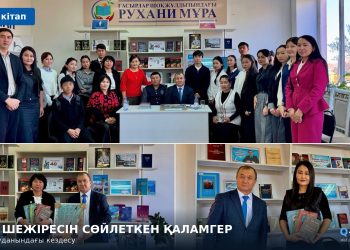
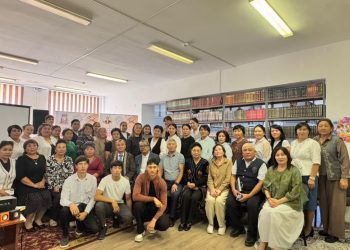
The book was launched at the Alakol District Library in 2016. During the event, Deputy Akim of the district Almas Abdinov highlighted the work’s historical and educational significance. Poets Tezekbay Sadiyev and Zhenis Zhumagozhin, who formally launched the book, praised the author for addressing complex historical subjects boldly and supporting his arguments with specific evidence.
Kuralbek Sabitov, a correspondent for the regional newspaper Zhetisu, conveyed congratulations from his colleagues, led by editor-in-chief Amire Arin. Poet Yerlan Zhunis, composer Zhangeldy Nemerebayev and singer Zhandos Smagulov wished the author continued creative success. Retired teacher Uldan Yergalikyzy offered her blessing. Articles about the book were also published in periodicals, noting that the author had collected historical evidence and presented the nation’s chronicles to the public in accessible language.
Its Significance for the Reading Nation Project
The principal goal of the Reading Nation project is to foster a sustainable culture of reading, promote high-quality literature and nurture a thoughtful generation through books. Viewed from this perspective, The Chronicle of the Great Steppe has several important qualities.
First, the book increases readers’ interest in national history. Second, its presentation of archival evidence, scholarly opinions and information preserved in collective memory helps readers develop the ability to work with different kinds of sources. Third, its journalistic style communicates complex historical issues to young readers in an engaging and accessible manner. Fourth, the book brings together the interconnected themes of national identity, statehood, historical memory and civic consciousness.
The work could be discussed in reading clubs at schools and universities, as well as at historical and educational events held in libraries. Each article could be studied as a separate topic, with students invited to compare the author’s sources with other scholarly works. Such activities would extend beyond simply reading the book and would help students develop the skills needed to analyse information, ask meaningful questions and express evidence-based opinions.
A Nation That Knows Its History Has a Secure Future
The Chronicle of the Great Steppe is not an academic work that claims to provide definitive answers to every question concerning the history of the Great Steppe. Its principal value lies in bringing together a wide range of historical subjects, presenting them in an accessible form and encouraging readers to continue their own research and view the past from a fresh perspective.
In Kazhet Andas’s studies, archival documents, scholarly concepts, national genealogies and journalistic storytelling converge within a single narrative. This quality makes the book accessible not only to researchers, but also to general readers wishing to gain a deeper understanding of their nation’s history.
A reading society is a society that knows its history, compares information and draws informed conclusions. Therefore, reintroducing works such as The Chronicle of the Great Steppe, promoting them widely through libraries and discussing them with younger generations is not only a way of honouring the past, but also a means of strengthening national consciousness. A nation that knows its history possesses a strong collective memory, and a country with a strong historical memory has a clear path towards the future.
UDC 94 (574)
LBC 63.3 (5Kaz)
A 57
The book was published with the support of A. Batalov, Akim of Almaty Region.
ANDAS K.
THE CHRONICLE OF THE GREAT STEPPE: Historical Studies. Almaty: Ädebiet Älemi Publishing House, 2016. – 160 pages.
ISBN 978-601-7414-64-1
The book contains materials on the Kazakh Khanate, runic writing, folklore and national history, as well as educational articles.
A valuable work intended for young researchers.
ISBN 978-601-7414-64-1
© Ädebiet Älemi, 2016
https://kazneb.kz/kk/catalogue/view/1549004
Author of the article:
Aisulu Bauyrzhankyzy,
video produced by Amina Sayakhatkyzy.
Correspondents of the Q-Andas News Agency.