
Location: The monument is located on a hill 5-6 kilometres south of the village of «Koktuma», between the «Singirli and Zhamanty» rivers.
Researchers: Erkin Tokpanov, Candidate of Geographical Sciences and Professor at Zhetysu University named after Ilyas Zhansugurov; and Kazhet Andas, local historian and journalist.
Description
The «Dyn» monuments – (ancient burial structures built over graves) – located in the valley of the Zhamanty River can be regarded as mausoleums of the pre-Islamic Karluk period preserved in the Alakol region. One of these monuments is «Kos Kelinchek» , which dates back to the Karluk period of the 7th-8th centuries.
Historical Background
Our land is home to numerous remarkable architectural monuments.
The construction of the Akyirtas structure began in the 7th-8th centuries but was never completed. It was built from large rectangular stone blocks.
The Bileuli structure is located near the border between Kazakhstan and Karakalpakstan. Structures built over wells are known in Persian tradition as «sardobas». Two sardobas built along the Myrzashol caravan route between the 6th and 9th centuries are known to have survived. Their structures and domes resemble the shape of a traditional Kazakh yurt.
«Dyn» were built over burial sites. Numerous such monuments have been found in Central Kazakhstan, Zhetysu, Tarbagatai and Mangystau.
Remains of Buddhist temples dating from the 7th-8th centuries have been discovered at the ancient cities of Akbeshim and Suyab. From the second half of the 9th century onward, architectural structures associated with Islamic traditions began to appear in the region. The remains of a mosque were discovered at the site of the ancient city of Baba Ata.
«Balbals», or carved stone figures, were placed near the graves of military commanders and other prominent individuals. Such stone figures are particularly common in Central Kazakhstan and Zhetysu.
The applied arts of this period included terracotta objects, decorative ceramics and small sculptures. Terracotta figures often depicted human facial features, hairstyles and clothing.During the period of the Turgesh and Karluk Khaganates, circular stone structures were built over the graves of prominent people. They were approximately 2-3 metres high and about 3 metres in diameter.
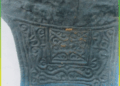
The «Dyn» examined by researchers was built from black stones brought from the nearby mountains. Local clay was used as a binding material.
Remarkably, although 8-10 centuries have passed since its construction, the monument has survived in relatively good condition. Its present height is 2.3 metres.
Unlike Muslim burial structures, the «Dyn» has neither a dome nor decorative ornamentation. Its architectural design resembles the «Kozy Korpesh and Bayan Sulu Mausoleum», located in the lower reaches of the Ayagoz River.
The «Kos Kelinchek» monument represents a valuable example of the ancient architecture of Zhetysu and provides evidence of the cultural and funerary traditions of the people who lived in this region during the 7th-8th centuries.
Author: Kazhet Andas
Translated by Amina Sayahatqyzy,
Q-Andas Information Agency.
(To be continued…)