Human life is filled with both joy and regret. It becomes joyful when we are fortunate enough to experience unforgettable moments of happiness, to be surrounded by good people, and to live through meaningful days. But life can also become bitter when we have to part with those who are dear to our hearts, when the soul becomes empty, like an aul left deserted after its people have moved away, when the heart fills with pain, and we are left alone with our sorrow and worries.
Oh, life! Sometimes you show a person the road ahead, and sometimes you make them look back. Sometimes you bring joy, sometimes you make us sad, and sometimes you put out the light of a person’s life and carry it away with you.
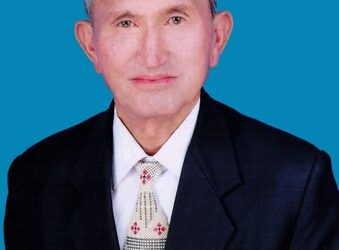
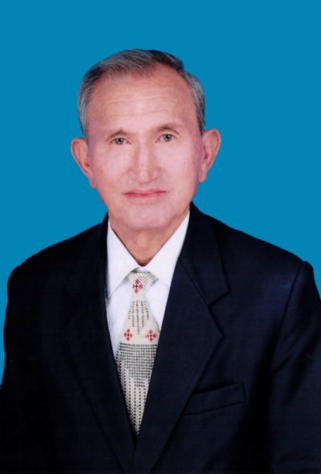
Today, my thoughts are scattered in every direction, while the sadness in my heart falls like yellow autumn leaves. Lost in thought, I look back on the days I spent beside my elder mentor, the poet and researcher Andas Omarakyn. As I remember his kind, warm-hearted face and mourn the loss of this dear person, I have taken up my pen.
Andas aga and I came from the same aul. In other words, we were both from the sacred land of Kenzu, a place rich in poetic talent and artistic tradition. From childhood, I regarded Andas aga as my teacher. I learned from his poems and always held him in special respect as one of the mentors who showed me the way into poetry.
He, too, treated me like his own younger brother. He affectionately called me “Zhakash,” never held back his advice, warmed my heart with his kind smile, always wished me success in the future, and became a true source of support for me.
I remember well that at the end of June 1985, we learned that a district aitys of the Kunes akyns would be held on July 15 at the beautiful Aközen zhailau. Special invitations were sent to every aul, asking them to select and submit a list of the akyns who would take part in the competition.
At that time, the aul of Kenzu had only recently separated from Araltobe. These were the first years after the establishment of its own local administration. The local House of Culture was headed by a well-known poet from our aul, Ualibek aga.
When Ualibek aga taught me literature at the Kenzu Agricultural School, I was studying at the local lower secondary school. At that time, I had already begun writing poems and would occasionally show them to Ualibek aga.
Andas aga was then working as a teacher at Secondary School No. 3 in Kunes District. Our home was in Kenzu aul, in the Kenzu kystau. My father died when I was still very young, so our family’s financial situation was far from comfortable. Because of our circumstances, I could not continue my education. Instead, I worked as a farmer in a production brigade, struggling to make a living.
Then one day, around lunchtime, Andas aga and Ualibek aga unexpectedly came to our home.
I was incredibly happy that such well-known and respected poets had come specifically to see us. My late mother was a warm-hearted woman who loved art deeply. For her, the visit of such respected people was a great joy.
She prepared a generous dastarkhan, brought out the best food we had in the house, and welcomed our guests with sincere warmth. My elder friends enjoyed the food and then explained to my mother why they had come.
– An aitys will soon be held in Aközen. We are currently selecting talented young people from different auls. We have heard that your son writes and recites poetry. That is why we have come to ask your permission to take him with us and let him participate in the aitys, — they said, addressing my mother with genuine kindness.
My mother, unwilling to refuse their request, replied:
– If he wants to go, let him go.
And she gave me her blessing.
I was overjoyed! After the elders left, I eagerly waited for the day of the aitys. So many times I felt as though time was moving endlessly slowly!
At last, the long-awaited day arrived. I went to the aitys in Aközen and took first place.
It was my first time taking part in an aitys, and it was there that I took my first successful step into this sacred art of poetic competition, so deeply cherished by the Kazakh people.
It was thanks to Andas aga and Ualibek aga that I had the opportunity to participate in an aitys for the first time and step onto the stage. For a person devoted to art, the first successful step on a creative path becomes one of the most important moments of their life – an important beginning.
That is why I have always held the kind-hearted Andas aga in special esteem, considering him one of the dear mentors who opened the way to art for me. He, too, treated me as a younger brother, guided me, supported me, and wished me success in my creative work.
From that time on, Andas aga and I lived side by side for thirty years – as an elder and younger brother, as close friends and like-minded people. Those thirty years passed as if they had been only one day.
The main qualities of Andas aga were nobility and generosity of spirit. Unlike some people, he was never jealous or hungry for fame. His heart was always open to young talents. He generously shared his warmth with them and was an honest, straightforward, sociable, and modest person.
In 1989, Andas aga and Ualibek aga were sent by the Kunes District People’s Government to the district cultural institution to take part in preparing a collection of Kunes oral folklore, and they began working on the book.
During those years, Andas aga travelled from one aul and kystau to another, speaking with the keepers of folk wisdom – the elders – and collecting valuable materials. He worked with great dedication and often came to our aul as well.
Every time he visited, he would call me over and keep me by his side. He treated me with brotherly care, read my writings, and encouraged me to continue my creative work.
A man as pure-hearted and noble as Andas aga was transferred in March 1991, in accordance with the requirements of his service and a decision of the organization, to a responsible position in the Kunes District Political Council and the archive of historical materials.
He actively participated in preparing and publishing Historical Materials of Kunes. To collect information, he crossed mountains and mountain passes, gathering historically valuable material. Through this work, he made a great contribution to the preparation of the fourth, fifth, sixth, seventh, eighth, ninth, and tenth volumes of Historical Materials of Kunes.
He wrote and edited the materials himself, paying close attention to the historical value of the books and doing everything possible to prepare them for publication.
Thanks to his work, many previously forgotten historical events and personalities were brought before readers. He told their stories with a powerful and talented pen, earning the gratitude and recognition of his people.
If we look at the life and career of Andas aga, we can see how difficult his path was. He lived through the harsh years of the Cultural Revolution and, despite not having the opportunity to receive a higher education, entered the world of literature through his natural talent as early as the mid-1970s.
As he continued his literary work, he gradually became known among the people. In addition, in accordance with the demands of public life at that time, from April 1975 to March 1978 he worked as an editor at Shugyla magazine under the Xinjiang Regional Publishing House, as well as at the Xinjiang People’s Publishing House.
Despite all this demanding public work, Andas aga never abandoned his creative work. He wrote interesting works and also took part in aitys competitions among folk akyns, where he demonstrated his talent as an improviser and master of aitys.
Beginning in 1974, he became a prize-winner at aitys competitions held at district, prefectural, and regional levels.
In July 1977, at Bolbadai zhailau in Kabaev District of the Altai Prefecture of the Ili Kazakh Autonomous Prefecture, he took part in an aitys with the well-known folk akyns Jamalkhan Karabatyrkyzy, Zhumagali Kuikabayev, and Berdikan, demonstrating a high level of improvisational skill.
Aitys with Jamalkhan and Aitys with Zhumagali were published in 1977 in the book Dala Dabyly. Around the same time, his poem Aksunkar was included in the collection of poems Zhongar Zholaushylary, published by the Xinjiang People’s Publishing House in 1979.
Thus, while going through difficult social circumstances and continuously developing his literary skills, Andas aga presented readers with a number of interesting works and books: the poetry collection Zhyldar izi, the essays and research articles Tarikh talgaryndagy tarlandar, the aitys collection Doda, the poetry collection Sarykezen saryny, and many other works.
In the autumn of 2006, he held a creative evening entitled Zhyldar izi, presenting the people with the results of his many years of work in the arts.
His friends, writers, poets, and other literary figures attended the evening. They highly praised his work, recognized his place in literature, and expressed their respect for his contribution.
As a sign of appreciation, the leaders of the Kunes District Party Committee and government presented the poet with a horse and placed a chapan over his shoulders.
The leaders of the local administration of his native aul, Kenzu, also honored him by presenting him with a decorated racehorse.
We shared in the poet’s happiness as well. We placed an embroidered national chapan over his shoulders, demonstrated the art of aitys, and in this way expressed our modest gratitude as his students to our mentor.
Oh, time! How quickly you pass! Those happy, close-knit days filled with joy gradually leave behind autumn leaves of sorrow in human memory.
As the saying goes:
“The world passes like the wind,
rushing by…”
And wherever good people set foot, it is as though they lead an entire people behind them.
Indeed, people of such dignity hold a special place in our lives — people who always strive to serve their people selflessly.
In mid-June 2007, preparations began in Kenzu aul for a district aitys, and work began on training young akyns.
The village leaders suggested inviting Andas aga so that he could teach and guide the young performers.
As always, Andas aga was not the kind of person to refuse people. He came together with his daughter Makpal and did not ask for any payment.
He held lessons with the young akyns, gave lectures on the history of Kazakh aitys and the history of Kunes, shared his knowledge, and treated the young poets with special fatherly warmth.
After the lessons, in the evening, at the Kurozek kystau, where Batyrgazy Mukhametbekuly, a resident of Kenzu aul who loved art with all his heart, lived, a white ram was slaughtered and a generous dastarkhan was prepared in honor of Andas aga and the akyns who had come with him.
All the poets of Kenzu aul, as well as singers and performers of kui, contributed to the festive atmosphere.
Esbol Muratzhan, a correspondent for the Kunes District Cultural Institution, Radio and Television, also came with Andas aga. He performed beautiful songs, turning the evening into a true celebration.
And the poet Andas aga, opening his heart, recited his poems and, with emotion, said:
“When a good poet calls, Batyrgazy,
all of Kenzu gathers its akyns.
Zhakypnur and Nauat are my students;
at aitys, they defended the honor of their native land.
Zhananur, Shaimardan and Zamannur,
Nurbolat, Kaysar and Turganali,
you will yet make your names known.
As long as you are here, this art will not die,
and the song of my Kazakh people
will continue to sound through the ages.”
Thus, devoted to the culture and art of his people with all his heart, our dear Andas aga always remained an active and energetic person.
In his later years, his health deteriorated, and he often had to receive treatment in hospital. Even then, however, he did not lose his strength and never stopped his creative work.
In addition to publications in his homeland, our tireless literary figure regularly published his works in Kazakhstan as well.
For example, his article Mukagali Bizdin Elde (Mukagali in Our Land) was published in the magazine Mukagali, while his poems and photograph appeared in the Almaty regional newspaper of the Republic of Kazakhstan, Zhetisu.
I was one of the students whom Andas aga surrounded with his brotherly care. That is why his witty jokes, wise advice, and guidance, which he always gave me, have remained in my memory forever.
In July 2014, an aitys of akyns from the districts directly subordinate to the Ili Kazakh Autonomous Prefecture was held in the Narat steppe of Kunes District.
One of the brightest representatives of Kazakh aitys in Xinjiang, the akyn Jamalkhan Karabatyrkyzy, was specially invited to the competition.
I learned that she was staying in a house prepared for her by the people of Kenzu aul. Unfortunately, I could not come to greet her in time and went to see her only the following morning.
Akyn Jamalkhan said to me:
– Zhakypzhan, I was waiting for you to come and meet me yesterday, but you never came.
Then she added:
– Oh, Zhakypnur, you have already become one of the senior akyns. Yet once you were just a little dark-haired boy. How cruelly and quickly time passes!
Once there were so many of us. Where have all our fellow participants in aitys gone since then – Kurmanbek, Mamedkan, Berdykan, Alkyder, Ualibek, Zhumagali…
Among those who are still alive, only Andas, Zhumash, and Kasym remain. They are such dear and wonderful people. They helped me sharpen my skills. It was thanks to them that I became Jamalkhan.
If Andas and Zhumash come this time, be sure to bring them here. I have not seen them for more than thirty years. I want to meet them and have a heartfelt conversation.
After receiving Jamalkhan’s request, I began looking for Andas aga and Zhumash. I asked our acquaintances about them, but it turned out that neither of my dear elders had come to the aitys.
Why – no one knew.
The people who had devoted their entire lives to the culture and art of our people never appeared. Could it have been because of human indifference, that even a simple invitation never reached them? Who knows…
In any case, the festive dastarkhan waited for them in vain.
Perhaps a person often realizes someone’s true value only when it is already too late, and then all that remains is bitter regret.
On June 20, 2015, the people of Kenzu aul decided to hold an aitys and invited Andas aga.
He came to the celebration in his native land with his wife Auez and daughter Makpal.
Because I was very busy, I did not even know that Andas aga had arrived. My wife, Nauat Shantubaykyzy, told me:
– Zhakypnur, Andas aga has arrived.
I immediately put my work aside, went out to meet him, and greeted him.
Our elder’s face had become thin and drawn, and he had noticeably lost weight. His voice was quiet.
– You invited me, so I came, — he said calmly and asked how we were doing.
I replied:
– I have a lot of work at the moment. Please sit and rest for now. We will definitely talk later.
And I returned to my work.
At that moment, I had no idea that this meeting with my dear mentor, the man who had always surrounded me with his care and warmth, would be our last.
How many such people there are — people who stood before our eyes for many years like high mountains, sharing their wisdom, hopes, and kind wishes with us. Yet time mercilessly carries them away, giving us no chance to stop it and no opportunity to change anything.
Oh, how many moments in human life eventually turn into regret!
Our dear and respected mentor Andas set out on his final journey in the autumn of 2015, following the flight of wild geese heading south. His passing left his native land and people with an irreplaceable loss and deep sorrow.
Thus, Taldykorgan became his eternal resting place.
The death of a man who had devoted his entire life to his people became an irreparable loss for us and for many others.
It seems that only after this worthy man had passed away did those who had failed to truly appreciate him during his lifetime realize their mistake and understand whom they had lost.
As the people say:
“The bad shout that they are good,
while the good cannot say of themselves, ‘I am good.’
When you live at the foot of the mountains,
you do not notice how high they are.”
And so the bright and noble soul of Andas aga has gradually become an even deeper part of the people’s memory, growing greater and more meaningful with time.
Through his beloved descendants and students, the spiritual life of such unique people continues in the hearts of others.
Their good deeds and the mark they left behind become part of the people’s memory, and their stories are passed down like legends.
Yes, dear Andas aga, we will never forget you.And your people will never forget you either.
Author: Zhakypnur Okas
Translated by: Amina Akylbek
Information Agency “Q-Andas”.
(To be continued…)