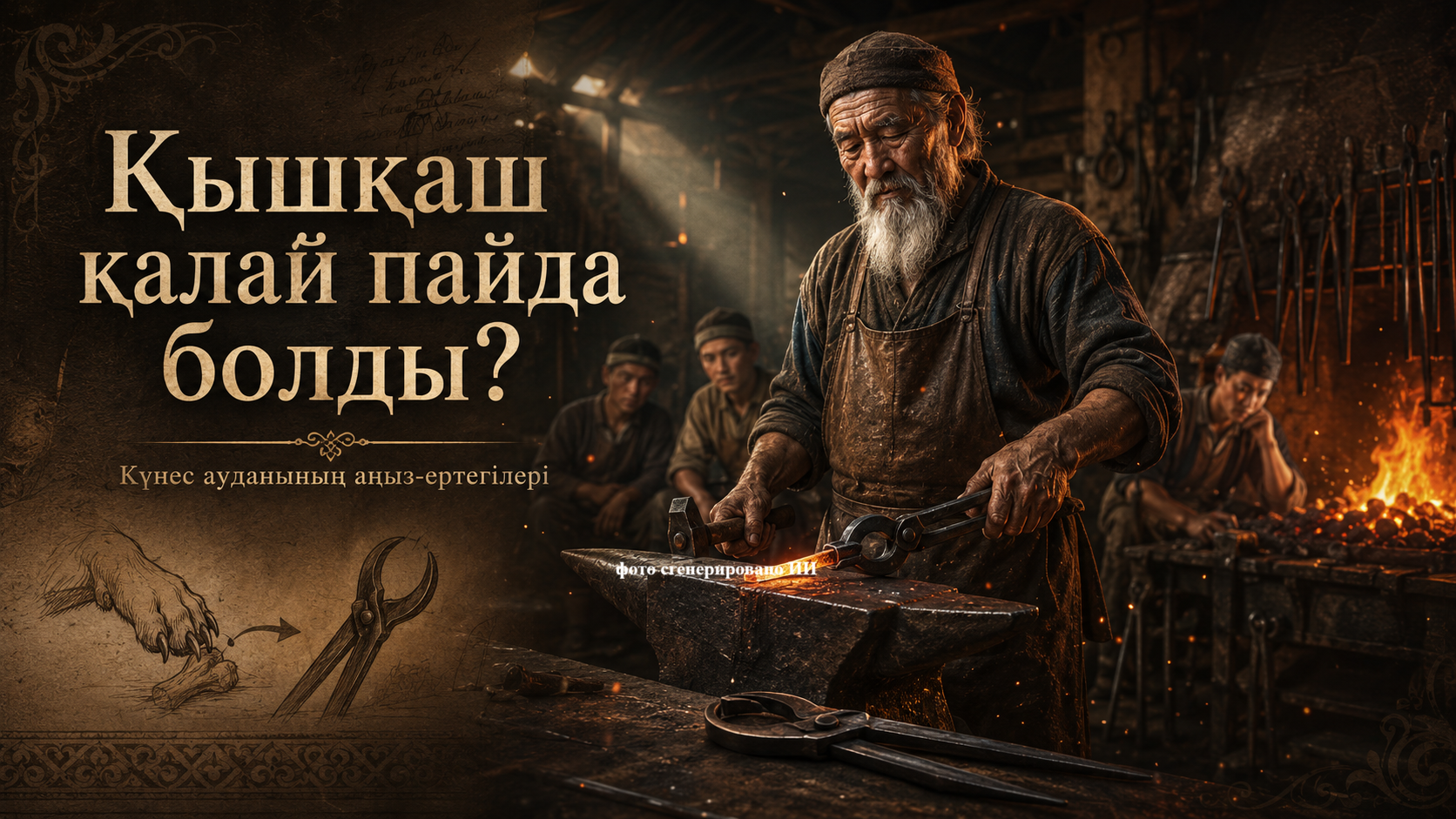
Búrynǵy zamanda álemge aty áigili temirshilerdiń piri – Dáuit paiǵampar degen kemeńger ústa ótken eken. Ol qyzǵan temirdi jalańash qolymen ústap soǵa beredi eken.
Ol óneri arqyly ataǵy jalpaq elge jaiylyp, halyqtyń qúrmetine bólenipti. Dáuit qúdirettiń keremetimen zerdeli de zerek adam bolyp, óz ónerin keiingi úrpaqtaryna qaldyryp ketu úshin 200-den astam shákirt tárbielep, ónerin olarǵa úiretipti. Kúnderdiń birinde ol shákirtterin baiqap kóru úshin ústine jaman kiim kiip, qolyna synǵan temirdiń bir parshasyn ústap, árbir shákirtiniń aldyna baryp:
– Myna temirden bir saiman soǵyp berińder, – deidi eken.
Biraq shákirtteriniń kóbi onyń alba-júlba túrine qarap:
– Aljyǵan aqymaq shal, osy temirden saiman soǵuǵa qalai bolady? – dep dúkenderinen shyǵaryp jiberedi eken.
Al Dáuit sonsha jyl tárbielegen shákirtteriniń kisi talǵaityn jaman isterine keiip:
– Asqanǵa – tosqan bir kezdespei qoimaidy. Esterińde bolsyn, temirshi bolsań ústazyńdy úmytpa, shákirt bolsań ústazyńdy úmytpa, adam bolsań tegińdi úmytpa, – dep, artyna búrylyp, júrip ketken eken.
Osydan keiin ústazdaryn renjitken shákirtteri qyzǵan temirdi qolymen ústap túryp, soǵa alatyn ónerlerinen túgel ada bolyp, jan baǵulary qiynǵa túsipti.
Olar oilai-oilai álgi shaldyń aitqan sózi esterine túsip, Qyzyr ǵaleihissalam paiǵampardy izdep tauyp, odan aqyl-keńes súrapty. Qyzyr ǵaleihissalam:
– Ol qart senderge beker kelgen aqsaqal emes, sóz tórkinine qaraǵanda, ol senderdi tárbielegen Dáuit ústazdaryń eken. Senderdi synap kelgen kórinedi. Sender elge qaiyrymsyzdyq istegendikten, ol ashuǵa shydamai el kezip ketken bolu kerek, – depti. Jáne: – Sender ony tabamyn deseńder: «Temirshi bolsań kómirdi úmytpa!» degen ósieti boiynsha, árbir jol toraptaryna kómir shashyp, baiqasańdar bolady. Kimde-kim kelip kómirdi jinasa, sol Dáuit ústa bolady. Sebebi ol óz óneriniń jaǵyna – kómirdi kórgende qaiqashanda odan attap kete almaidy, – deidi.
Dáuittiń shákirtteri Qyzyr paiǵampardyń aitqany boiynsha istep, Dáuit ústazyn tauyp alady da:
– Ústaz, sizdiń qadir-qymbatyńyzdy bilmeppiz. Siz úiretken temirdi qolmen ústap soǵu ónerinen aiyryldyq, – depti. Dáuittiń ayaǵyna bas úryp, Dáuit shákirtteriniń qolynyń syrtymen qaǵyp:
– Olai bolsa, ittiń ayaǵyna qarańdar! – dei salyp, júrip ketipti.
SHákirtter Dáuittiń búl sózine túsine almai, taǵy da Qyzyr paiǵamparǵa barypty. Ol:
– Ai, aqymaqtar, «Itke qara» degeni – sender ittik istedińder, solai bolsa da, senderdiń temir soǵyp, jan baǵularyńdy oilap, súiek mújyǵan ittiń ayaǵyna qarap, «Qyshqash jasap alyńdar» degeni emes pe?! – depti.
Sodan keiin shákirtteri súiek júrgen aluan túrli qyshqashtarymyz áne sol ittiń ayaǵynan paidalanyp jasalypty. SHákirtteri sol súiek mújyǵan ittiń ayaǵyna qarap, qyshqash jasap alypty. Qazirgi bizdiń istetip júrgen aluan túrli qyshqashtarymyz sol ittiń ayaǵynan paidalanyp jasalypty.
Derekkóz : «Kúnes audanynyń ańyz-ertegileri». 1991 jyl. Ishki taralym. Ile halyq baspasy.
«Q-Andas» aqparat agenttigi.
Jalǵasy bar…
KAK POYAVILISЬ KLESHI?
V davnie vremena jil mudryi master po imeni prorok Daud, schitavshiisya pokrovitelem proslavlennyh na vesь mir kuznetsov. Govoryat, chto on mog bratь raskalyonnoe jelezo golymi rukami i kovatь ego.
Blagodarya svoemu masterstvu on proslavilsya na vsyu stranu i zaslujil uvajenie naroda. Po vole Vsevyshnego Daud byl chelovekom umnym i pronitsatelьnym. Jelaya ostavitь svoyo iskusstvo budushim pokoleniyam, on vospital bolee dvuhsot uchenikov i obuchil ih svoemu remeslu. Odnajdy, chtoby ispytatь svoih uchenikov, on nadel na sebya plohuyu odejdu, vzyal v ruki kusok slomannogo jeleza i stal zahoditь k kajdomu iz nih so slovami:
– Vykuite mne iz etogo jeleza kakoi-nibudь instrument, – govoril on.
No bolьshinstvo uchenikov, glyadya na ego oborvannyi vid, govorili:
– Vyjivshii iz uma glupyi starik, kak mojno vykovatь instrument iz takogo jeleza? – i progonyali ego iz svoih kuznits.
Daud, ogorchyonnyi tem, chto ucheniki, kotoryh on stolьko let vospityval, stali suditь lyudei po ih vneshnemu vidu, skazal:
– Na kajdogo vozgordivshegosya odnajdy naidyotsya tot, kto ego ostanovit. Zapomnite: esli ty kuznets – ne zabyvai svoego uchitelya, esli ty uchenik – ne zabyvai svoego nastavnika, esli ty chelovek – ne zabyvai svoego proishojdeniya, – i, povernuvshisь, ushyol.
Posle etogo ucheniki, obidevshie svoego uchitelya, polnostьyu lishilisь sposobnosti derjatь raskalyonnoe jelezo rukami i kovatь ego. Im stalo trudno zarabatyvatь sebe na jiznь.
Dolgo razmyshlyaya, oni vspomnili slova togo starika, razyskali proroka Hyzyr aleihissalam i poprosili u nego soveta. Hyzyr aleihissalam skazal:
– Tot starets prishyol k vam ne sluchaino. Sudya po ego slovam, eto byl vash uchitelь Daud, kotoryi vas vospital. Vidimo, on prishyol ispytatь vas. Iz-za togo, chto vy proyavili besserdechie k lyudyam, on razgnevalsya i ushyol stranstvovatь po svetu, – skazal on. Zatem dobavil: – Esli hotite ego naiti, sleduite nastavleniyu: «Esli ty kuznets – ne zabyvai ugolь!» Rassypьte ugolь na perekryostkah dorog i nablyudaite. Kto pridyot i stanet sobiratь ugolь, tot i budet master Daud. Vedь on, uvidev ugolь, svyazannyi s ego remeslom, nikogda ne smojet proiti mimo nego.
Ucheniki Dauda sdelali tak, kak posovetoval prorok Hyzyr, i nashli svoego uchitelya Dauda.
– Uchitelь, my ne znali vashei istinnoi tsennosti. My lishilisь iskusstva, kotoromu vy nas nauchili, – sposobnosti bratь jelezo rukami i kovatь ego, – skazali oni.
Oni pali k nogam Dauda. Daud udaril uchenikov tylьnoi storonoi ladoni i skazal:
– Togda posmotrite na sobachьyu lapu! – posle chego razvernulsya i ushyol.
Ucheniki ne ponyali slov Dauda i snova otpravilisь k proroku Hyzyru. Tot skazal:
– Eh vy, gluptsy! Slova «Posmotrite na sobaku» oznachayut: vy postupili po-sobachьi, no, nesmotrya na eto, on vsyo je podumal o tom, chtoby vy mogli kovatь jelezo i zarabatyvatь sebe na jiznь. On velel vam posmotretь na lapu sobaki, gryzushei kostь, i sdelatь po eyo podobiyu kleshi. Razve ne eto on imel v vidu?!
Posle etogo ucheniki posmotreli na lapu sobaki, gryzushei kostь, i izgotovili kleshi. Govoryat, chto razlichnye vidy kleshei, kotorymi my polьzuemsya i segodnya, byli sozdany po obraztsu sobachьei lapy.
Istochnik: «Legendy i skazki uezda Kyunes». 1991 god. Vnutrennii tiraj. Narodnoe izdatelьstvo Ili.
Informatsionnoe agentstvo «Q-Andas».
(Prodoljenie sleduet…)
HOW WERE TONGS INVENTED?
Long ago, there lived a wise craftsman named the Prophet Dawud, who was regarded as the patron of blacksmiths renowned throughout the world. It is said that he could hold red-hot iron with his bare hands and forge it.
Through his skill, his fame spread far and wide, and he earned the respect of the people. By the grace of the Almighty, Dawud was an intelligent and perceptive man. Wishing to pass his craft on to future generations, he trained more than two hundred apprentices and taught them his art. One day, in order to test his students, he put on shabby clothes, took a piece of broken iron in his hand, and went to each of his apprentices, saying:
– Forge some kind of tool for me from this piece of iron, – he would say.
However, most of his apprentices looked at his ragged appearance and said:
– What a foolish, senile old man! How can anyone make a tool from a piece of iron like this? – and drove him out of their workshops.
Dawud was deeply disappointed that the apprentices he had trained for so many years had begun judging people by their appearance. He said:
– For every arrogant person, someone who can stop him will eventually appear. Remember this: if you are a blacksmith, do not forget your master; if you are an apprentice, do not forget your teacher; if you are a human being, do not forget your roots, – and then he turned around and left.
After this, the apprentices who had offended their master completely lost the ability to hold red-hot iron in their hands and forge it. It became difficult for them to earn a living.
After thinking for a long time, they remembered the old man’s words. They searched for the Prophet Khidr, peace be upon him, found him, and asked for his advice. Khidr said:
– That old man did not come to you by chance. Judging by his words, he was your teacher Dawud, the one who trained you. It seems that he came to test you. Because you showed no kindness to people, he became angry and went wandering through the land, – he said. Then he added: – If you want to find him, follow his saying: “If you are a blacksmith, do not forget the coal!” Scatter pieces of coal at every crossroads and watch carefully. Whoever comes and begins collecting the coal will be Master Dawud. Since coal is part of his craft, he will never be able to simply walk past it when he sees it.
Dawud’s apprentices followed the Prophet Khidr’s advice and eventually found their teacher.
– Master, we did not understand your true worth. We have lost the skill you taught us – the ability to hold hot iron in our hands and forge it, – they said.
They bowed at Dawud’s feet. Dawud struck the backs of their hands and said:
– In that case, look at a dog’s paw! – and then turned around and walked away.
The apprentices could not understand Dawud’s words, so they once again went to the Prophet Khidr. He said:
– You fools! When he told you to “look at the dog,” he meant that you had behaved like dogs. Yet despite that, he was still thinking about how you could continue forging iron and earn your living. He meant that you should look at the paw of a dog gnawing a bone and make a pair of tongs based on its shape. Is that not what he meant?!
After that, the apprentices observed the paw of a dog gnawing a bone and made tongs based on its shape. It is said that the various kinds of tongs we use today were originally created by taking inspiration from a dog’s paw.
Source: “Legends and Folktales of Künes County”. 1991. Internal publication. Ili People’s Publishing House.
Information Agency “Q-Andas”.
(To be continued…)