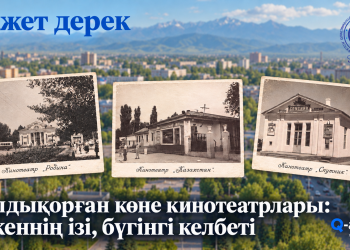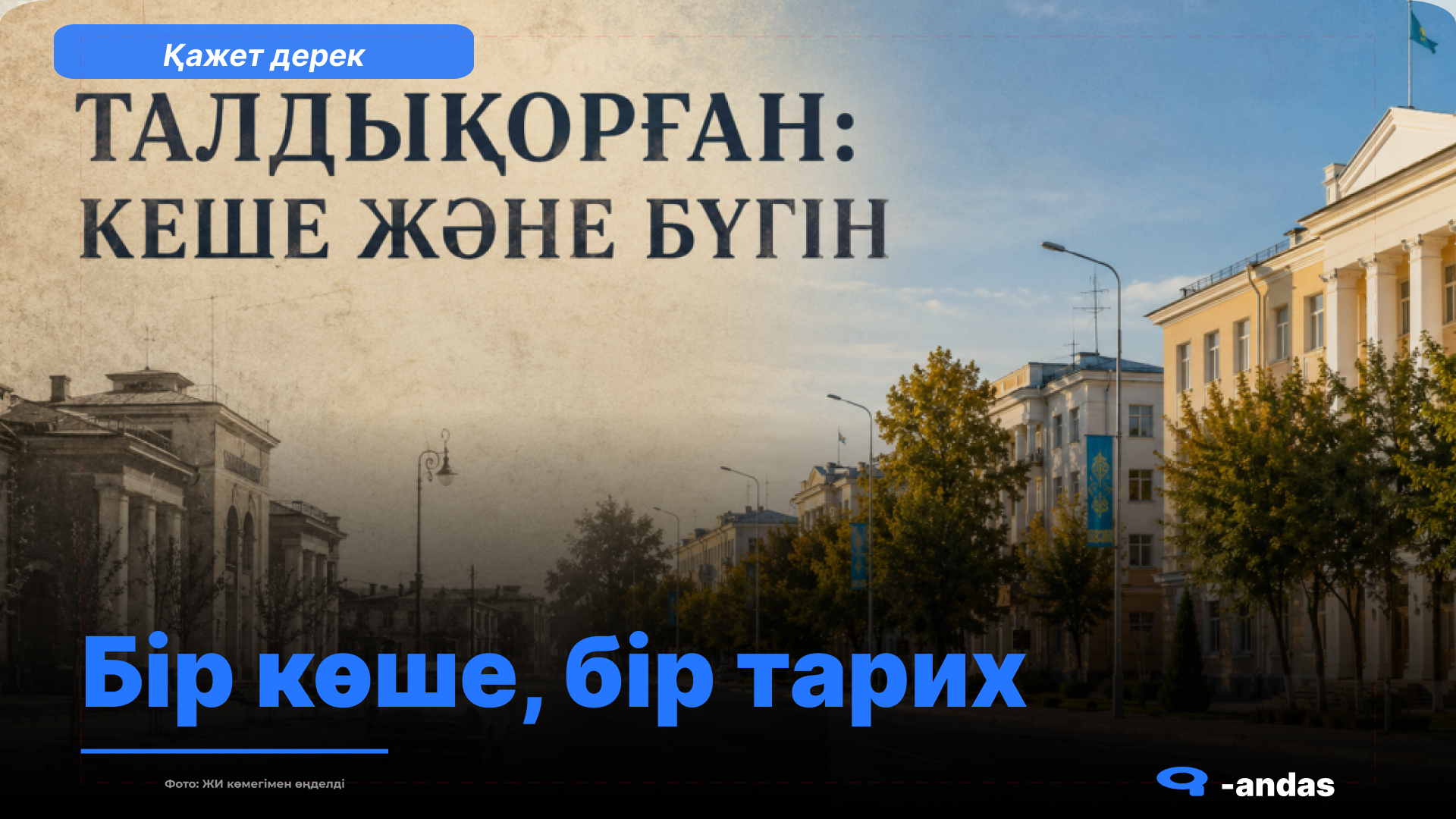
The modern face of Taldykorgan did not take shape overnight. Every street, every building and every old photograph preserves a distinct trace of the past. Once a small settlement, Taldykorgan gradually grew into the political, economic, cultural and spiritual centre of the Zhetysu region.
Under a Decree of the Presidium of the Supreme Soviet of the Kazakh SSR, the Taldykorgan Region was established on 15 March 1944. Taldykorgan was granted city status and designated as the administrative centre of the newly established region.
According to records of the State Archive of the Zhetysu Region (SAZR, Fund 7, Inventory 1; Fund 1278, Inventory 1; Fund 1152, Inventory 1), the city had a population of around 20,000 at the time. There were two production cooperatives, two state farms, a machine and tractor station, a brewery, a bakery, a nursing school, one secondary school, two seven-year schools and two primary schools. Residents were served by four shops, a canteen, a House of Culture, a cinema, a clinic and kindergartens.
After Taldykorgan became a regional centre, the city began to expand. Residential buildings, industrial enterprises, administrative offices and cultural institutions were gradually built. The House of Soviets, the City Party Committee building, libraries, the Palace of Culture and the Rodina Cinema were among the new landmarks. In 1947, a railway junction connecting the city with the Turkestan–Siberia Railway was built through a public construction initiative, giving a major boost to industrial development.
Important changes also took place in education. In 1951, an institute for teacher professional development was opened. At the beginning of 1953, 4,460 students were studying at ten schools in the city. By 1955, Taldykorgan’s population had reached 26,534. That same year, a specialised secondary veterinary educational institution was opened, followed in 1956 by a seven-year children’s music school.
On 6 June 1959, the Taldykorgan Region was abolished for the first time, but the city’s industrial development did not come to a halt. In 1961, a plant producing municipal equipment was established. From 1962, the city’s bakery began producing confectionery, bread and pasta. A youth sports school was opened, while the footwear and furniture enterprises were incorporated into new industrial structures. During the 1960s, work also began on supplying the city’s residents with piped gas.
On 23 December 1967, the Taldykorgan Region was re-established, and the city once again became a regional centre. From this period onward, industry, education and culture began to develop at a particularly rapid pace.
Construction of the battery plant began in 1970, and its first production facilities were commissioned in 1975. In 1972, a Russian Drama Theatre and the Taldykorgan Pedagogical Institute were opened. The garment factory became one of Kazakhstan’s major light-industry enterprises. On 5 March 1973, the Taldykorgan Region was awarded the Order of Lenin for its industrial and social achievements.
By the mid-1970s, the city’s population had exceeded 81,000. In 1979, the 800-seat Kazakhstan widescreen cinema opened. Later, the reinforced-concrete products plant, furniture factory, footwear and garment industries, and dairy-processing enterprises further strengthened the city’s economic potential.
Culture and healthcare developed alongside industry and education. The Historical and Local Lore Museum, the Ilyas Zhansugurov Literary Museum, the Regional Drama Theatre, Zhetysu Stadium, libraries and cinemas served the city’s residents. Monuments dedicated to the poet Sara and Ilyas Zhansugurov were also erected.
After Kazakhstan gained independence, a new chapter began in the city’s social and public life. In 1997, the Taldykorgan Region was abolished and the city became part of Almaty Region. On 14 April 2001, a decree was issued to transfer the administrative centre of Almaty Region to Taldykorgan.
On 16 March 2022, in his Address to the People of Kazakhstan, President of the Republic of Kazakhstan Kassym-Jomart Tokayev proposed dividing Almaty Region into the Zhetysu and Almaty regions. In accordance with the Presidential Decree of 4 May 2022, the Zhetysu Region was established on 8 June, and Taldykorgan became the administrative centre of the new region.
Today, Taldykorgan is an important city in the Zhetysu region, where education, culture, tourism, industry and services come together.
Old Taldykorgan Through Archival Photographs
Посмотреть эту публикацию в Instagram
The project «Essential Facts: Taldykorgan Yesterday and Today» aims to introduce readers to the city’s nearly century-long history while tracing its connection to the Taldykorgan of today. As part of the project, historical photographs preserved in the collections of the State Archive of the Zhetysu Region are used to present the city’s life at different stages alongside its achievements today.
Every old photograph in the archive is a fragment of the city’s history — a silent witness to a bygone era. Over the years, street names have changed, buildings have been renovated, and the city’s architecture and everyday life have been transformed. Yet traces of those periods have survived in historical photographs.
This time, we present archival photographs taken in 1959 of what are now Kabanbai Batyr, Akyn Sara, Nazarbayev and Abai Streets. By comparing these photographs with the streets as they look today, we can see how dramatically Taldykorgan has changed over several decades.
Kabanbai Batyr Street
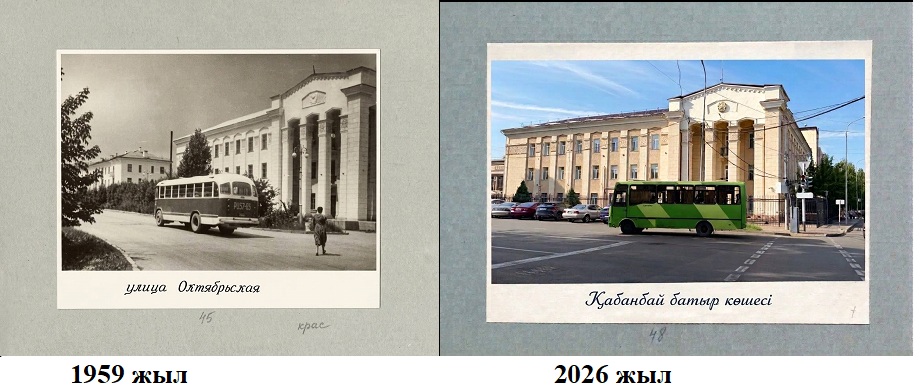
In 1959, Kabanbai Batyr Street was known as Oktyabrskaya Street. Today, it is one of the main streets of Taldykorgan and is closely intertwined with the city’s everyday life. It is difficult to imagine modern Taldykorgan without it.
For many years, the street was home to the central market, one of the main arteries of city life, as well as the city clinic and the Offset printing house, which has long served the work of the regional press. The street is also home to an academic building of Zhetysu University named after I. Zhansugurov and the regional art gallery.
Bringing together trade, education, healthcare, culture and the press, Kabanbai Batyr Street is crossed every day by thousands of people. The transformation of what was once a small street into one of the major arteries of a modern city clearly reflects Taldykorgan’s path of growth.
Akyn Sara Street
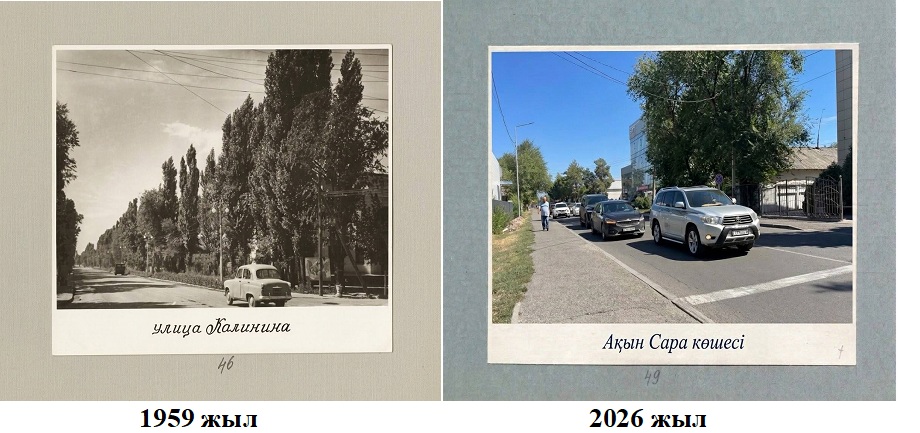
The name of Akyn Sara holds a special place in the history and spiritual culture of the Kazakh people, particularly in the cultural heritage of Kazakh women. The location of Akyn Sara Street in the centre of Taldykorgan can also be seen as a sign of the people’s respect for art and the power of the spoken word. According to the archival photograph, the street was known as Kalinin Street in 1959.
Today, Akyn Sara Street is one of the meeting points of the city’s busy everyday life. The Taldykorgan Hotel, well known to visitors arriving from near and far, is located here. A bust of Akyn Sara stands beside the hotel.
The boarding school named after Danesh Rakyshyev, a renowned Kazakh singer known for his distinctive voice, is also located on this street. The building of the Regional Department of Internal Affairs, various restaurants and multi-storey residential buildings also line the street, together shaping its present-day architectural character.
Akyn Sara Street reflects not only the fast pace of modern city life, but also the artistic and spiritual heritage of Zhetysu.
Nazarbayev Street
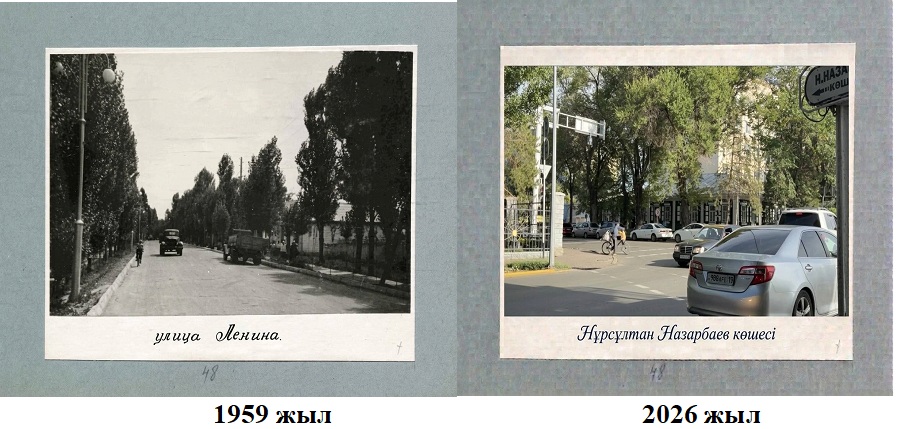
Previously known as Lenin Street, then as Tauelsizdik Street and later as Nursultan Nazarbayev Street, this thoroughfare is one of the main routes connecting the western and eastern parts of Taldykorgan.
Multi-storey residential buildings, shops, schools and public institutions along the street contribute to the city’s modern appearance.
The central section of the street is distinguished by the square in front of the regional akimat building. The I. Zhansugurov Palace of Culture and the Ilyas Zhansugurov Literary Museum are located nearby. This area is one of the important centres of Taldykorgan’s cultural and public life.
Various festive, cultural, artistic and public events are held here. In the evenings in particular, the central square remains lively, becoming a popular place for residents and visitors to walk and spend time.
Thus, the street is important not only as a transport route, but also as a significant space for the city’s public and cultural life.
Abai Street
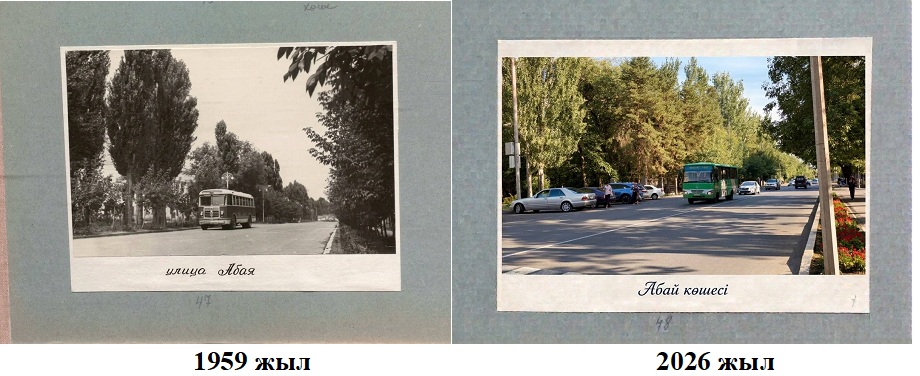
The fact that a central city street bears the name of Abai Kunanbaiuly, the great Kazakh thinker, is a sign of the respect shown by the people of Zhetysu towards the great scholar and educator.
Abai Street is home to many sites of historical, cultural and administrative importance to Taldykorgan. These include the city akimat building, the Glory Monument opposite it, the M. Tynyshpaev Regional Museum of History and Local Lore, the Nurgisa Tlendiyev Music School and the city police department.
Every building has its own history, and every corner has its own place in the life of the city. For this reason, walking along Abai Street allows visitors to see not only today’s Taldykorgan, but also traces of its past that have survived to the present day.
The cultural and historical sites along the street create a distinctive atmosphere and offer a sense of the city’s spiritual character.
Continuity Between Yesterday and Today
There is a striking difference between the Taldykorgan captured in the archival photographs of 1959 and the city we see today. Streets once lined with low-rise houses and only a few vehicles have been transformed by multi-storey buildings, educational and cultural institutions, shops and modern infrastructure.
Yet the city’s history has not disappeared. It remains preserved in old photographs, archival documents, long-standing street layouts and the collective memory of its people.
By comparing the past and present views of Kabanbai Batyr, Akyn Sara, Nazarbayev and Abai Streets, we can trace the broader story of Taldykorgan’s growth and transformation.
This is also the main purpose of the *“Essential Facts: Taldykorgan Yesterday and Today”* project – to connect archival materials with the modern city and introduce the history of Taldykorgan to a new generation. After all, behind every street of today’s beautiful city lies a story, and behind every historical photograph is the imprint of an entire era.
Source: State Archive of the Zhetysu Region.
Kazhet Andas,
local historian and journalist.
Photographs and video footage by:
Aidana Amanzholkyzy and Dinara Narymbai,
correspondents of the “Q-Andas” news agency.
Translated by: Amina Sayahatqyzy