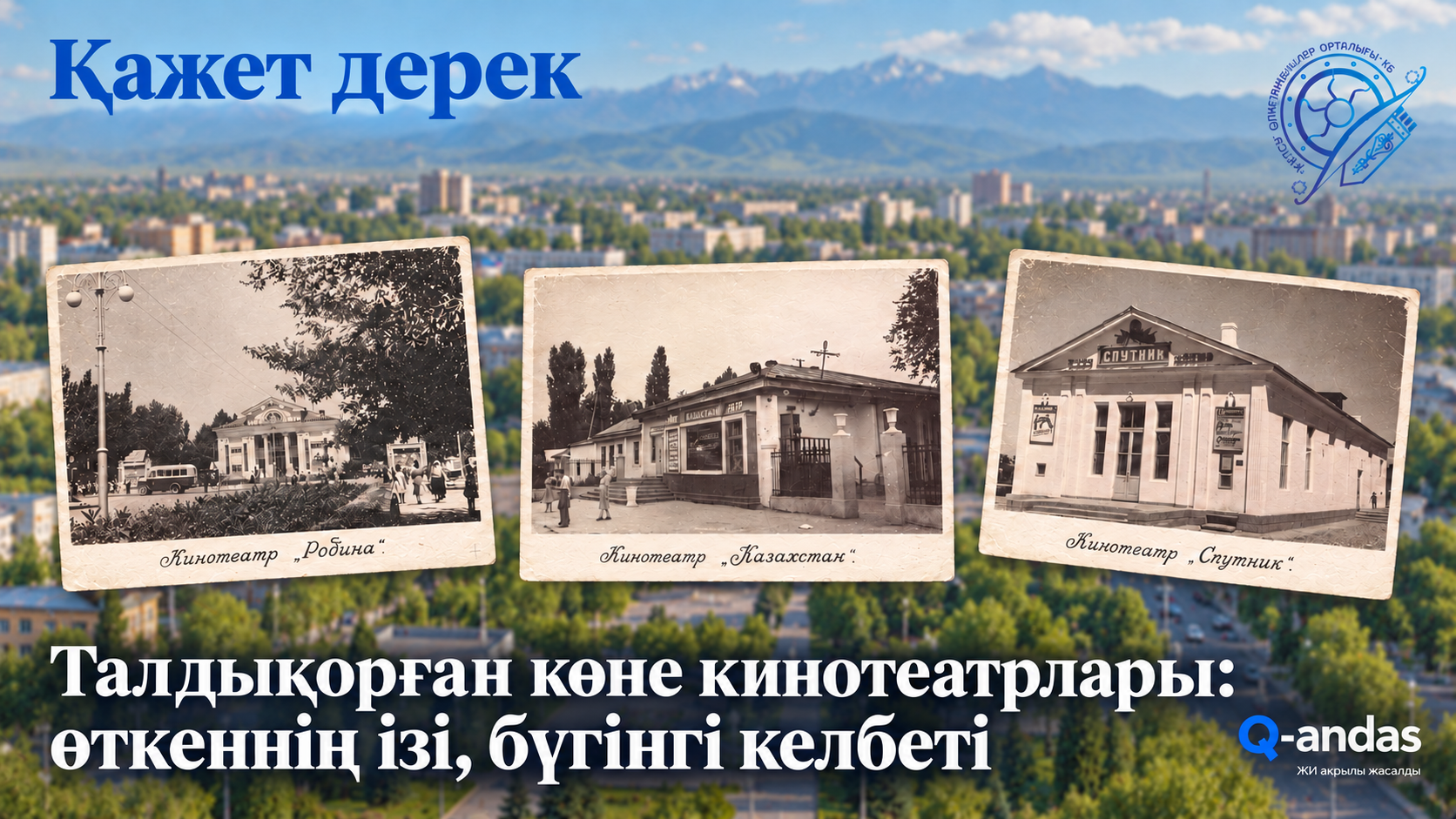
Taldykorgan’s old cinemas bring together the city’s cultural history and the memories of several generations. Residents once came here to meet, watch films and relax. Some of these buildings have survived, while new developments are rising on the sites of others. As part of the “Қажет дерек” series, we explored their history and visited the locations to see how they look today.
Посмотреть эту публикацию в Instagram
The series aims to identify Taldykorgan’s historic places through archival documents and introduce the public to their past and present. This time, we examined old photographs and documents held by the State Archive of the Zhetisu Region, gathering information about cinemas that once operated in the city. Among the discoveries were photographs of the Rodina, Kazakhstan, Druzhba and Sputnik cinemas. We previously shared a video report about the Rodina cinema.
During the last century, cinemas played an important role in the city’s cultural life. Young people and older residents met here, watched films and spent their free time together. The history of these places therefore extends beyond the buildings themselves. It is tied to residents’ youth, their encounters and their shared memories.
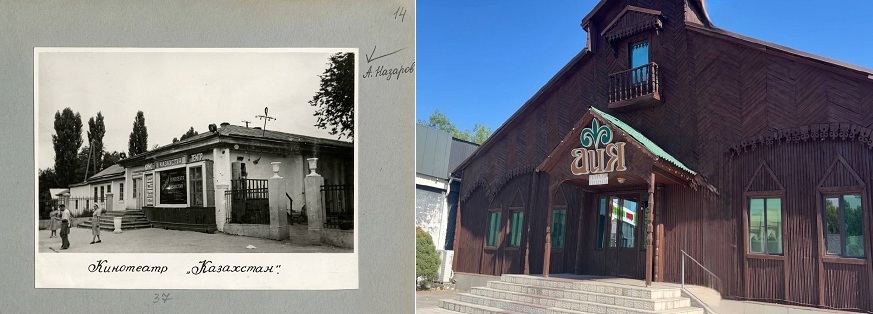
The site now occupied by the Aya café once housed the Kazakhstan cinema. Well known to local residents, it was one of their favourite places to watch films and relax.
For Totai Izbaskanov, chair of the Council of Elders of the Erkin Rural District, this building holds special meaning. Sharing his memories of the cinema, he recalled its connection to his childhood.
“Whenever I look at this building, I remember my childhood and youth. The building behind me is the former Kazakhstan cinema. When we were children, this was one of the centres of the city’s bustling cultural life.
It was later renamed the Pioneer cinema. The secondary school we attended was also nearby. We came here with our friends to watch films. Many of the first films we saw were shown in this cinema. That is why this place is so dear to us. It holds traces of our childhood and memories of the friends we grew up with.
Time passes and the city changes. But as these changes happen, we should remember our past. I would like future generations to know the history of the places familiar to us. If children walking past this building knew that it was once a cinema where their grandparents came to watch films, they might feel an even stronger connection to their home city.
The better we understand our past, the more confidently we can move towards the future. It is therefore our duty to share the history we witnessed and pass on the memories we carry,” says Totai Izbaskanov.
Today, the area looks different. The city’s central park is nearby, surrounded by cafés and restaurants, institutions and various public service facilities. Yet many people going about their daily lives here may be unaware of the area’s former role in the city’s cultural life.
Another venue that served as a place of cultural recreation from the 1960s to the 1980s was the Dostyk, or Druzhba, cinema. Following Kazakhstan’s independence, the building was left unattended for a time. It later passed into private ownership and was used for various purposes.
During filming, the building was undergoing major renovation. Its refurbishment opens a new chapter in its life, while sharing its history as a cinema could encourage greater interest in the site among local residents.
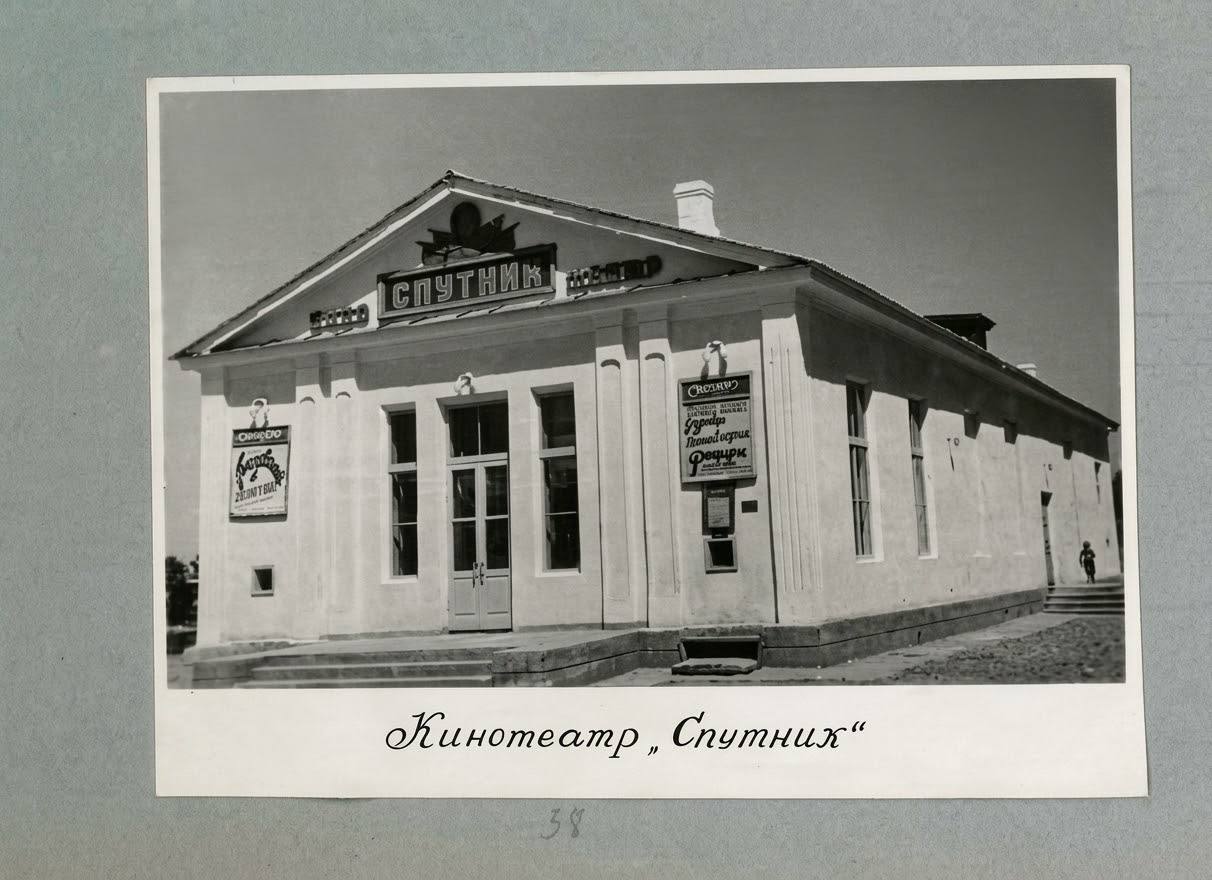
One of the photographs found in the State Archive of the Zhetisu Region was taken in 1970. It clearly shows the Sputnik cinema as it appeared at the time. This cultural venue, frequently visited by residents in the 1970s and 1980s, is now privately owned.
Unfortunately, the building shown in the photograph has not survived. When the filming crew visited the site, new construction work was underway where the former building had stood.
Totai Izbaskanov also recalled going to the Sputnik cinema to watch films.
“The Sputnik cinema once stood here. It was a small cinema. I believe it may have been built for the residents of the nearby settlement.
We used to come here to watch films too. Later, we began going to the Rodina and Kazakhstan cinemas. At the time, each cinema had its own place in city life and its regular audience. Today, remembering those days brings back memories of our youth as well as the cinemas themselves.
It is heartening to see the history of these places being brought back into view. So much is forgotten over time. That is why we need to study the past of historic places, collect information and memories about them, and pass them on to future generations.
I would like surviving buildings such as Rodina to be preserved, with their historic appearance intact. We should also keep the history of old venues such as Kazakhstan alive. Where cinema buildings have been lost, we could mark their locations and explain what once stood there. This would be a valuable legacy for future generations. These places hold traces not only of our youth, but of an entire chapter in the city’s history,” says the elder.
The city’s growth and the construction of new facilities reflect the needs of the times. At the same time, it is important to preserve the history of places that once contributed to residents’ spiritual and cultural lives. Even where a building has been lost, marking its location, publishing archival photographs and collecting residents’ memories can help pass its history on to future generations.
This work within the “Қажет дерек” series aims to recover parts of the city’s history that are gradually fading from memory. The old cinemas carry the traces of earlier generations and are connected to whole periods in many people’s lives. We therefore believe it is important to mark the sites of lost buildings and, where possible, install commemorative plaques explaining their history.
Aisulu Toleukhan,
local historian and journalist.
Photography and video by Amina Akylbek.
Correspondents of the Q-Andas News Agency.