Қазақша:
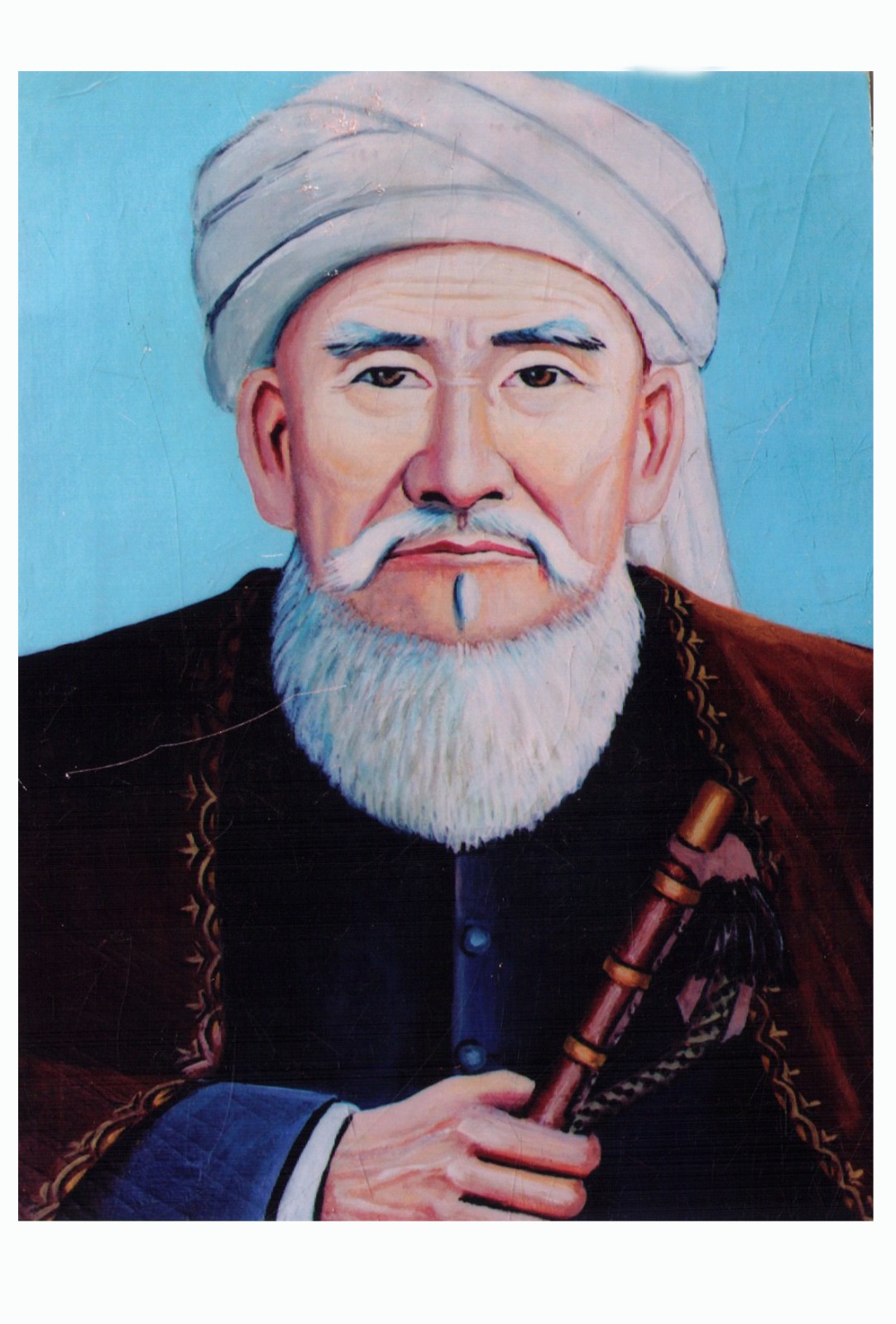
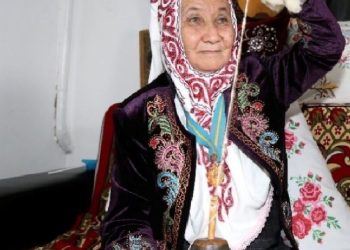
Zhansarbay Ultarakuly (1850-1945)
The whip has long been regarded as one of the important traditional tools and attributes of Kazakh nomadic life. Our ancestors used it to drive livestock, intimidate predatory animals, demonstrate strength and authority, and compete in tests of whip-handling skill. There was even a special technique of striking with a whip powerful enough to knock a rider out of the saddle. A well-known saying used to intimidate others went: “Six tightly braided leather strands, and even a mounted rider will be thrown from his horse.”
Numerous sayings, proverbs and expressions in Kazakh culture are associated with the whip. For example, the expression «within one whip’s reach» refers to a short distance. «He does not need the whip to keep him moving» describes someone who is exceptionally swift and energetic. «He laid down his whip as a pledge» means to make a promise or reach a firm decision, while «he struck his thigh with the whip» expresses regret or frustration. Many other meaningful expressions involving the whip have also become part of everyday speech.
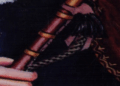
There were several types of traditional whips, including the six-strand calf-tooth braid (a traditional braided pattern resembling the shape of a young calf’s teeth), the Kyrgyz-style braid (a distinctive traditional leather-braiding technique) and the heavy riding or ceremonial whip. Each type had its own method of craftsmanship and established traditions.
The process began with cowhide, which was softened, thoroughly tanned and prepared before being cut into narrow leather strips. These strips were then braided into whips of different patterns and thicknesses. The finished braided leather section was attached to a handle made from tobylgy wood (wood from a hardy wild shrub traditionally used by Kazakh craftsmen to make durable whip handles) or from the lower leg bone of a roe deer. It was secured with leather bindings and small nails.
A particularly important type was the six-strand whip, made by braiding six leather strips together. It was considered one of the principal traditional designs. The Kyrgyz-style whip, by contrast, consisted of sixteen fine leather strands and required particularly intricate craftsmanship. It was also known as a heavy or decorative whip.
Other varieties included whips adorned with silver, wrapped with brass wire or covered in fine leather. They also differed in size and intended use: some were designed for riding horses, others for handling young horses, while smaller versions were used by shepherds to manage sheep.
Craftsmen who made these whips often presented their finest work as gifts to noblemen, wealthy livestock owners and influential members of the local elite. In return, they might receive foals, yearling calves, sheep, lambs, goats or kids, providing them with a livelihood. Some artisans also accepted special commissions. Whips made for military expeditions, warfare and prestigious gift-giving were particularly valued.
The Kazakh people traditionally treated the whip with great respect. It was never carelessly discarded or left lying around. It was usually hung from the upper framework of a yurt or placed on a traditional wooden household stand for clothing and horse equipment (a specially designed wooden rack used to hang garments and store riding gear). The household owner’s horse tack was kept nearby.
Yet Zhansarbay Ultarakuly was not merely a man who held the whip in high regard. He was also one of those who incorporated it into traditional healing practices.
During his lifetime, Zhansarbay Ultarakuly successfully treated people suffering from typhus and malaria, diseases that had caused severe hardship and claimed many lives in those years. People rarely allowed him to remain at home. They constantly sent for him, and he was almost always on horseback, travelling to help those in need. His reputation extended beyond the Kunes region to distant areas such as Nilky and Togystaru.
At one point, an educated Tatar man named Salaki, who had arrived from Kazakhstan, introduced Zhansarbay to a highly experienced physician named Aliyev. Aliyev had received his medical education in the inland provinces of the Russian Empire. Zhansarbay invited the doctor to his village and welcomed him as an honoured guest. The two men exchanged professional knowledge, discussed various illnesses and their treatments, and shared their practical experience, continually expanding their understanding of medicine.
Other respected folk healers also lived in the same village, including Mashi, Sakal and Batima. Some were known as shamans (traditional spiritual practitioners who combined ritual ceremonies, prayers and folk healing methods).
In addition to his healing knowledge, Zhansarbay possessed two particularly revered personal objects: a yellow-and-mottled whip and a white turban.
According to local accounts, when a pregnant woman experienced prolonged and difficult labour, or when the afterbirth failed to be delivered following childbirth, Zhansarbay performed a special healing ritual. He would recite prayers, gently blow over the woman and carefully pass his whip over her abdomen. People believed that, following this ritual, the woman would give birth safely and the afterbirth would be delivered naturally.
Zhansarbay was also known for other forms of traditional healing. As an old saying goes: «Nothing is worse than a stabbing pain in the body and malicious gossip among people.» When someone suffered from severe cramps or intense pain throughout the body, Zhansarbay was said to perform a ritual using his whip, recite prayers and drive away the illness.
If the distance was too great or other commitments prevented him from visiting a sick person, he would send one of his two sacred possessions – either the whip or the white turban. According to local belief, either object could be used to perform the ritual and assist a woman in childbirth.
A legend about Zhansarbay has survived among the local people under the title «Struck by the Devil.» It tells of an extraordinary incident from his youth.
One day, while still a young man, Zhansarbay was riding a camel and driving a large herd of sheep and goats towards a mountain pasture. Among the animals, he noticed a small white kid that was limping and struggling to keep up with the herd.
«What could possibly have happened to this poor little creature?» he thought sympathetically.
He stopped his camel, dismounted and gently lifted the kid in front of him. After travelling a short distance, he decided to check whether the animal was male or female and reached underneath to examine it.
Suddenly, the little goat spoke in a human voice:
«Have you found what you were looking for?»
«Ah, you wretched creature! So you are a shaitan (a supernatural evil being associated with the devil and malevolent spirits in Islamic folk belief)!» Zhansarbay exclaimed.
He seized the kid by its tuft of hair and began striking it with his yellow-and-mottled whip, whose handle was made from tobylgy wood (the traditional hardwood of a wild shrub used for crafting sturdy handles).
With every blow, the devil dropped one of the coins attached to the top of its head. Finally, it dropped its last coin and fled, crying out in desperation:
«I swear I will never come near your children, your grandchildren or any of your descendants!»
With these words, it disappeared as quickly as it could.
Of course, this story sounds more like a legend than something that can easily be believed. Nevertheless, local people maintained that there might be some truth behind it.
The very same yellow-and-mottled whip later passed into the possession of Zhansarbay’s youngest son, Omarakyn. To this day, it remains preserved among his descendants.Even many years later, people who knew of the whip’s supposed healing powers continued to visit the family. Whenever someone fell ill or experienced a serious ailment, they sought help through traditional purification and healing rituals known as ushyk-tau (a traditional spiritual cleansing and healing ceremony involving prayers, ritual gestures and the symbolic driving away of illness). Prayers were recited, ritual fumigation was performed, and the sacred whip was used to bless the afflicted person.
Thus, the yellow-and-mottled whip of Zhansarbay Ultarakuly became more than a family heirloom. It became part of the collective memory of the people, preserving stories of traditional healing, spiritual beliefs and the cultural heritage of the Kazakh people.
Author: Qazhet Andas
Translation: Amina Sayahatkyzy
Q–Andas News Agency
(To be continued…)