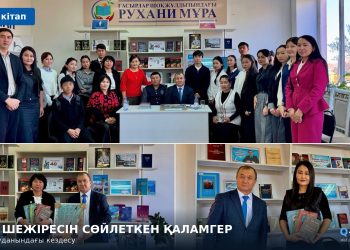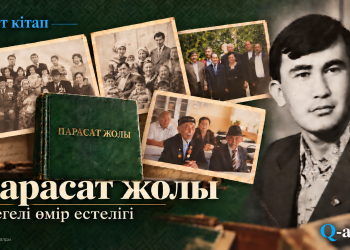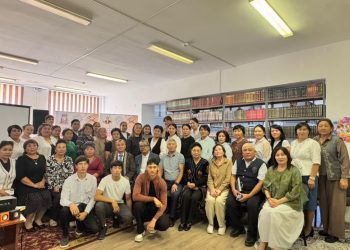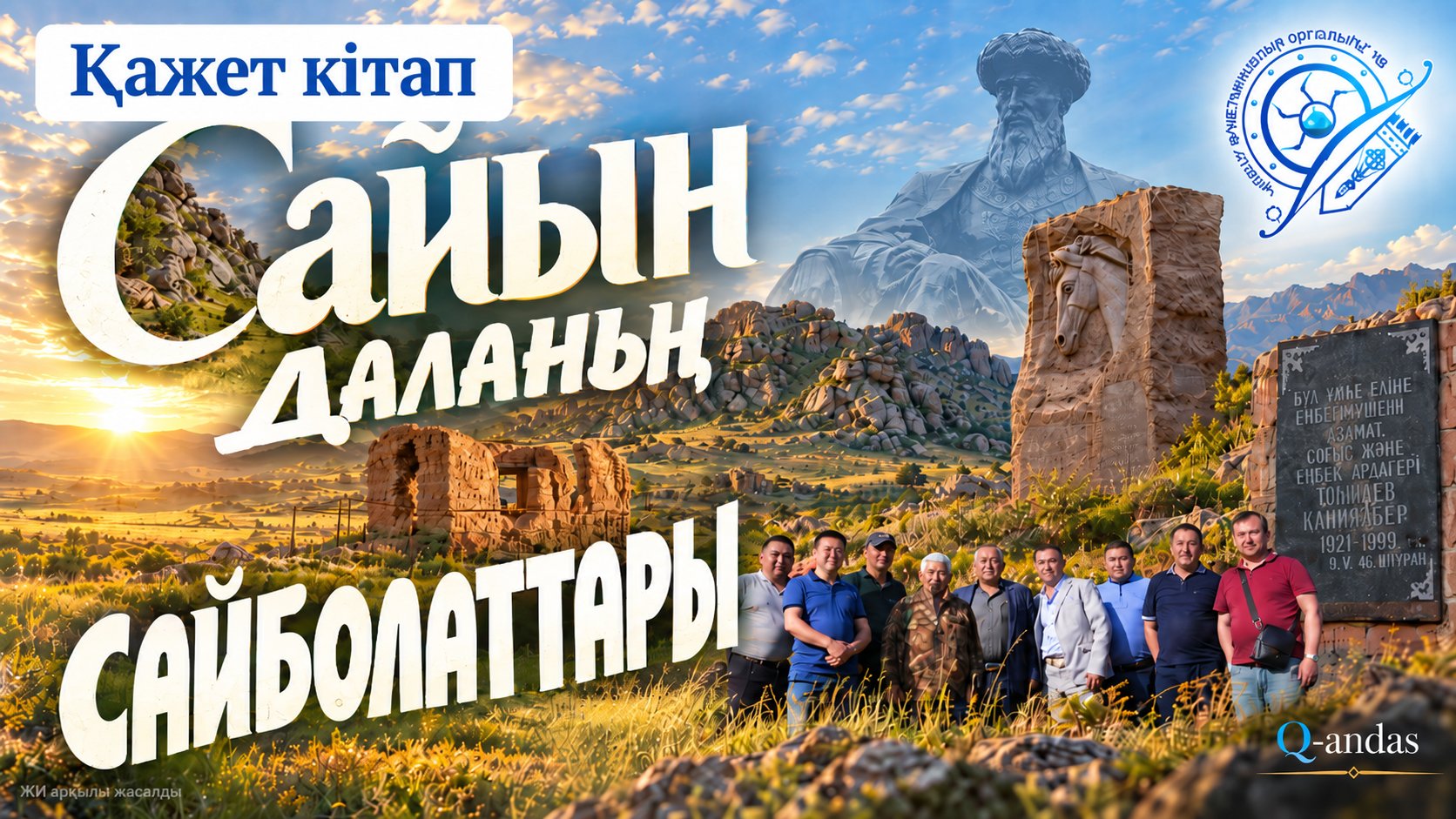
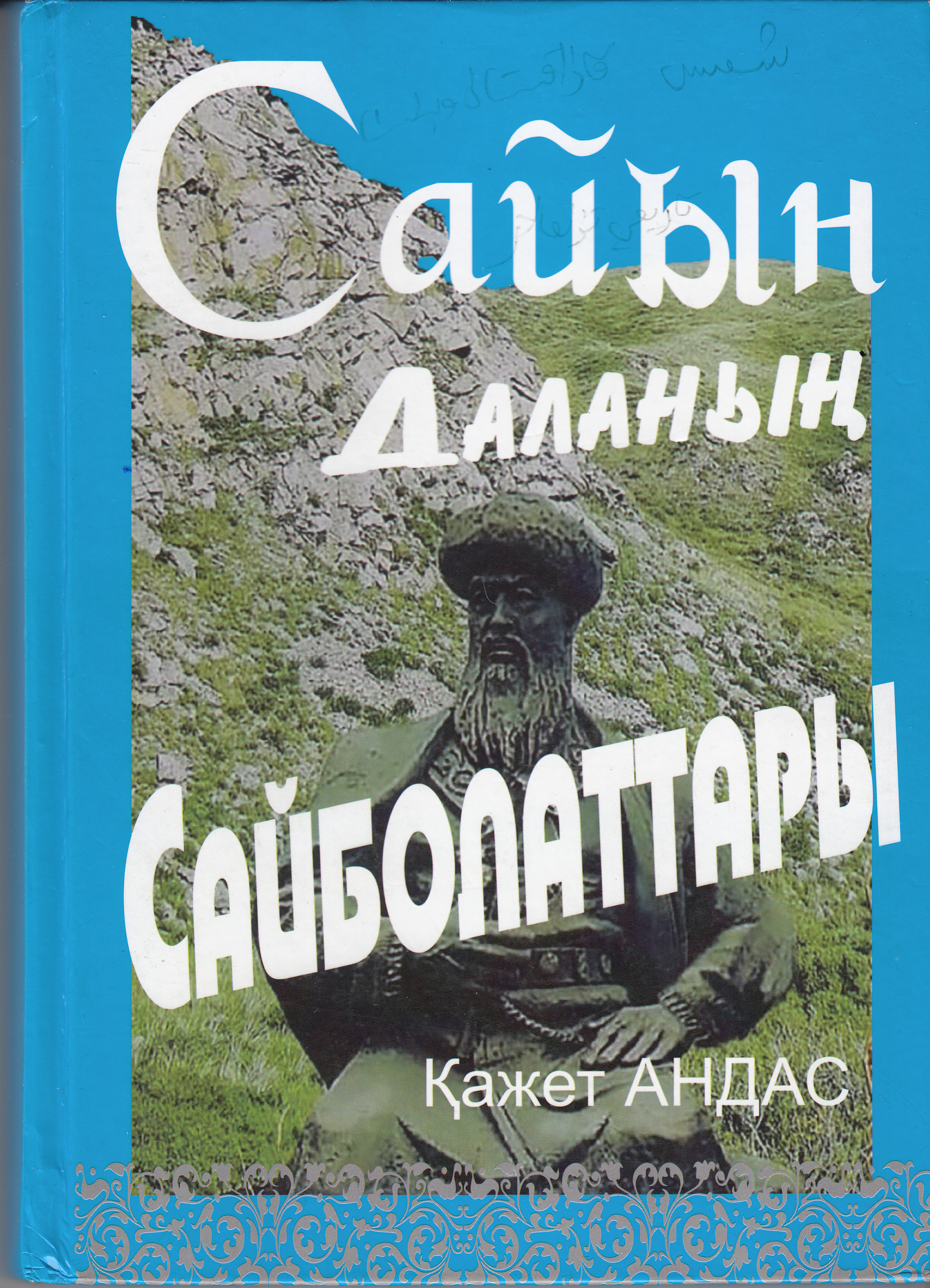
Writing a work of local history requires thorough research, factual accuracy and tireless effort. It involves listening to the recollections of people who know the history of their land, visiting places associated with historical figures and events, and reflecting on what those places reveal. Qazhet Andas’s book Sayyn Dalanyn Saybolattary (The Saybolats of the Vast Steppe) grew out of this kind of research and seeks to pass on the heritage preserved in folk memory to future generations.
The book explores the history of the Tarbagatai region through the genealogy of Saybolat’s descendants, individual lives and historical places. The author combines observations made during his travels with oral recollections and written sources, connecting the history of the land with the lives of its people.
Reconstructing the history of old settlements through recollections preserved among local people is the central theme of this work. By listening to elders and visiting places that retain traces of earlier generations, the author seeks to revive names and events that are gradually being forgotten.
Посмотреть эту публикацию в Instagram
A Journey into History
The ideas introduced in the foreword and the section “I, Too, Have a Duty…” continue in the introduction, taking the reader from Taldykorgan to Aksuat, then to Akzhar and Orshanbulak. The section “Zhetiaral, My Homeland…” expresses affection for the native land, while the journey from Kuigan to Kurban Hajji’s mausoleum introduces the reader to the people’s spiritual heritage.
Separate sections are devoted to Saybolat’s descendants who performed the Hajj and to well-known members of the lineage. The book concludes with a closing reflection and a list of references.
Contents of the Book
Foreword – 3
I, Too, Have a Duty… – 4
Introduction – 7
From Taldykorgan to Aksuat… – 8
From Aksuat to Akzhar… – 24
From Akzhar to Orshanbulak… – 41
Zhetiaral, My Homeland… – 78
From Kuigan to the Mausoleum of Kurban Hajji (Qonyz)… – 87
Saybolat’s Descendants Who Performed the Hajj – 125
Well-Known Members of the Saybolat Lineage – 129
Closing Reflections – 156
References – 158
People Who Contributed to the Book
The recollections and information preserved among local residents play an important role in reconstructing the region’s history. Kanatbek Kazhybekov, Khadisha Mukan, Rakhmetolla Suleimenov, Nygmetolla Kyzov, Myrzakhan Shakenov, Bakytzhan Kazhykenov, Meiirbek Shaimardanov, Kuanysh Omarov, Kairat Dakerov and Murat Kyzov contributed to the creation of the book.
Kanatbek Kazhybekov sponsored its publication and helped with organisational work and the collection of information. Khadisha Mukan’s recollections provided the basis for several sections. The photographs were taken by Zhumabai Musabekov.
| Person | Contribution to the Book | Pages |
| Kanatbek Kazhybekov Kenesbekuly | Sponsored the preparation of the book for publication and helped with organisational work. Collected extensive information and lists of historical figures. | 2–6, 157–158 |
| Khadisha Mukan | Wrote the foreword. Information from her recollections was used in the book. | 3, 158 |
| Rakhmetolla Suleimenov | Provided oral recollections and information, including figures for the number of houses in villages in the past and at the time described. | 156, 158 |
| Nygmetolla Kyzov | Provided oral recollections and information. | 158 |
| Myrzakhan Shakenov | Provided oral recollections and information. | 158 |
| Bakytzhan Kazhykenov | Provided oral recollections and information. | 158 |
| Meiirbek Shaimardanov | Provided oral recollections and information. | 158 |
| Kuanysh Omarov | Provided oral recollections and information. | 158 |
| Kairat Dakerov | Provided oral recollections and information. | 158 |
| Murat Kyzov | Provided oral recollections and information. | 158 |
| Zhumabai Musabekov | Took the photographs featured in the book. | 158 |
Historical Settlements and Monuments
Along the route from Taldykorgan to Aksuat, monuments, old burial grounds, sacred sites and historical settlements reveal traces of the past.
The book covers the monument to Shynkozha Batyr, the Saka burial mounds near Ayagoz and the old burial grounds of Tarbagatai village. The memorial complex dedicated to Kabanbai Batyr and Boranbai Bi, the monument to the horse Kubas and the spring bearing its name are discussed in connection with resistance to the Dzungar invasions.
| Historical Site or Place | Information Presented in the Book | Page |
| Monument to Shynkozha Batyr | Located in the village named after the warrior, along the Almaty–Oskemen highway. The author stops at the monument and describes the warrior’s military achievements. In the book, his name is written as “Шынқожа”. | 9 |
| Saka Burial Mounds near Ayagoz | Mentioned along the travel route. The author writes that a lack of time prevented him from making a detour to the mounds. | 9 |
| Old Burial Grounds near Tarbagatai Village | Describes cemeteries on both sides of the Zhylanshyk River and a visit to a stone-built burial site. | 10 |
| Memorial Complex Dedicated to Kabanbai Batyr and Boranbai Bi | Describes the sculptures and architectural features of a complex honouring courage and wisdom. | 10–11 |
| Monument to the Horse Kubas and the Kubas Spring | Connected with folk accounts about Kabanbai Batyr’s horse. | 11–13 |
| Mausoleum of the Healer Yrgyzbai | Introduces the history of the mausoleum, its mosque, the Dala Danalary Library and the Amanat Museum. | 13–15 |
| Uan Village – a Place Connected with Sultan Abilpeiiz’s History | The village’s name leads into an account of Sultan Abilpeiiz’s title of wang and the history of Khankozha and Sybankul. | 15–17 |
| Monument to Kabanbai Batyr in Aksuat | Describes the bronze statue, its pedestal and the landscaping of the surrounding area. | 17 |
| Mausoleum of Mametek Batyr | During the next stage of the journey around Aksuat, the author visits the mausoleum and discusses the warrior’s bravery and the condition of the old structure. | 19–22 |
The subsequent sections introduce the historical and spiritual life of Akzhar, Orshanbulak, Zhetiaral and Kuigan. Folk accounts about Sengir, Manyrak and Sauyr–Saikan reveal traces of battles with the Dzungars and stories of bravery preserved in place names.
| Historical Place or Site | Coverage in the Book | Pages |
| Baizhigit Baba Mosque and the Monuments to Makta Apa and Dauletbai | Akzhar’s spiritual and historical setting | 41–42 |
| Abai School and the Folk Theatre in Akzhar | The region’s educational and cultural history | 41 |
| Orshanbulak, Arganaty and Erganaty | Settlements, nature and stories about place names | 68–77 |
| Zhetiaral and the Former School Site in Pramila | Village history, artistic traditions and Kurban Hajji’s educational work | 78–86 |
| The Old Mosque in Kuigan Built at Kurban Hajji’s Initiative | The remains of the mosque and its educational role | 90–91 |
| The Graves of Espai Hajji, Kairakbai Bi and Sasan Bi; the Mausoleum of Shotai Batyr | Burial sites associated with historical figures of the region | 94–95 |
| The Burial Site of Maily Batyr, Sengir and Sauyr–Saikan | Recollections of battles, place names and tragic events | 107–112 |
| Kurban Hajji’s Mausoleum | A visit to the mausoleum, grave markers and the respect shown by descendants | 113–123 |
The book also mentions the Burme and Begetai burial mounds, ancient sanctuaries and deer stones on the lower slopes of Arganaty, stone statues at Aktam, and rock carvings at Mysyktyn Auzy and Zholbulak (page 90). These are presented as traces of ancient history that require further study.
The mausoleum of the healer Yrgyzbai, the Dala Danalary Library and the Amanat Museum introduce the region’s spiritual heritage. The park named after Mustafa Ozturk and the monument to Zheltoksan heroine Sabira Mukhametzhanova extend the story to later generations who upheld the honour of their people.
People in the Region’s History
The history of a region is the history of the people who lived there and served their community. The book brings together the lives of warriors and traditional judges, teachers and artists, showing the example set by several generations.
The genealogy of Saybolat Baba and Zhaksylyk’s descendants is interwoven with the military achievements of Kabanbai, Mametek and Dauletbai Batyrs. It covers the leadership of Boranbai, Quti, Segizbai, Botabai and Kairakbai Bis, as well as Sybankul Khankozhauly’s resistance to colonial rule.
Kurban Hajji – Qonyz Kenzheuly’s courage and educational work, alongside Sultanmakhmut Toraigyrov’s teaching, hold a special place in the book. Folk recollections introduce the healing traditions of Yrgyzbai Doskanuly and the bonesetting skills of Symatai Ata.
| Person | Subjects Covered in the Book | Pages |
| Saybolat Baba, Zhaksylyk and Their Descendants | The lineage’s origins and settlement, genealogy and role within the community | 25–32, 66–67 |
| Karakerei Kabanbai Batyr and Boranbai Bi | Defence of the homeland, stories about the horse Kubas and monuments | 10–13, 17, 112 |
| Yrgyzbai Doskanuly | Healing traditions, accounts of his life and the mausoleum complex | 13–15 |
| Mametek Batyr | Bravery in Kabanbai’s army, the account of his nickname “Tisti Batyr” (“the Toothed Warrior”) and his descendants | 19–22 |
| Kurban Hajji – Qonyz Kenzheuly | Courage, leadership, the establishment of a mosque and school, his connection with Sultanmakhmut and his mausoleum | 90–93, 113–125 |
| Sultanmakhmut Toraigyrov | Teaching in the region and works dedicated to Kurban Hajji | 90–91, 120–122 |
| Quti Koshkarbaiuly | Leadership, service as Abylai Khan’s envoy and information about the place name Qutybi | 42–43, 130 |
| Segizbai Bi and Botabai Segizbaiuly | Oratory, leadership and relations with the tsarist authorities | 43–45, 131 |
| Kairakbai Shalekenuly | Leadership, the performance and composition of kui instrumental music, and involvement in community affairs | 99–101, 130 |
| Dauletbai Satyuly | Fighting the Dzungars and campaigning alongside Kabanbai | 41–42 |
| Sybankul Khankozhauly | Resistance to colonial rule and his fate | 15–17 |
| Sailaukhan Shaimardanuly | Teaching, reconstructing the lineage’s history and initiatives to preserve historical heritage | 18–19 |
| Sabira Mukhametzhanova | Her fate in connection with the Zheltoksan events and the respect shown by local people | 21, 37 |
| Mustafa Ozturk | His life, role in sport and ancestral connections with the region | 71–74 |
| Smagzam Kylyshbaev – Symatai Ata | Bonesetting skills and the recollections of those who witnessed his work | 101–107 |
Other figures featured in the book include Zhunisbek Ausarbaev, Sagatbek and his fellow soldiers, whose stories concern courage in wartime and work in peacetime. The account of Zhaparbek Kaliaskarov follows the life of the captain who brought a vessel to Lake Zaisan. Rakhymbek Abilmazhinuly’s story concerns work on the home front and in agriculture. Zeinep Mazhikenkyzy, Tusipkhan Mukhatov and Smagzam Shombin are presented through their teaching and cultural work. Anuarbek Malgazhdarov, Kuralai Alkenbaeva and the Sakhariev family introduce poetry, aitys improvised poetic contests and music. The accounts of Kereibai Tashauly and Baishukan Kereibaiuly cover social changes and public affairs in the early twentieth century.
The courage of Zhunisbek Ausarbaev, Sagatbek and his fellow soldiers, Rakhymbek Abilmazhinuly’s work on the home front, and the life of Captain Zhaparbek Kaliaskarov illustrate different periods in the region’s history. Information about Kereibai Tashauly and Baishukan Kereibaiuly sheds light on community life in the early twentieth century.
The teaching of Sailaukhan Shaimardanuly, Zeinep Mazhikenkyzy, Tusipkhan Mukhatov and Smagzam Shombin adds to the history of education. Anuarbek Malgazhdarov, Kuralai Alkenbaeva and the Sakhariev family represent the region’s artistic traditions. The lives of Sabira Mukhametzhanova and Mustafa Ozturk continue the themes of national honour and spirit.
Pages 129–155 contain a separate reference section on well-known people. It introduces warriors and traditional judges, teachers, scholars, artists, workers and athletes.
The Saybolats of the Vast Steppe brings together information about historical settlements and people. Behind every place is a human life; within every recollection is part of the people’s history. Studying these accounts, recording them and passing them on to future generations is one way to preserve the history of the homeland.
References and Sources
- Sultanmakhmut Toraigyrov. Collected Works, Volume III. Almaty: Alash Publishing House, 2005.
- Kuigan at the Foot of Barkytbel, Erkinbek Askaruly. Oskemen, 2002.
- Ili Historical Materials, Volumes 5 (1989) and 20 (2004). People’s Republic of China, Kulja.
- A Brief History of the Kazakhs, 1986. People’s Republic of China, Urumqi.
- Local History of Xinjiang, 1999. People’s Republic of China, Urumqi.
- Kazakh Qissa-Dastans, Volume 11, 1995. People’s Republic of China, Urumqi.
- Kazakh Orators and Their Sayings. People’s Republic of China: Ili People’s Publishing House, 1992.
- “How Kurban Hajji Came to Be Known as Qonyz”, Zangar Karimkhan. History of Kazakhstan
- Information from the official website of the akim of Tarbagatai District, East Kazakhstan Region, and other web pages.
- Oral recollections and information provided by Rakhmetolla Suleimenov, Nygmetolla Kyzov, Myrzakhan Shakenov, Bakytzhan Kazhykenov, Meiirbek Shaimardanov, Kuanysh Omarov, Kairat Dakerov and Murat Kyzov.
- Some information was taken in abridged form from the recollections of writer Khadisha Mukan.
- Much of the information was provided by Kanatbek Kazhybekov.
Photographs were taken by Zhumabai Musabekov. Photographs published on websites and collected by Saybolat Baba’s descendants were also used.
Sayyn Dalanyn Saybolattary [Text]: a historical and journalistic work / Q. Andas… – Almaty: [б. ж.], 2019. – 159 pages, [12] leaves of illustrations. – Bibliography: page 158. – Print run: 400 copies. – ISBN 978-601-06-59-30-8.
Aisulu Toleukhan,
local historian and journalist.
Photographs and video film by
Amina Akylbek.
Correspondents of the Q-Andas News Agency.