Ultaraq Aqtubituly
In 1864, seeking to expand its territory, the Russian Empire concluded a treaty with China concerning the demarcation and establishment of the northwestern section of the Sino-Russian border. Following this agreement, the Kyzai people, who found themselves under Russian rule, were burdened with increasingly heavy taxes and levies. Their communities fell into hardship.
Witnessing the suffering of their people, the Kyzai clan leaders and influential elders gathered to discuss their situation. They reached a decision, expressing it in a traditional saying: «Better to endure blows in open country than to starve in a confined place.»
After making secret preparations, they organized an armed group to protect their people. Among those involved were Zhantas, Kadysh, Baimurat, Karabek, Otep, Shoke, Zhantyk, Ultarak, Zhaulybai, Myktybek, Kantarbai, Shozhai, Kobegen, Baikaska, Yerden, Bakei, Bogenbai, and others.
One night, the Kyzai people abandoned their settlements and migrated across the border, moving to the Chinese side of the Tarbagatai region. Around the same period, Azhy Gun, a nobleman and leader of the Kerei people, also crossed the border with his community.
However, living alongside one another soon brought the Kyzai and Kerei into repeated conflict. Disputes arose over livestock theft, barymta – armed raids to seize livestock, often as an act of retaliation – and personal disagreements. On one occasion, Kyzai young men beat a Kerei man named Sarseke to death. The Kyzai paid one hundred horses in compensation for his death. This incident further aggravated tensions between the two communities.
To end the hostilities, influential men from both sides agreed to settle their differences through marriage alliances. As a sign of their agreement, they slaughtered a young horse with a white blaze on its forehead, known as a kok kaska, and agreed to establish bonds between their families through marriage. From that point onward, relations gradually improved, and harmony began to return.
As the Kyzai population and herds continued to grow, they moved to Borotal in 1876 and established new settlements there. Yet their troubles did not end. Conflicts with the Mongols broke out, and livestock theft, barymta, and retaliatory raids became increasingly frequent.
In 1880, at Akarasan in the Borotal area, a group of Mongol raiders attacked Kyzai young men who were tending their horses. They killed a man named Sholakaidar, tied Baimurat to a tree, and drove away four hundred horses. Upon hearing the news, Kyzai horsemen mounted their horses and rode out in pursuit. They killed two Mongols and recovered the entire herd.
During those same years, Dungans were traveling through the region. On one occasion, they killed Konyr Kulzha, the father of Auelkhan Tore, along with three of his companions while the men were on a journey.
In 1881, Kalmyk raiders killed Kadysh Batyr’s younger sister, who was ill and staying at his home, as well as Kantarbai’s mother, who was over seventy years old. At the time, Kadysh and another warrior, Shoke Batyr, were nearby hunting. When they learned of the attack, they engaged the Kalmyks in battle. Kadysh was killed by the raiders, while Shoke survived.
Consumed by grief and the desire for revenge, the Kyzai warriors mounted their horses and rode out together. Swearing to answer blood with blood and life with life, they attacked the Kalmyks, devastated their settlement, and captured their khan, Arashap.
Arashap begged for his life and pleaded for mercy. But the Kyzai warriors, who according to the traditional account were fierce fighters and would not let an enemy escape without retribution, beheaded him and sent his head back to his people.
After this, relations between the Kyzai and the Mongols deteriorated into deep and lasting hostility, leaving little prospect of reconciliation.
In view of these circumstances, the Kyzai elders and military leaders decided to leave Borotal as well. They needed to find another place where their people could settle. To explore potential destinations, they dispatched groups of their most capable and trusted men in different directions.
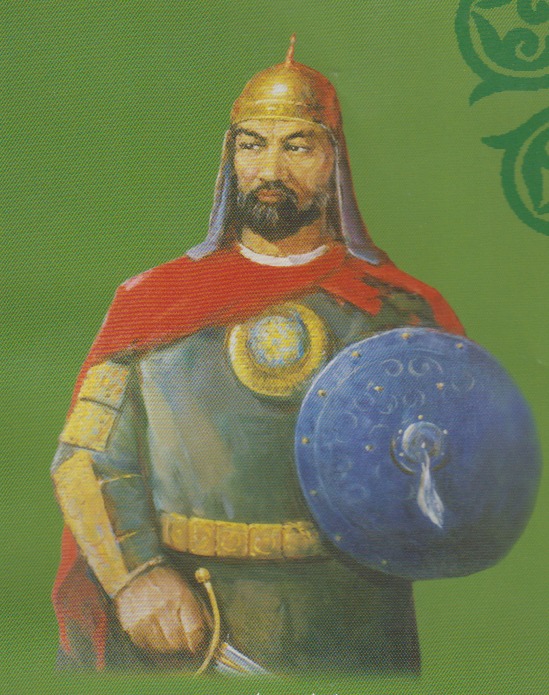
One of these groups included Ultarak Batyr, a determined and fearless warrior who never abandoned a task once he had undertaken it. According to the oral tradition, he had never spared an opponent in single combat. He was not only a batyr – a warrior renowned for his courage – and a skilled marksman, but also an accomplished hunter. His hunting abilities were said to have been inherited from his ancestor Shakil.
Seventy young horsemen took part in this expedition. Their names have not been fully established to this day. According to local oral tradition, the group was led by a man named Kuanysh.
Half of the group consisted of armed warriors. The others provided the practical and spiritual support necessary for the expedition: cooks, men responsible for preparing food and setting up camp, healers, baksys – traditional shamans and spiritual practitioners – and balgers, people believed to possess the ability to interpret signs and foretell events.
The group traveled light. They rode hardy horses and carried sabers, spears, and bows. They took neither baggage trains nor caravans, and they brought no herds of horses, cattle, or sheep to supply themselves along the way. Instead, they were instructed to find food as they traveled and seek shelter wherever they happened to arrive at nightfall.
There is a saying: «A commander out in the steppe does not always obey the orders of the khan back at his encampment.» Far from authority and supervision, members of such expeditions sometimes engaged in behavior that was difficult to justify, including acts of coercion and violence.
At the same time, the men hunted wild animals, set traps, captured young golden eagles, and trained them for falconry. With their trained birds of prey, they hunted roe deer, deer, and argali, the wild mountain sheep of Central Asia. After five months in the field, the expedition returned to Borotal.
The scouts reported to the elders that the fertile lands of the Ili River valley offered ample room for four Kyzai clans to settle. Apart from small communities of Dungans, Mongols, and Sibe-Solon people, they believed there were no large neighboring groups likely to engage the Kyzai in prolonged hostilities or repeated armed conflict.
Following this report, in 1881, Kudaimende Tore, Sasan, Baiyeke, and Bukash, influential leaders among the Kyzai, met with the Governor-General of Ili. The negotiations resulted in an agreement permitting the Kyzai people to relocate to the Ili region.
The eagle-trapping net mentioned in this account was the device Ultarak Batyr used during his expedition to capture young golden eagles.
During that journey, Ultarak climbed the high Muzart Pass, where he caught a young wild golden eagle. The bird was named Kok Tuigyn. According to family tradition, our ancestor Ultarak cared for this eagle and kept it by his side for the rest of his life.
Author: Kazhet Andas
Translation: Amina Sayahatkyzy
News Agency: Q-Andas
(To be continued…)