Abstract: This article examines the role of the nature museum within Zhongar-Alatau State National Nature Park as a resource for environmental awareness and the development of educational tourism. It analyses the museum’s principal functions and its importance in fostering visitors’ environmental culture and improving the quality of the tourism offering in a specially protected natural area.
Keywords: national park; specially protected natural area; nature museum; guided tour services; ecotourism; environmental awareness; educational tourism; environmental education.
Educational tourism and ecotourism have become increasingly relevant worldwide. This is attributable not only to the tourism sector’s recovery following the pandemic but also to a global shift in travellers’ priorities. Ecotourism and educational tourism are overlapping and mutually complementary approaches within the broader category of responsible travel.
According to H. Ceballos-Lascuráin, the originator of the ecotourism concept, ecotourism involves responsible travel to relatively undisturbed natural areas to study, enjoy and appreciate nature, as well as its associated cultural features. Such travel supports environmental conservation, has minimal impacts on ecosystems and provides socioeconomic benefits to local communities.
Educational tourism is a form of tourism focused on acquiring new knowledge and experiences through visits to natural, historical, cultural and scientific heritage sites. It seeks to broaden people’s horizons, support learning and foster an appreciation of the environment and culture. Educational tourism is often regarded as a specialised form of ecotourism. Its primary purpose is to acquire knowledge about a region’s nature, history and culture.
Ecotourism has now become a key instrument for achieving UN goals, particularly those concerning responsible consumption and action on climate change. Moreover, the term regenerative tourism is beginning to enter common usage in place of sustainable tourism.
According to sustainable tourism expert A. Pollock, regenerative tourism is an approach to tourism development in which tourism activities help restore and strengthen the ecological, social and economic systems of the host destination, rather than merely reducing negative impacts.
The objectives of contemporary ecotourism are to conserve natural ecosystems, raise environmental awareness among the public and support the sustainable socioeconomic development of natural areas. Tourists are increasingly participating in ecosystem restoration and wildlife protection programmes. These forms of tourism are described as regenerative when travel not only teaches people something new but also directly benefits the ecosystem of the destination.
The development of educational tourism and ecotourism in Kazakhstan is driven both by the global trend towards conscious travel and by the government’s policy of economic diversification. Ecotourism has been identified as a priority within the Taza Qazaqstan Concept for the Development of Environmental Culture for 2024–2029.
In this context, national parks serve not only as areas for conserving biological and landscape diversity but also as important centres for environmental awareness and science communication.
One of the key elements of this system is the nature museum, which collects, interprets and communicates environmental knowledge.
The relevance of this topic stems from the need to improve the effectiveness of environmental awareness activities for visitors and to integrate museum activities into tourism development in specially protected natural areas.
Zhongar-Alatau State National Nature Park is a specialised institution that combines the protection of biodiversity, mountain landscapes and the environment with opportunities for scientific research, various forms of recreation, and cultural and educational activities.
The national park was established to preserve natural mountain landscapes of exceptional ecological, historical and aesthetic value. Wild stands of the Sievers apple, regarded as the ancestor of all cultivated apple varieties worldwide, cover 1.05% of the park’s total area. These stands require special protection to conserve and restore the unique agrobiodiversity of fruit forests of global significance.
One of the national park’s principal areas of activity is the development of ecotourism. The specially protected natural area currently has 13 tourist routes and two ecological trails. Environmental talks and educational guided tours are provided for visitors. Environmental awareness activities include environmental lessons, quests, quizzes, educational visits to the nature museum and environmental campaigns.
These activities aim to conserve natural complexes and biodiversity, protect rare and endangered species of flora and fauna, maintain ecological balance, prevent violations of environmental protection legislation, and foster environmental culture and a responsible attitude towards nature among visitors.
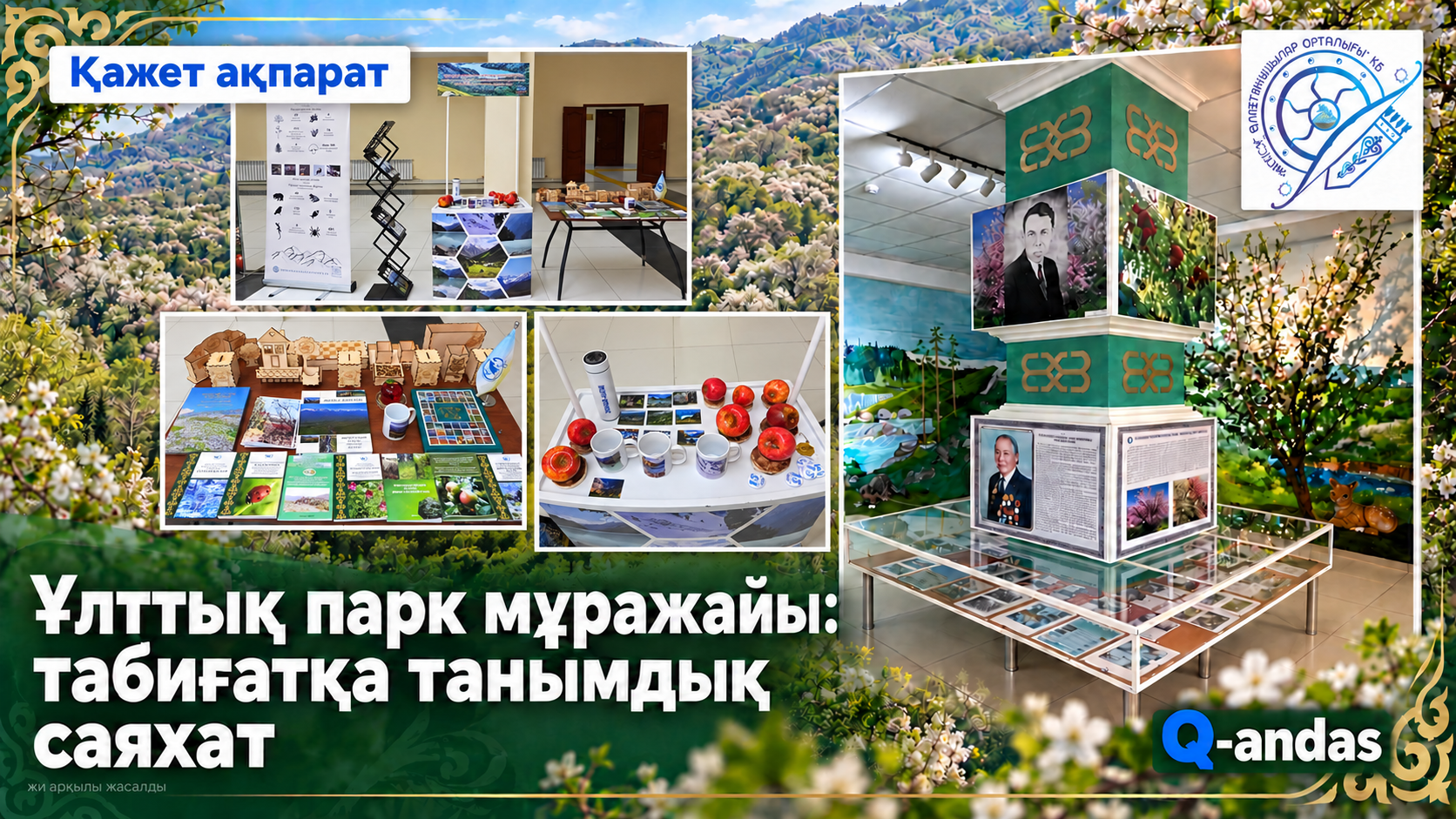
Within the national park’s organisational structure, the nature museum links science, education and tourism. It houses reference collections of flora and fauna that introduce visitors to the specially protected natural area’s natural features at an early stage. For schoolchildren and university students, the museum provides a platform for environmental education through environmental lessons and educational guided tours. It also serves as a starting point for visits to tourist routes. It helps tourists understand what they will see along a route, what they should pay attention to and which rare animals they may encounter. The museum is a key component of year-round tourism: in poor weather or winter, it remains a principal visitor attraction.
Within a specially protected natural area, a museum redirects visitor flows from sensitive zones towards information areas, satisfying tourists’ curiosity without harming the ecosystem. In this way, scientific data presented in museum exhibitions become an educational resource and an important component of the national park’s high-quality tourism offering.
The nature museum of Zhongar-Alatau State National Nature Park focuses on promoting the area’s natural heritage and informing visitors about the park’s natural complexes, biodiversity and conservation status.
Unlike traditional museums, a national park’s nature museum operates in close connection with the natural environment, serving as an intermediary between scientific research and the practical use of the area for tourism. Its exhibitions draw on field observations, scientific data and ecosystem monitoring results.
Raising environmental awareness is a priority for the nature museum. The national park’s museum features photographic material about the park’s flora and fauna, information about scientists who contributed to research on the Sievers apple, and a tourism corner presenting the park’s routes and ecological trails.
Work with younger generations is particularly important and seeks to foster an environmental worldview and sustainable patterns of behaviour in natural settings. Guided tour programmes are tailored to each age group and designed to explain and explore the subject matter. The quality of tour content and the guide’s professional expertise also deserve attention, as these elements shape visitors’ overall impressions of a tour. In this respect, national park specialists demonstrate a high level of preparation, turning each guided tour and environmental lesson into an engaging exploration of the region’s history and nature.
Museum lessons, thematic guided tours and educational programmes help develop environmental thinking and a sense of responsibility for conserving natural heritage. In this context, the museum fulfils an important social and educational mission. Environmental awareness activities in the museum not only broaden visitors’ horizons but also encourage sustainable behaviour among tourists within the national park.
The museum thus serves as an educational platform that complements formal education and helps develop environmental responsibility.
Environmental awareness activities delivered through museum exhibitions help reduce human pressure on natural complexes by increasing visitors’ environmental awareness.
The nature museum plays a significant role in developing environmentally focused educational tourism by providing scientific and informational support for tourist routes. Here, tourists receive initial information about the sites they will visit and learn about route conditions, rules of conduct in specially protected natural areas and preparations for hiking trips.
Museum exhibitions therefore prepare visitors to understand the natural features and processes encountered on the park’s ecological trails and tourist routes. This promotes a deeper understanding of natural phenomena and enhances the educational value of the tourism experience.
The nature museum functions as an interpretation centre, providing a meaningful connection between scientific knowledge and the practical experience of visiting the area.
Current trends in tourism development call for interactive and innovative approaches to museum activities. Multimedia technologies, interactive exhibitions, travelling exhibitions, and integration with visitor centres and ecological trails can broaden the museum’s audience and improve the effectiveness of environmental awareness activities.
The nature museum of Zhongar-Alatau State National Nature Park is an important centre for environmental awareness and the development of environmentally focused educational tourism. It combines scientific, educational and cultural functions, helping foster environmentally responsible attitudes towards nature and enhance the area’s appeal as a tourist destination.
The development of museum activities in national parks should be regarded as a key approach to conserving natural heritage and providing environmental education for the public.
References:
- Law of the Republic of Kazakhstan No. 175 of 7 July 2006, “On Specially Protected Natural Areas”.
- Rules for Tourism and Recreational Activities in State National Nature Parks. Order No. 73 of the Minister of Ecology, Geology and Natural Resources of the Republic of Kazakhstan, dated 5 March 2022.
- Aleksandrova, A. Yu. Ecological Tourism. Moscow: KNORUS, 2018. 256 pp. [In Russian.]
- Kozhevnikov, N. N. Environmental Awareness and Education in Specially Protected Natural Areas. Ekologiya i obrazovanie [Ecology and Education], 2019, No. 2, pp. 15–21. [In Russian.]
- Kotlyarova, I. V. Nature Museums as a Tool for Environmental Education. Vestnik muzeynogo dela [Museum Studies Bulletin], 2020, No. 1, pp. 34–40. [In Russian.]
- Pechyorina, K. S. The Role of Visitor Centres and Museums in the Development of Ecotourism in National Parks. Turizm i ustoychivoe razvitie [Tourism and Sustainable Development], 2021, No. 3, pp. 48–55. [In Russian.]
- https://zhongar-alatau.kz/ – Materials of the Republican State Institution “Zhongar-Alatau State National Nature Park”.
Ramazanova A.M.
Zhongar-Alatau State National Nature Park, Republican State Institution, Sarkan, Zhetisu Region, Kazakhstan
e-mail: ramazanova101@mail.ru