Annotation: This article examines the ecological grouping of insect pests associated with the wild apple Malus sieversii in the Zhetysu region. The pests were classified according to their feeding specialization and the plant organs they damage, including leaf-feeding (phyllophagous), wood-feeding (xylophagous), and fruit- and reproductive organ-feeding (carpophagous) species. A total of 117 pest species were identified on Malus sieversii. The results showed that phyllophagous insects were the dominant ecological group, accounting for 62.4% of all recorded species, while carpophagous and xylophagous species represented 21.4% and 16.2%, respectively. The obtained data expand current knowledge of the biological and ecological characteristics of pests of wild apple and provide a scientific basis for improving conservation and pest management strategies.
Keywords: Malus sieversii, wild apple, insect pests, ecological groups, phyllophagous insects, xylophagous insects, carpophagous insects, biodiversity.
Introduction. Sievers apple (Malus sieversii (Ledeb.) M.Roem.) is a rare relict plant of global importance and is regarded as an ancestor of cultivated apple varieties. Its natural range is concentrated in wild fruit forests of southern and southeastern Kazakhstan, from the Tarbagatai Mountains to the Pamir-Alay. These forests play a distinctive role in conserving biodiversity and provide natural habitats for many invertebrates, including insects [1, 2].
In recent years, natural and human-induced factors have reduced the area of Sievers apple forests and worsened the phytosanitary condition of the trees. One of the main factors adversely affecting the stability of forest ecosystems is the diversity of insect pests and their damage to various plant organs. By feeding on leaves, buds, flowers, fruits, bark, and wood, insects weaken the physiological condition of trees, reduce their productivity, and facilitate the spread of various pathogens [3, 4].
Although several studies have examined the species composition and bioecological characteristics of Sievers apple pests [1, 3, 5, 6], organizing information on their ecological groups and feeding specialization is important for protecting natural populations. Classifying pests by the organs they damage helps improve phytosanitary monitoring, identify harmful species in a timely manner, and develop scientifically grounded protective measures [7–9].
Accordingly, this study aimed to classify insect pests feeding on Sievers apple in the Zhetysu region into ecological groups according to the plant organs they damage and to determine the characteristics of their distribution and their relative proportions.
Materials and methods
Study material was collected during the 2018–2019 and 2023–2024 field seasons through transect surveys of natural Sievers apple populations in Zhongar-Alatau State National Nature Park. Standard entomological methods were used to observe and collect insects: the leaves, reproductive organs, bark, trunks, and branches of trees were examined, and mobile insects were captured with an insect net. Collected specimens were identified from morphological characters using identification keys, and species names were checked against available scientific sources [10, 14].
The identified species were assigned to three ecological groups according to the plant organs they damaged: phyllophages (leaf feeders), xylophages (feeders on the structural parts of trees), and carpophages (feeders on reproductive organs, buds, and fruits). The percentage of each group was calculated as P = n/N × 100, where n is the number of species in the group and N is the total number of recorded species (N = 117). Results were rounded to one decimal place.
Results
Insects damage plants through feeding and egg laying and by transmitting fungal, bacterial, and viral diseases [10–13]. Feeding damage is the most common type of harm.
Insects generally specialize in particular organs, selecting leaves, fruits, wood, roots, or other plant parts as food. Species damaging leaves are termed phyllophages; those damaging fruits, carpophages; those damaging wood, xylophages; and those damaging roots, rhizophages. The feeding sites on Sievers apple used by the identified pests were determined (Table 1).
Table 1 — Pest species feeding on leaves
| Order | Family | Species |
| Homoptera — homopterans | Aphididae — aphids | Aphis pomi De Geer; Dysaphis mali Ferrari; Dysaphis devecta Walker; Eriosoma lanigerum Hausmann |
| Homoptera | Cicadellidae — leafhoppers | Typhlocyba rosae L. |
| Homoptera | Coccidae — soft scales | Parthenolecanium corni Bouché; Parthenolecanium persicae Fabricius; Eulecanium mali Borchsenius; Palaeolecanium bituberculatum Signoret; Rhodococcus turanicus Archangelskaya |
| Hemiptera — true bugs | Tingidae — lace bugs | Stephanitis pyri Fabricius |
| Coleoptera — beetles | Scarabaeidae — scarab beetles | Phyllopertha horticola L.; Maladera holosericae Scopoli |
| Coleoptera | Curculionidae — weevils | Phyllobius pyri L.; Phyllobius urticae De Geer; Phyllobius oblongus L. |
| Coleoptera | Chrysomelidae — leaf beetles | Chrysomela tremulae Fabricius; Melasoma populi L.; Luperus xanthopoda Schrank |
| Hymenoptera — hymenopterans | Pamphiliidae — web-spinning sawflies | Neurotoma saltuum L.; Croesus septentrionalis L. |
| Diptera — flies | Cecidomyiidae — gall midges | Dasyneura pyri Bouché; Dasyneura mali Kieffer |
| Diptera | Agromyzidae — leaf-miner flies | Phytomyza heringiana Hendel |
| Lepidoptera — moths and butterflies | Tortricidae — tortricid moths | Cydia (Laspeyresia) pomonella Linnaeus; Laspeyresia pyrivora Danilevsky; Spilonota albicana Motschulsky; Grapholita molesta Busck; Spilonota ocellana Denis & Schiffermuller; Archips rosana Linnaeus; Archips crataegana Hubner; Archips podana Scopoli; Acleris variegana Denis & Schiffermuller; Argyrotaenia ljungiana Thunberg; Eupoecilia ambiguella Hubner; Hedya nubiferana Haworth; Cacoecia xylosteana Linnaeus; Ptycholoma lecheana Linnaeus; Adoxophyes orana Fischer v.Roslerstamm; Ancylis selenana Guenee; Acleris ferrugana Denis & Schiffermuller |
| Lepidoptera | Glyphipterygidae — glyphipterigid moths | Simaethis pariana Clerck |
| Lepidoptera | Yponomeutidae — ermine moths | Yponomeuta malinellus Zeller; Yponomeuta padellus L. |
| Lepidoptera | Gemiostomidae — leaf-miner moths | Leucoptera malifoliella Costa; Cemiostoma scitella Zeller |
| Lepidoptera | Lyonetiidae — slender leaf-miner moths | Lyonetia clerckella Linnaeus |
| Lepidoptera | Momphidae — momphid moths | Lastodacna putripennella Zeller |
| Lepidoptera | Lithocolletidae — leaf-miner moths | Callisto denticulella Thunberg; Gammaornix petiolella Frey; Lithocolletis blancardella Fabricius; Lithocolletis corilifoliella Hübner |
| Lepidoptera | Gelechiidae — twirler moths | Recurvaria nanella Denis & Schiffermüller; Recurvaria leucatella Clerck |
| Lepidoptera | Stigmeleidae — pygmy moths | Stigmella malella Stainton |
| Lepidoptera | Pyralidae — pyralid moths | Eurrhypara hortulata Linnaeus |
| Lepidoptera | Geometridae — geometer moths | Operophthera brumata Linnaeus; Oporinia autumnata Borkhausen; Lycia hirtaria Clerck; Chloroclystis rectangulata Linnaeus; Opisthograptis luteolata Linnaeus |
| Lepidoptera | Noctuidae — owlet moths | Autographa gamma Linnaeus; Atethmia ambusta Denis & Schiffermuller; Agrotis segetum Denis & Schiffermuller; Agrotis ipsilon Hufnagel; Apatele tridens Denis & Schiffermüller |
| Lepidoptera | Lymantriidae — tussock moths | Euproctis chrysorrhoea Linnaeus; Lymantria dispar Linnaeus; Orgya antiqua Linnaeus |
| Lepidoptera | Arctiidae — tiger moths | Phragmatobia fuliginosa Linnaeus; Hyphantria cunea Drury |
| Lepidoptera | Pieridae — whites | Aporia crataegi Linnaeus |
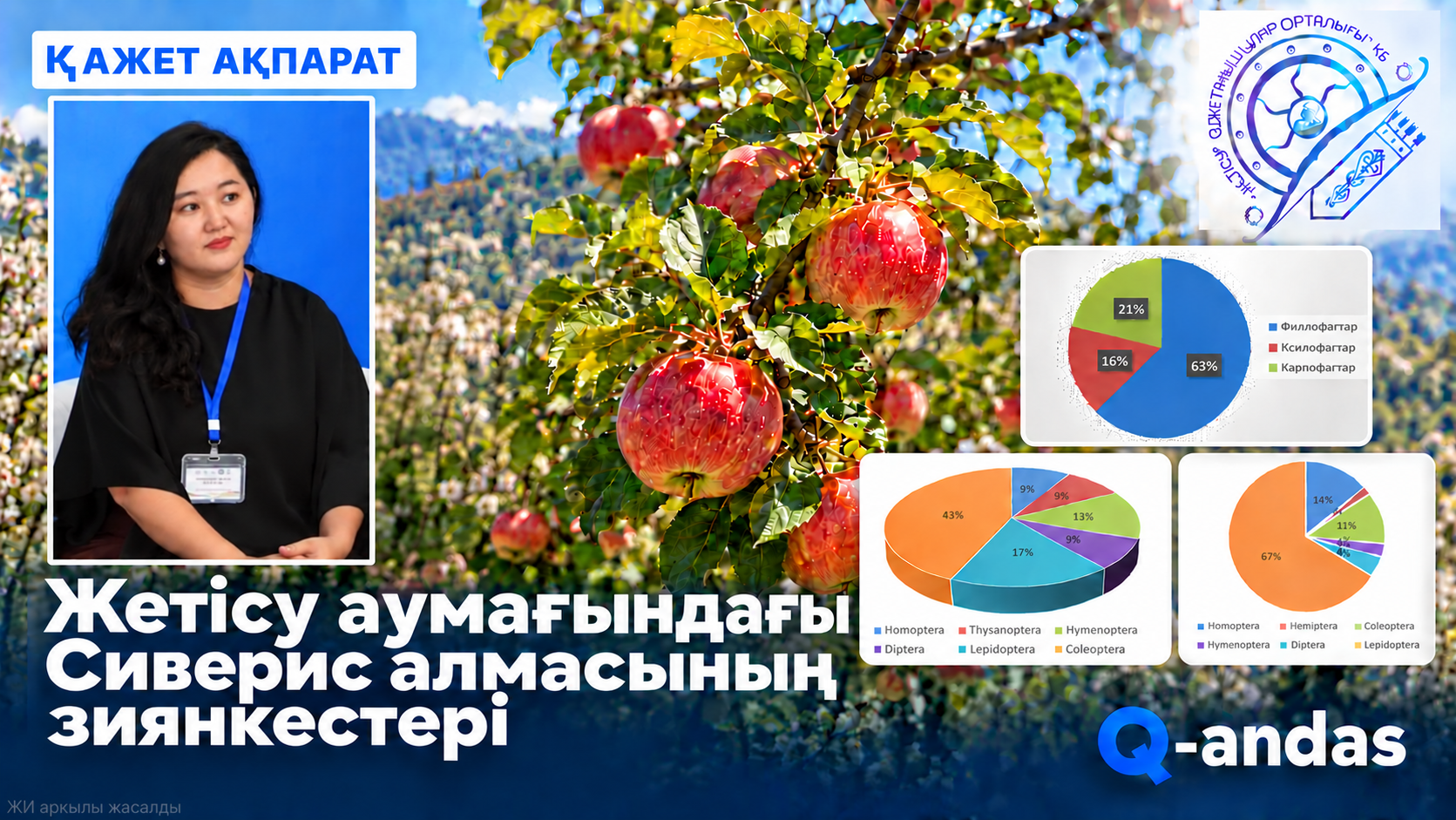
Table 1 shows that leaf-feeding species occur in every order identified, although most belong to Lepidoptera. This is also evident in Figure 1.
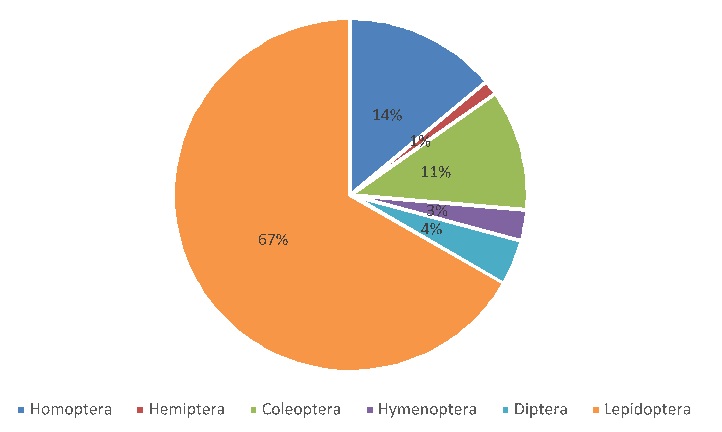
Figure 1 — Pest species feeding on Sievers apple leaves.
According to Figure 1, Lepidoptera account for the largest share of leaf-feeding insects (67%), followed by Homoptera (14%) and Coleoptera (eight species; 11%). Diptera account for 4%, Hymenoptera for 3%, and Hemiptera for the smallest share, just 1%. Some species feed on the structural parts of trees (Table 2).
Table 2 — Pest species feeding on the structural parts of trees
| Order | Family | Species |
| Homoptera — homopterans | Diaspididae — armored scales | Epidiaspis leperii Signoret; Diaspidiotus prunorum Laing; Diaspidiotus ostreaeformis Curtis; Lepidosaphes ulmi L.; Lepidosaphes malicola Borchsenius |
| Homoptera | Eriococcidae — felt scales | Acanthococcus lagerstroemiae Kuwana |
| Homoptera | Pseudococcidae — mealybugs | Coccura comari Kunow |
| Coleoptera — beetles | Cerambycidae — longhorn beetles | Tetrops praeusta L.; Cleroclytus semirufus collarius Jakovlev; Molorchus schmidti Ganglbauer; Turanium badenkoi Danilevsky; Trichoferus campestris Faldermann; Tetrops formosus bivittulatus Jankowski; Tetrops formosus songaricus Kostin |
| Coleoptera | Scolytidae — bark beetles | Scolytus mali Bechstein; Scolytus rugulosus Müller; Xyleborus dispar Fabricius |
| Coleoptera | Buprestidae — jewel beetles | Chrysobothris affinis nevskyi Richter |
| Coleoptera | Anobiidae — woodboring beetles | Cacotemnus rufipes Fabricius |
| Lepidoptera — moths and butterflies | Cossidae — carpenter moths | Zeuzera pyrina Linnaeus; Cossus cossus Linnaeus |
Table 2 shows that species belonging to Homoptera, Coleoptera, and Lepidoptera feed on tree bark, trunks, and branches. This is illustrated in Figure 2.
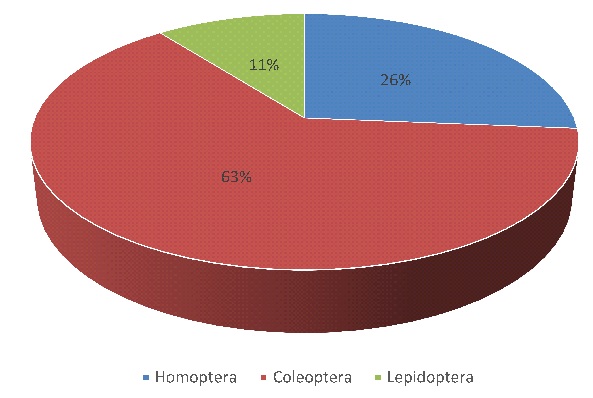
Figure 2 — Percentage distribution of pests feeding on the structural parts of Sievers apple trees.
Figure 2 shows that beetles (Coleoptera) predominate among species specializing in the structural parts of trees. Homoptera rank second. Only two species of Lepidoptera prefer to feed on these parts [14–15]. Some species also feed on the reproductive organs of Sievers apple (Table 3).
Table 3 — Pest species feeding on reproductive organs and buds
| Order | Family | Species |
| Homoptera — homopterans | Psyllidae — jumping plant lice | Psylla mali Schmidberger; Psylla pyri Linnaeus |
| Thysanoptera — thrips | Phlaeothripidae — tube-tailed thrips | Haplothrips reuteri Karny; Frankliniella intonsa Trybom |
| Coleoptera — beetles | Scarabaeidae — scarab beetles | Epicometis hirta Poda; Oxythyrea funesta Poda |
| Coleoptera | Curculionidae — weevils | Anthonomus pomorum L.; Sciaphobus squalidus Gyllenhal; Psalidium maxillosum Dejean |
| Coleoptera | Rhynchitidae — leaf-rolling weevils | Rhynchites bacchus L.; Rhynchites giganteus Kryn; Neocoenorhinidius pauxillus Germar; Coenorrhinus aequatus L.; Haplorhynchites coeruleus De Geer |
| Hymenoptera — hymenopterans | Tenthredinidae — common sawflies | Hoplocampa testudinea Klug; Hoplocampa brevis Klug; Hoplocampa minuta Christ |
| Diptera — flies | Cecidomyiidae — gall midges | Thomasiniana oculiperda Rubsaamen |
| Diptera | Tephritidae — fruit flies | Rhagoletis pomonella Walsh |
| Lepidoptera — moths and butterflies | Gemiostomidae — leaf-miner moths | Argyresthia conjugella Zeller |
| Lepidoptera | Gelechiidae — twirler moths | Anarsia lineatella Zeller |
| Lepidoptera | Coleophoridae — casebearer moths | Coleophora hemerobiella Scopoli |
| Lepidoptera | Geometridae — geometer moths | Erannis defoliaria Clerck |
Table 3 shows that several species in each of the recorded orders specialize in feeding on reproductive organs and buds, including flowers, stamens, pistils, and fruits. This is also shown in Figure 3.
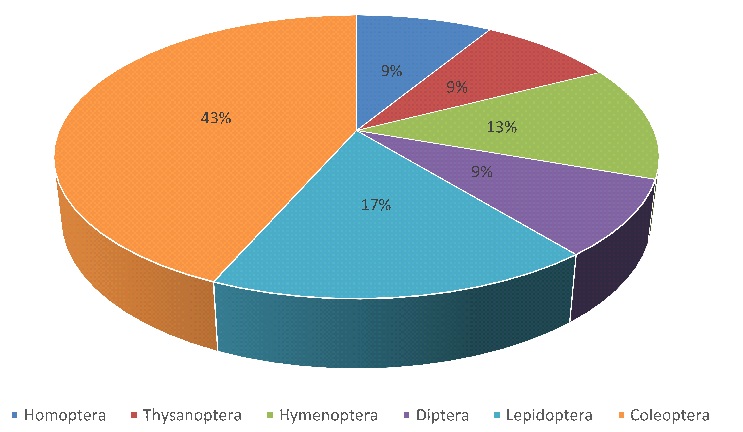
Figure 3 — Percentage distribution of pests feeding on reproductive organs and buds.
According to Figure 3, Coleoptera have the largest share among species feeding on reproductive organs, at 43%. Lepidoptera rank second among species feeding on flowers, stamens, pistils, buds, and fruits. Hymenoptera rank third, while the remaining orders—Homoptera, Thysanoptera, and Diptera—have equal numbers of species feeding on Sievers apple reproductive organs and buds.
After the feeding specialization of all species had been determined, the ecological groups of pests were analyzed by the nature of their effects and the location of damage on Sievers apple (Table 4).
Table 4 — Ecological groups of pests by damaged organs and nature of their effects on Sievers apple
| Damaged organs | Number of orders | Number of species | Percentage |
| Leaf feeders | 6 | 73 | 62.4% |
| Feeders on structural parts | 3 | 19 | 16.2% |
| Feeders on reproductive organs and buds | 6 | 25 | 21.4% |
| Total | 117 | 100% |
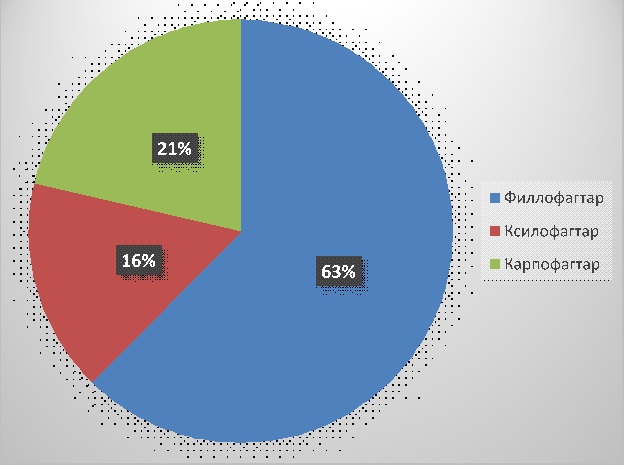
Figure 4 — Ecological groups of pests by damaged organs and nature of their effects on Sievers apple.
Figure 4 and Table 4 show that phyllophages—species specializing in leaves—predominate among the ecological groups (62.4%). Carpophages, which feed on fruits and other reproductive organs, rank second; xylophages, which feed on the structural parts of trees, rank third (16.2%).
Conclusion
The study established the ecological structure of insect pests inhabiting Sievers apple trees in the Zhetysu region. A total of 117 pest species were recorded and classified as phyllophages, xylophages, or carpophages according to the plant organs they damage.
Leaf-feeding phyllophages were the dominant group, accounting for 62.4%. Carpophages damaging reproductive organs and fruits accounted for 21.4%, while xylophages feeding on the structural parts of trees accounted for 16.2%. Lepidoptera had the largest share among leaf-feeding pests. Most species specializing in wood and bark belonged to Coleoptera. Beetles also had a high share among species damaging reproductive organs.
These findings describe the feeding specialization of insect pests in Sievers apple populations and patterns in their distribution among ecological groups. They can provide an important scientific basis for assessing the phytosanitary condition of natural wild apple forests, monitoring pests, and planning scientifically grounded protective measures. The results also add to entomological research aimed at conserving the biodiversity of Sievers apple forests in Kazakhstan and protecting them over the long term.
Әдебиеттер тізімі / Список литературы / References
Төмендегі библиографиялық жазбалар екі аудармаға да ортақ; жарияланған еңбектердің атаулары түпнұсқа тілінде сақталды.
- Мухамадиев Н.С., Ашикбаев Н.Ж., Меңдібаева Г.Ж., Болат Ж., Кеңес Н., Мусин Т.О. Основные виды дефолиаторов яблони Сиверса (Malus sieversii) в Джунгарском и Заилийском Алатау // Известия Национальной академии наук Республики Казахстан. – 2017. – Т. 3, № 39. – С. 147–151.
- Сагитов А.О., Мухамадиев Н.С., Ашикбаев Н.Ж. и др. К дендрохронологическим исследованиям яблони Сиверса в дикоплодовых лесах Юго-Востока Казахстана // Инновационные экологически безопасные технологии защиты растений: материалы международной конференции. – Алматы, 2015. – С. 171–175.
- Исин М.М., Джуманова Ж.К., Солтанбеков С.С., Омаров Е.Е. Испытание инсектицидов гормонального действия, биопрепаратов и фунгицидов против вредных организмов на яблоне Сиверса в Заилийском Алатау // Вестник сельскохозяйственной науки Казахстана. – 2016. – Т. 10, № 9. – С. 44–49.
- Митяев И.Д., Ященко Р.В., Казенас В.Л. Удивительный мир беспозвоночных. По страницам Красной книги Казахстана. – Алматы: Алматы кітап, 2005. – 115 с.
- Кащеев В.А., Тлеппаева А.А. Материалы по фауне супралиторальных членистоногих Большого Алматинского озера (Илейский Алатау) // Известия МН-АН Республики Казахстан. Серия биологическая. – 1997. – № 2. – С. 16–19.
- Кадырбеков Р.Х., Тлеппаева А.М. Обзор жуков-дровосеков (Coleoptera, Cerambycidae) Алматинской области // Tethys Entomological Research. – 2008. – Т. 16. – С. 45–58.
- Кабак И.И. Жужелицы (Coleoptera, Carabidae) гор юга и юго-востока Казахстана // Видовое разнообразие насекомых и паукообразных в горных экосистемах юга и юго-востока Казахстана: заключительный отчет о научно-исследовательской работе за 2000–2002 гг. – Алматы: Институт зоологии МОН РК, 2002. – 226 с.
- Есенбекова П.А. К фауне полужесткокрылых долины среднего течения р. Или // Вестник КазНУ. Серия биологическая. – 2006. – № 2 (28). – С. 68–78.
- Джанокмен К.А. Предварительный список видов птеромалид (Hymenoptera, Chalcidoidea, Pteromalidae) Казахстана и Средней Азии // Tethys Entomological Research. – 2003. – Т. 8. – С. 215–238.
- Вредители и болезни полезащитных лесных насаждений и меры борьбы с ними / под ред. В.Н. Старка. – Л.: Государственное издательство сельскохозяйственной литературы, 1951. – 326 с.
- Кащеев В.А. Справочник насекомых-вредителей яблонь в дикорастущих плодовых лесах и садах Казахстана. – Алматы, 2010. – 156 с.
- Матесова Г.Я., Митяев И.Д., Юхневич Л.А. Обзор насекомых, повреждающих плодово-ягодные культуры и виноградную лозу в Юго-Западном Казахстане // Материалы по изучению насекомых Казахстана. – Алма-Ата: АН КазССР, 1962. – С. 3–46.
- Казенас В.Л. Фундаментальной энтомологической науке — новый стимул // Доклады НАН РК. – 2001. – № 4. – С. 74–79.
- Jashenko R., Tanabekova G. Insects that damage the wild populations of Malus sieversii in Kazakhstan // IOP Conference Series: Earth and Environmental Science. – 2019. – Vol. 298. – Art. 012018. https://doi.org/10.1088/1755-1315/298/1/012018.
- Jashchenko R., Tanabekova G.B., Lu Z. Assessment of biological and ecological characteristics of Malus sieversii pests in the Trans-Ili Alatau, Kazakhstan // Sustainability. – 2023. – Vol. 15, No. 14. – Art. 11303. https://doi.org/10.3390/su151411303.
Tanabekova G.B.¹˒²
¹ Institute of Zoology, Science Committee of the
Ministry of Science and Higher Education of the Republic of Kazakhstan
² Al-Farabi Kazakh National University
tanabekova.guli@gmail.com
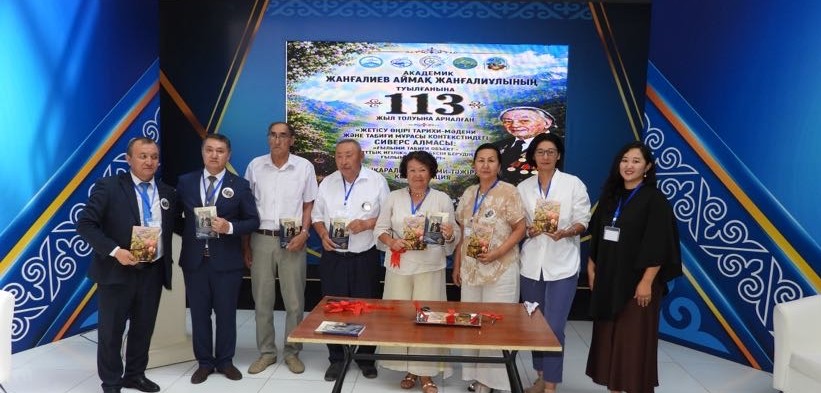
As part of the conference, Gulzhanat Bakytovna Tanabekova’s book “Insect Pests of Sievers Apple in the Ile and Zhetysu Alatau Mountains” was launched.