At first glance, it may seem that the researchers who came before us have already uncovered everything there was to discover. Yet science has always sought new discoveries and renewal. As the state, society, and human life change, new ideas and scientific findings continue to emerge, moving human civilization forward.
Introduction (Beginning)
From this perspective, journalism, like other social sciences, has gone through a process of formation and development in the countries of Central Asia. If individual elements of journalism began to appear in Central Asian countries as early as the nineteenth century, then in the twentieth century this field began to influence virtually every sphere of public life, particularly through the development of the press.
The outstanding Kazakh intellectual Akhmet Baitursynov famously said: «A newspaper is the eyes, ears, and tongue of the people.» Indeed, in every era and under every circumstance, the press sought to observe what was happening around the people, hear their many grievances and concerns, and convey the views of society to the wider world.
Unfortunately, the Soviet regime prohibited access to some of the newspapers and journals published in Central Asia in the early twentieth century, along with the historical, educational, and informational materials they contained. Following the collapse of the Soviet Union and the independence of several Central Asian states, however, materials that had remained inaccessible to researchers for seventy years gradually became available. This also made it possible to reconsider and investigate some of the «blank pages» of history.
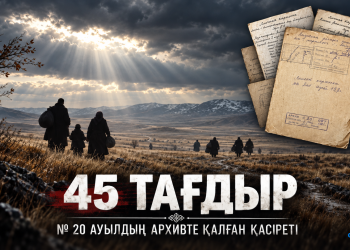
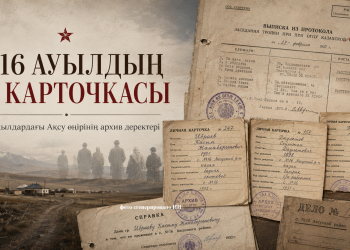
Among them was the national liberation uprising of 1916, which spread across several countries of Central Asia. Historians and writers began working actively in this direction, searching through archives and bringing numerous valuable materials before the public. The influence of the heroic struggle waged by our ancestors on the later aspirations for independence thus became evident at an early stage.
As a result, the superficial assessments of the 1916 uprising found in the 1979 edition of the «History of the Kazakh SSR and in the Kazakh Soviet Encyclopedia», where the uprising was treated only briefly, could finally be challenged. Other previously hidden pages of history gradually began to emerge as well.
Unfortunately, we have still not paid sufficient attention to articles published in the contemporary press concerning the nature, development, and consequences of the uprisings that took place across different regions of Central Asia. We have often become accustomed either to viewing press materials as lacking sufficient scholarly value or simply treating newspapers and journals as temporary products of their era. As a result, we leave historians to work with archives and turn to documents covered in dust.
I do not intend to deny the importance of this approach. However, when it comes specifically to the 1916 uprising, I became convinced that it is particularly important to study publications concerning the uprising in Kazakh, Kyrgyz, Uyghur, and Uzbek newspapers and journals published between 1910 and 1925.
As Professor M. Koigeldiev has observed, «newspaper materials are exceptionally valuable sources for studying and understanding the various social processes that took place in Kazakh society during the first two decades of the twentieth century.»
The reason is that much of the archival material from that period was produced from the perspective of those who suppressed the uprising. Most of these records were aimed at denigrating and punishing the indigenous population and portraying them as ignorant, backward, savage, and violent.
Newspapers and journals, by contrast, wrote in defense of the local population that had risen in revolt, describing their grievances, suffering, and hardships. Through the press, it is possible to learn about the tensions that existed in Central Asian societies at the time, social inequality, and the conflicts that emerged between different social groups. Such materials can therefore bring us closer to the historical truth.
For this reason, in order to understand the causes and consequences of the 1916 uprising, determine its results, and uncover evidence of facts that had previously remained unspoken, it became necessary to examine the contemporary press patiently and systematically.
First, I had to study the newspapers and journals written in the Arabic script and preserved in the Rare Collections Department of the National Library of the Republic of Kazakhstan.
I do not mean to suggest that this issue had previously been ignored by Kazakh historians who have studied the subject. The second volume of the 21-volume series The Kazakh National Liberation Movement, prepared jointly by the Ministry of Culture and Information of the Republic of Kazakhstan and the Association of Historians of Kazakhstan, includes Cyrillic-transliterated versions of a number of articles published in Arabic-script newspapers such as «Qazaq», «Alash», «Saryarqa», «Jas Azamat», «Birik Tusy», «Ush Juz», «Ushqyn», and «Enbekshi Qazaq».
Unfortunately, however, these materials do not provide a complete account of the 1916 uprising. I also discovered that complete versions of articles published in other newspapers and journals, as well as articles published in various periodicals in 1926 on the tenth anniversary of the uprising, have still not been prepared. Some individual texts have appeared in certain books and collections, but not the full body of material.
The subject was also widely discussed in newspapers and journals published in Kyrgyz, Uyghur, Bashkir, Tatar, Nogai, Uzbek, Russian, and Chinese. I have not yet been able to examine Tajik-language publications because of the language barrier.
Yet the task of collecting these materials systematically and drawing scholarly conclusions from them has still not been undertaken on a sufficient scale.
For this reason, as a first step, I had to examine 128 newspapers and journals written in the Arabic script and published in Kazakh, Kyrgyz, Uyghur, Uzbek, Bashkir, Nogai, and Tatar. These are preserved in the Rare Collections and Manuscripts Department of the National Library of the Republic of Kazakhstan.
Eighty-four of them are Kazakh-language newspapers and journals. Among them, the newspaper «Qazaq», published between 1913 and 1918 and serving as the official newspaper of the «Alash Party», as well as «Birik Tusy» and «Saryarqa», covered this subject consistently and extensively.For this reason, I consider the materials published in «Qazaq», «Birik Tusy», and «Saryarqa» to be exceptionally valuable primary sources for studying this issue.
I therefore began painstakingly collecting complete versions of materials published in «Qazaq» that had not been included in the aforementioned collection. During the research, I also accumulated articles from Kyrgyz, Bashkir, Tatar, Nogai, Uyghur, and Chinese-language publications.
Interestingly, despite dealing with the same subject, these publications often present different arguments and conclusions, and in some cases their views directly contradict one another.I therefore decided to separate and classify the articles by language before attempting to draw an overall conclusion.
The Uprising as Reflected in the Kazakh-Language Press and The Question of Conscripting Kazakhs into Military Service
Until recently, I believed that the national liberation uprising of 1916 had taken place only in Kazakhstan, particularly in the Almaty region.
However, as I delved deeper into the subject, I began to understand that the uprising first broke out in Tajikistan, then spread to Uzbekistan, continued in Kyrgyzstan, and subsequently reached Kazakhstan, with its consequences extending into China in the form of flight and mass displacement. Even within Kazakhstan, researchers still disagree about the scale and scope of the upheaval. Each tends to approach the issue primarily from the perspective of their own region or clan, and a common conclusion has yet to be reached.
In short, I believe that the uprising of 1916 should not be viewed as a merely regional event. It should be understood as a broader Central Asian struggle — and perhaps as part of humanity’s wider struggle for freedom. It is known that national liberation uprisings also took place in India and Algeria during the same year and around the same period. Perhaps there was an internal connection between all these events that we have not yet fully recognized. We will discuss this in greater detail in our future publications. Nevertheless, one thing is clear: in the Kazakh steppe, the spark that ignited the uprising was the issue of conscripting Kazakhs into military service.
Russia’s enormous human losses during the military campaigns of 1914–1916 further aggravated the problem of manpower. The government therefore introduced various measures to make up for the shortage. One such measure was the recruitment of the “native” peoples of Central Asia and Siberia for defense and military construction work.
In September 1915, Tynyshpayev was informed by Chaev M., head of military construction work for the Russian army, that the conscription of Kazakhs into military service was being considered.
Beginning in November of that year, «Qazaq» published several articles discussing the possible reasons and implications of the issue, including «The Conscription of Kazakhs», «On the Conscription of Kazakhs», «The Views of Nogai Newspapers on the Conscription of Kazakhs», and «The Congress of the Right-Wing Parties», among others.
I do not know why these materials were not included in collections published on the 1916 national liberation uprising.
Perhaps historians considered them unrelated to the uprising itself. But from a journalistic perspective, it is clear that these publications in «Qazaq» subsequently became the basis for reporting on the Tsar’s June 25 Decree, the emergence of the uprising, and the events surrounding assistance to Kazakh and Kyrgyz refugees after the uprising.
These materials also provide an important opportunity to understand, from a historical perspective, the position of the Kazakh intelligentsia on the question of military conscription. It is equally important to examine the series of materials based on articles published in Russian, Bashkir, Nogai, and Tatar newspapers concerning issues discussed in the State Duma even before the June 25 Decree was issued.
In fact, the question of conscripting Kazakhs into military service had already been raised in 1883, when Kazakh representatives who travelled to the coronation celebrations of Tsar Alexander III themselves petitioned for Kazakhs to be admitted into Cossack military service. The issue was also raised during the tenure of War Minister Sukhomlinov. He too opposed the conscription of Kazakhs.
According to «Qazaq», the question of conscripting Kazakhs began to appear in Russian newspapers during the second half of 1915, including «Russkoye Slovo», «Novoye Vremya», «Birzhevye Vedomosti», and «Utro Rossii».
As reported by the newspaper, War Minister Sukhomlinov opposed the idea.
An article in «Qazaq», drawing on reports published in «Birzhevye Vedomosti», stated that before preparing a law on the conscription of Kazakhs, the government had decided that it was necessary to collect information, examine the matter, and determine whether such conscription was possible.
After the information had been collected and examined, a memorandum was prepared around July 1914 arguing that Kazakhs were supposedly unsuitable for military service.
The memorandum stated: «The Kazakh is a nomad, and nomadism is incompatible with statehood. The Kazakh people have a low level of culture. They do not know Russian and cannot read or write. They are unaccustomed to soldiers’ food and cannot endure military service» [Qazaq, No. 153].
The Chief of the General Staff, General Mikhnevich, expressed a completely different view when speaking to a correspondent of «Birzhevye Vedomosti»:
«I consider the Kazakh people capable of fulfilling their duties. The Kazakhs are a warrior people. They have lived through and witnessed many different eras. They are skilled horsemen, keen-eyed, and good marksmen. Judging by these qualities, good soldiers could be made from the Kazakhs. If we ask what benefit could come from conscripting Kazakhs, the answer is that the benefit would be considerable. There are approximately twelve million Kazakhs. Six million live in Turkestan and the frontier regions, while another six million live elsewhere. Thus, in terms of numbers, they are a large population, and in terms of their qualities, they could provide good soldiers» [Qazaq, No. 153].
When the correspondent of «Birzhevye Vedomosti» asked a representative of the Ministry of Agriculture about the issue, he replied:
«To think that Kazakhs would be unable to perform military and state service would be to unfairly belittle and insult them. The Kazakhs have experienced many things. They could prove particularly useful in war. It is also incorrect to say that Kazakhs are far removed from Russian culture or that the concept of statehood is alien to them. In recent years, many petitions have been submitted by Kazakhs asking to become settled and to receive land».
«Russkoye Slovo» also raised the question of what would happen if Kazakhs from Akmola, Semipalatinsk, and Turgai regions were conscripted when the State Duma considered the draft law on mobilizing second-category reservists. The military authorities did not support the idea. Although Muslim deputies also strongly supported the conscription of Kazakhs, their efforts produced no result.
Instead, an alternative proposal was raised: to increase the ranks of the militia and send them to the frontier regions rather than directly conscripting Kazakhs into the army.
The newspaper «Utro Rossii» wrote:
«This year, while the State Duma was considering the issue of mobilizing second-category reservists for service in the war, the question arose of beginning to conscript Kazakhs from the Akmola, Turgai, Semipalatinsk, and Semirechye regions. The memorandum accompanying the proposal discussed at length the political, cultural, and religious conditions of the Kazakhs, their way of life and means of livelihood, and concluded on this basis that conscripting Kazakhs into military service was undesirable» [Qazaq, No. 153].
However, certain government institutions, as well as officials and agencies more closely acquainted with the Kazakhs, considered these conclusions unfounded.
Muslim deputies in the State Duma viewed the matter differently:
«The nomadic life of the Kazakhs is neither permanent nor unchanging. As the resettlement of Russian peasants onto Kazakh lands intensifies, the Kazakhs are gradually changing their way of life and means of livelihood. The Kazakhs are keen-eyed, strong riders, and physically resilient. Judging by these qualities, excellent soldiers could be made from them»[Qazaq, No. 154].
Thus, Muslim deputies argued that the six million Kazakh people should be freed from the humiliating descriptions contained in the official memorandum and be allowed to serve in the military on an equal footing with other peoples of Russia.
Some ministers also supported this position.
Representatives of the relevant military authorities stated:
«Conscripting Kazakhs is entirely possible. The belief that Kazakhs are ignorant is unfounded. The Kazakhs have seen and experienced much and are a people of considerable experience» [Qazaq, No. 154].
Thus, those supporting the conscription of Kazakhs included:
- Muslim deputies;
- Muslim newspapers;
- some Kazakhs themselves.
Naturally, each of these institutions and groups had its own interests.
«In brief, their intention was this: the army is the support of the state» [Qazaq, No. 154].
At the same time, some officials were concerned that once a people contributed to the army and thereby gained greater political weight, they might become more independent and difficult to control.
This concern is reflected in a statement by Glinka, head of the relevant military administration, published in Russian newspapers:
«The Kazakh is ignorant and will not fulfill his military duty. He is unsuitable for zemstvo work.»
This alone demonstrates how the colonial imperial system could invoke «ignorance» and “unsuitability for military service” whenever it needed an excuse to deny Kazakhs certain rights.
The newspaper «Orenburgskoye Slovo» also published the argument of a man named Nimurod:
«The claim that Kazakhs do not know Russian is unfounded. To prove this, we need look no further than the present war. In this war, France has enlisted peoples even more backward than the Kazakhs. They did not know French either. Is French culture inferior to ours? Are those peoples in France better than the Kazakhs? The French praise them as disciplined and useful soldiers and are recruiting around a million of them» [Qazaq, No. 166].
The Muslim deputies who supported conscription also clearly had their own calculations.
Muslim newspapers wrote:
«Young men who go into military service will see the world, learn roads and customs, gain experience, and return more mature. In this way, the level of culture among the Kazakhs will rise» [Qazaq, No. 154].
It is important to note that the intentions of the Muslim deputies and Muslim newspapers were not directed against the Kazakhs. On the contrary, they were seeking opportunities for their advancement.
Yet these good intentions were once again drawn into an atmosphere of mistrust and internal contradictions.
This can be seen from the following passage published in «Qazaq» in response to an article in the newspaper «Uaqyt»:
«When a fire breaks out in a house, no one worries about broken windows».
That is true. But conscripting Kazakhs into military service could not be compared with collecting leather, metal, iron, and copper from the population for the needs of war.
If a law on the conscription of Kazakhs were passed, an age limit would have to be established — from infants in the cradle to ninety-year-old men, no one should be taken.
But where were the birth records that could establish a person’s exact age?
Determining the age of a Kazakh was a truly complicated matter. It is true that Kazakhs had unofficial lists. Yet the ages recorded there were rarely accurate. Village officials would simply write down someone’s age without properly asking.
There had previously been little need to establish age precisely among the Kazakhs.
«If someone belonged to one political faction, a twenty-year-old could easily be recorded as forty. If he belonged to the opposing faction, a forty-year-old could just as easily be recorded as twenty» [Qazaq, No. 154].
Qazaq strongly criticized this unfounded accusation as well:
«If Kazakhs are conscripted, their rights will expand, their political weight will increase, and their culture will rise — all of these are beautiful words.But viewed through the eyes of that period, the Kazakh people had already been under Russian rule for nearly two hundred years. That was more than enough time to put the Kazakhs’ birth records in order» [Qazaq, No. 154].
This was a problem shared by all Kazakhs, who were unable to enjoy even basic freedom in their own homeland.
The Tatar-language newspaper «Turmysh» wrote:
«Considering the situation and livelihood of our Kazakh brothers, military service is also highly necessary for them. From now on, it will certainly be impossible to maintain a livelihood by continuing to wander from place to place. It is essential to come into contact with the world of culture, communicate with peoples who have adopted settled ways of life and culture, and learn about their methods of living. If these brothers of ours, who have not yet left the vast Kazakh steppe, are called into military service, they will become acquainted with the lives, worldviews, and general circumstances of other peoples. This will have a significant influence on the overall life of Kazakhstan» [Qazaq, No. 154].
From a political perspective, the issue was even more significant.
By calling the «native» peoples to rear-area labor, the government intended to make use of cheap labor and free Russian workers and peasants for military service and the replenishment of the regular army.
At the same time, the authorities were afraid to arm Kazakhs, Uzbeks, Turkmens, Kyrgyz, and other peoples, fearing that they might eventually turn those weapons against Russia itself.
If Kazakh young men were admitted into military service, the Kazakhs could potentially gain opportunities to build towns, settle permanently, construct mosques, schools, and madrasas, establish a muftiate, elect deputies to the Duma, and obtain other rights.
The government, however, understood these possible consequences and continued to postpone the question of conscripting Kazakhs.
The newspaper «Yulduz», accurately identifying the authorities’ intentions, wrote:
«According to the law of December 27, 1914, taking into consideration the dangers that may arise in the future, the native peoples of the Steppe regions, the population of Turkestan, and Muslims in the Kuban and northern regions are not to be called into military service» [Qazaq, No. 154].
To resolve such an important issue affecting the life of an entire people, it had to be examined from every possible angle. This required a thorough understanding of the people’s economy, environment, character, and aspirations.
Unfortunately, the absence of Kazakh representatives capable of speaking on behalf of the Kazakh people was one reason the question of conscription was not considered at the congress of right-wing and anarchist parties held in Petrograd on November 21, 1915.
The congress was attended by Justice Minister Shcheglovitov, Deputy Interior Minister Beletsky, State Duma members Markov and Zamyslovsky, Professor Lyubikov, and numerous bishops.
The congress was also congratulated by telegram by Interior Minister Khvostov, Justice Minister Khvostov, and Minister of Railways Trepov [Qazaq, No. 159].
Yet even at a gathering of such influential officials, the question of conscripting Kazakhs remained unresolved.
The resolution reported by the newspaper stated:
«To oppose the program proposed by the aforementioned deputy Blagin. To support the right-wing newspapers and take measures to restrict the left-wing press. As for granting equal rights to the native peoples, we shall decide that ourselves after the war» [Qazaq, No. 159].
In issue No. 166 of Qazaq, dated January 24, 1916, several opinions on military service were published.
Salmakbai Kosemisuly argued that, according to the decision of the State Council based on the «Steppe Statute» introduced on March 25, 1891, the Kazakhs of Akmola, Semipalatinsk, Semirechye, Ural, and Turgai regions were exempt from military service until a special order was issued.
Akhmet Zhantalyuly proposed:
«…One representative from each region should be sent to Petrograd. They should explain the situation and demands of the Kazakh people to the government and deputies».
The Kazakh demands are as follows:
- If Kazakhs are to be conscripted, various measures should be taken so that military service does not damage their livelihood and way of life, and they should receive the same privileges as peoples who have long been accustomed to military service;
- Kazakhs should be granted equal rights with Russians and receive land under the relevant legislation;
- Lands taken from the Kazakhs should be administered separately, with local leadership appointed from among the Kazakhs themselves;
- Parliamentary inquiries should be submitted;
- «Zemstvos» and education should be introduced.
In essence, through these proposals, «Qazaq» gradually sought to prepare the population for political demands and for the pursuit of the political equality that Kazakhs had long been denied.
However, there is no concrete evidence showing to what extent these proposals were considered or implemented. Leading representatives of Kazakh society believed that the issue of conscription should not be resolved hastily. The people first had to be prepared. They understood well that one of the greatest obstacles to military service was the population’s lack of knowledge of Russian. Opening schools in the villages and establishing fair local administration would, in their view, benefit the state itself. There was also no properly organized system of birth registration among the Kazakhs. First, measures had to be taken to determine the ages of the population and establish an orderly registration system.
Most importantly, if Kazakhs were eventually conscripted, they should not serve as ordinary infantry.
Like the Cossacks, Kazakhs could serve as cavalry. For that to happen, their rights would have to be made equal to those of the Cossacks, while measures were taken to improve their living conditions. Whatever the case, conscripting Kazakhs during wartime was an extremely hasty step. On the eve of the «June Decree», this was the position held by educated and forward-looking representatives of Kazakh society.
There was, however, an enormous difference between being a soldier and being a Cossack.
The newspaper «Qaza» explained it this way:
«Now let us consider: which is more beneficial for a Kazakh — to become a Cossack or a soldier? To be a soldier means being placed in the position of a peasant.The peasant land allotment is 15 desyatinas, while the Cossack allotment is 30 desyatinas of good land; if the land is poor, the allotment increases. Thus, the difference between the peasant and Cossack allotments remains. In other words, if a peasant receives 30 desyatinas, a Cossack may receive at least 60 desyatinas» [Qazaq, No. 179].
The common people, however, did not agree with this view.
The position of the population was reflected in an article published under the pseudonym «Zhoqshy» in issue No. 179 of Qazaq:
«For a Kazakh, becoming a Cossack is disadvantageous. It is a burdensome service that destroys his spirit. A Kazakh who becomes a Cossack would spend fifteen years, from the age of eighteen to thirty-three – three years of training and twelve years of active service – in military service. Since three or four months of every year would be spent on training, many of those who study would have to spend their time and money traveling back and forth, preventing them from concentrating on their livelihoods. For our already poor, uneducated, and backward Kazakh people, this would become yet another reason to grow accustomed to idleness and disorder» [Qazaq, No. 184].
The State Duma opened on February 9, 1916.
Among the issues under consideration were:
- zemstvos;
- cooperatives;
- amendments to the 1890 zemstvo regulations;
- the complete prohibition of alcohol;
- a congress of zemstvo and municipal organizations;
- equal rights for native peoples;
- granting parliamentary representation to peoples excluded from the Duma under the law of June 3, 1907;
- various civil liberties;
- freedom for political prisoners;
- freedom of the press;
- freedom of assembly and association;
- restoration of the Finnish Constitution;
- a fair resolution of the land question and revision of the November 9 law;
- freedom of religion;
- strengthening the State Duma’s right to submit inquiries to the government, among other issues [Qazaq, No. 168].
Following the opening of the Duma, Qazaq reported that Alikhan Bukeikhanov from Samara, Akhmet Baitursynov from Orenburg, and Nysangali Begimbetov from Aktobe District had gone to Petrograd carrying three principal demands on behalf of the Kazakh people:
- Kazakhs should not be conscripted during the present war;
- before conscription, birth records should be put in order and their administration transferred to the muftiate;
- if conscription proved unavoidable, Kazakhs should not serve as infantry but as cavalry, and they should be granted equal rights with Russians [Qazaq, No. 170].
They met with the Minister of War and government officials and returned with the answer that the matter would be postponed. They were unable, however, to have their demands included in the Duma’s agenda.
After their visit to Petrograd, it became clear through the deputies that many newspaper reports about the existence of a draft law on the conscription of Kazakhs had been unfounded.
Reports that Muslim deputies considered exemption from military service humiliating and supported the conscription of Kazakhs also proved false.
As «Qazaq» wrote:
«The law on the conscription of Kazakhs that the newspapers had been talking about turned out to be a fabrication. The likely source of these rumors was a memorandum prepared by the Minister of War in July 1914, only a few days before the outbreak of the war, for submission to the Council of Ministers. But the memorandum did not call for the conscription of Kazakhs. On the contrary, it argued that they should not be conscripted» [Qazaq, No. 171].
The newspaper provided numerous arguments in support of this position.
According to Qazaq, only Deputy Antonov supported the Kazakh demands at the Duma session of February 15. In response, Alikhan Bukeikhanov, Akhmet Baitursynov, and Mirzhakyp Dulatov published an appeal in Qazaq entitled «To the Citizens of Alash».
«Our message to our people is this: we cannot refuse to comply. We have said this many times before.
…What will be more difficult for the people — obeying or refusing to obey?
If we obey, the livelihood of the people will suffer, and the young men who go may face death and hardship. But the unity of the country will not be broken.If we refuse, if we reject the order of the government under whose authority we live, if we remain at home when the enemy attacks and do not even offer the state the tip of our whip, the government will not simply remain offended. It will use force, acting under the law.»
This was the position of the educated Kazakh intelligentsia of the time. The opinion of the wider Kazakh population, however, was entirely different.
«We cannot give our children to the front. That is all. End of discussion.»
It was not a political strategy or diplomatic calculation. It was spontaneous popular anger. Thus, a contradiction emerged between the leading intellectuals and the broad masses of the population. This situation shows that the Kazakh people were simply not prepared to fight for the empire.
Nevertheless, the Russian government made no serious attempt to understand the condition of the Kazakh people or act accordingly. As a result, discontent began to spread. The historical cause of the Karkara tragedy, however, was not merely the wartime recruitment of people for rear-area labor. That issue was only the visible tip of the iceberg.
The real causes lay much deeper, in contradictions that had accumulated and festered for many years.
In issue No. 172 of Qazaq, dated March 9, 1916, an article entitled «Letter from Petrograd II. What Should Be Done?» was published on the first and second pages.
It raised two main questions.
First, the newspaper invited readers to consider what kind of military service Kazakh young men should perform if the conscription law were adopted.
«There are different types of military service. There is infantry and cavalry. Infantrymen are called «soldiers» in Russian. Cavalry is also of two kinds: one is called «cavalier» or cavalryman, while the other is called «Cossack». The latter are called «mounted Cossacks» by our Kazakhs in the Orenburg region and «Cossack-Russians» in Siberia. There is a great difference between these three forms of military service.The soldier travels on foot and lives in barracks.The cavalryman travels on horseback but also lives in barracks.The Cossack travels on horseback and lives at home, leaving home only when going to war.Compared with the others, Cossack service also has certain advantages in terms of land allotmentsIf a law on the military service of Kazakhs is drafted and submitted to the Duma, what should we become: soldiers, cavalrymen, or Cossacks?»
Of course, it cannot be said that this question was widely debated throughout the population.
Qazaq could not reach every corner of the Kazakh steppe.
People living in mountainous and remote areas, who did not fully understand the issue of military conscription, made their own assumptions and became increasingly agitated. This only deepened the confusion within society. Issue No. 173 of Qazaq, dated March 16, 1916, published an article entitled “Letter from Petrograd III. What Should Be Done Next?” on its first and second pages.
It discussed the question of parliamentary representation:
«When we proudly say in Russia that there are six million of us Kazakhs, we appear to be a large and united people.
But when it comes to action, we seem to shrink and lose all the strength of our numbers.We cannot accomplish what even five million Jews, or even one million Armenians, are accomplishing.The reason Muslims have been unable to establish a bureau is not a lack of numbers or financial means, but a lack of political foresight.”After this, the Kazakh intelligentsia, led by prominent figures, began raising the issue of establishing a bureau attached to the Muslim faction.
According to Qazaq, the annual expenses of a single deputy were calculated as follows:
«Ten rubles a day amounts to 3,600 rubles a year. Rent and office expenses amount to 700-800 rubles, making a total of approximately 4,500 rubles.That is for one person. Two people would require twice as much – about 9,000 rubles.Given the current high cost of living, it is impossible to live in Petrograd on less than ten rubles a day» [Qazaq, No. 173].
Unfortunately, the Kazakh population was unwilling to share these expenses collectively. As a result, when the Third Duma was convened in 1916, the Kazakhs once again failed to elect a representative. Thus, a people without a deputy in the Duma had no effective means of making its voice heard at the highest levels of government. For this reason, the Kazakh intelligentsia was unable to find a way to communicate the growing contradictions in the Kazakh steppe to senior government officials.
At the same time, circumstances began to favor the emergence of «Red Kazakhs» who had joined the ranks of the communists. While the Kazakh intelligentsia was searching for ways to resolve the tensions between the authorities and the people, they were already preparing various methods of mobilizing the largely uneducated population for revolt. Issue No. 174 of Qazaq, dated March 23, 1916, published an article entitled «Letter from Petrograd IV. To the Muslim Faction».
It stated:
«The question of whether Muslim deputies should join the external bloc of the Duma was put before the council. Opinions were divided. The reason was that there was no bloc that, while wishing others to join, would itself seek them out and invite them. Anyone wishing to join the bloc had to accept its program and thereafter remain committed to it».
Another article, «To the Meeting of Siberian Deputies», discussed the need for land for the Kazakhs. Although the newspaper raised the issue, it was unable to secure any practical action.
Unfortunately, these steps made the Alash intellectuals deeply unpopular in the eyes of the people.
Mirzhakyp Dulatov explained why in the 1926 issue of « Enbekshi Qazaq», No. 145: «At that time, the Kazakhs had only one newspaper – «Qazaq». The generation of today, which did not live in the heart of that era and never tasted its bitterness and sweetness, might read «Qazaq» now and say: «How timid and cowardly it was! Couldn’t they have written it differently? Couldn’t they have said it another way?
But the young people of today never saw the censorship that disfigured the pages of newspapers in those days. They never experienced what it meant to steal your own thoughts from yourself, to write indirectly, to hesitate and look around, thinking: ‘Will people understand what I mean if I write it this way?»
In short, a careful examination of the articles in «Qazaq» concerning the conscription of Kazakhs reveals that during this turbulent period, the leaders of «Alash» were trying to protect the population from the chaos they believed might erupt and to preserve the people at all costs. That is why they called upon Kazakhs to comply with the Tsar’s decree.
First, they believed that the external threat facing Russia also affected the Kazakhs, who were subjects of the empire.
Second, they sought to prevent an armed uprising by an essentially unarmed Kazakh population against the regular Russian army.
Third, they hoped that if Russia emerged victorious from the war, the condition of the Kazakh people would improve and an opportunity for national autonomy would arise.
They attempted to convey these objectives to the wider population through the newspaper «Qazaq».
Author: Kazhet Andas
Translated by Amina Sayahatqyzy,
Q-Andas Information Agency.
(To be continued…)