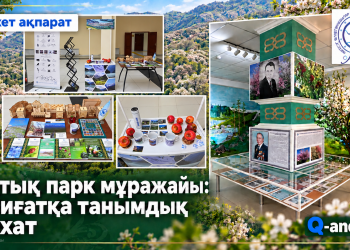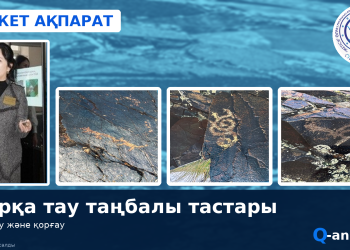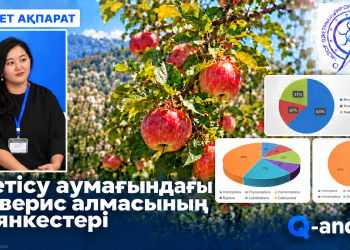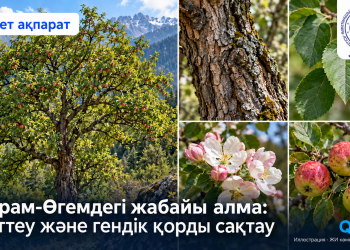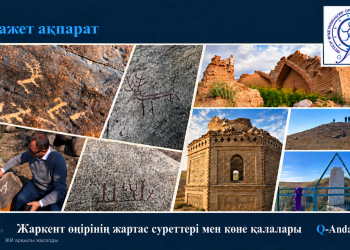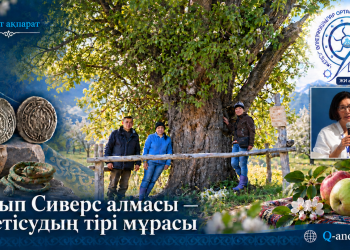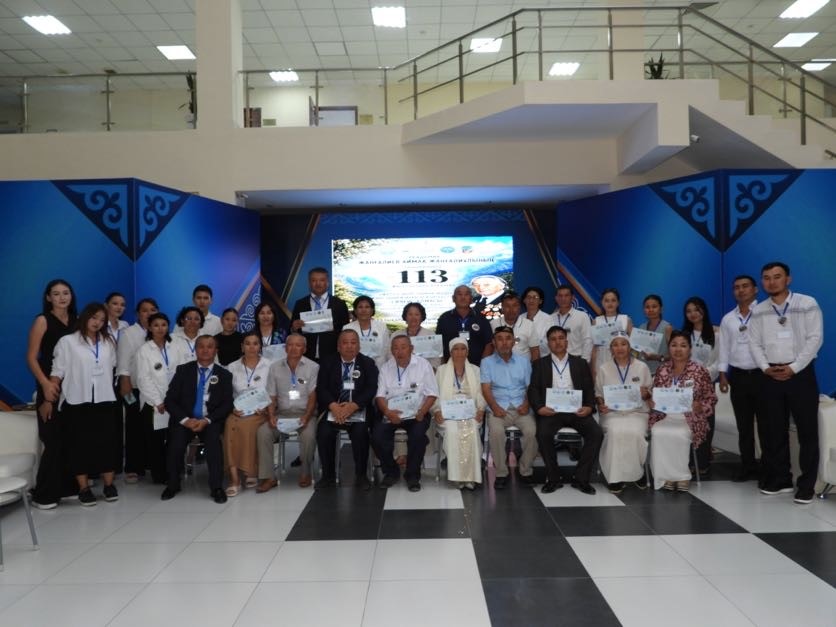
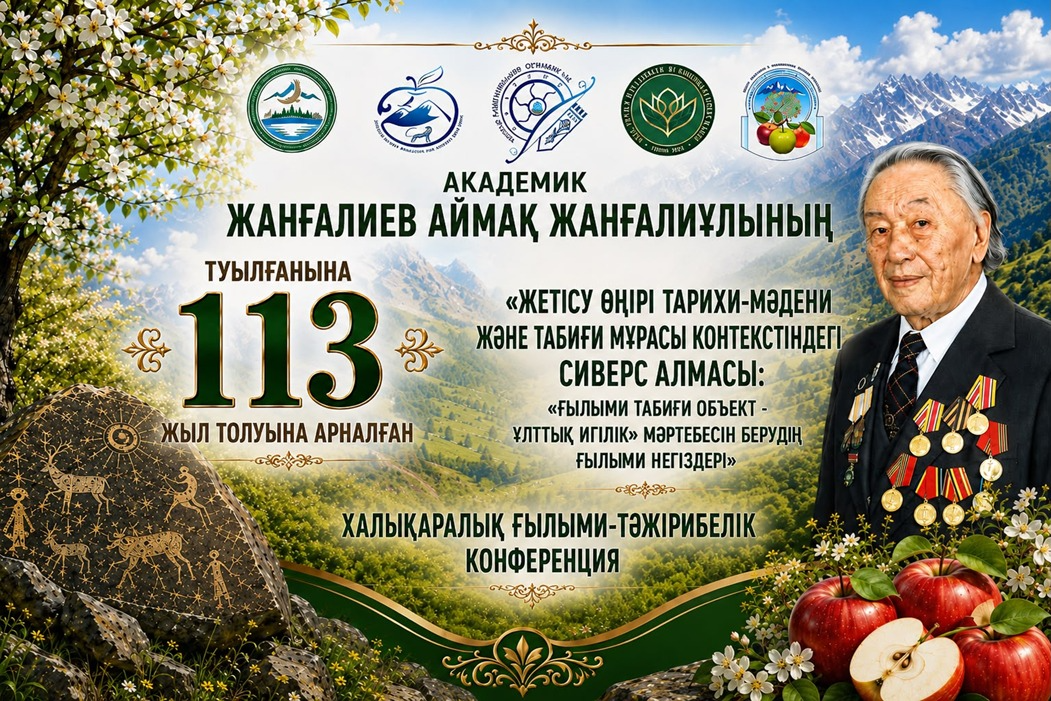
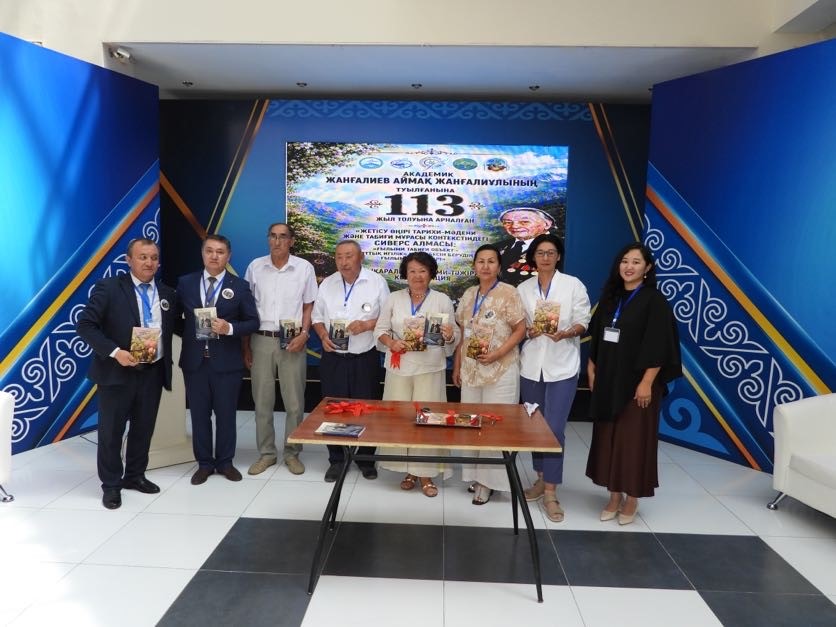
The international scientific and practical conference dedicated to the 113th anniversary of Academician Aymak Zhangaliuly Zhangaliyev focuses on the Sievers apple and its importance to the Zhetysu region.
The main goal of the conference is to draw attention to the unique Sievers apple trees growing in Zhetysu.
Scientists are studying their history, biological features, genetic value, and natural environment. Another important task is to find effective ways to protect and preserve these trees.
One of the key proposals is to consider granting the unique giant Sievers apple tree the status of a “Scientific Natural Object – National Heritage.”
The conference also brings together scientists, environmental specialists, local historians, museum and archive workers, public organizations, and local researchers.
Such meetings allow specialists from different fields to work together and study the history, culture, and nature of Zhetysu as one shared heritage.
The Sievers apple is not simply a wild fruit tree.
It is a living part of Zhetysu’s natural history and is considered one of the ancestors of modern cultivated apples.
For this reason, it is important to study the tree, protect its natural habitat, explain its value to the public, and preserve it for future generations.
This work is closely connected with the activities of the Zhetysu Local Historians Center Public Association.
Our organization brings together people who care about the history, nature, culture, and spiritual heritage of Zhetysu.
For us, local history is not only about studying the past or collecting old documents.
It also means learning more about our native land, preserving historical memory, protecting natural and cultural heritage, conducting research, and passing knowledge on to future generations.
Our association carries out scientific and educational work, supports talented people, brings attention to little-known historical figures, and studies the connection between the past and the present.
We also collect information about the forests, rivers, lakes, animals, and plants of Zhetysu. This helps us build a reliable source of information about the natural wealth of the region.
Another important part of our work is environmental protection, the promotion of national art, and the study of historical and sacred places.
We also study documents connected with political repression, archival materials written in Chagatai and the traditional Kazakh Arabic script known as töte jazý, collect examples of oral folklore, and support projects in culture, tourism, art, and sports.
Since the association was established, these goals have been carried out through expeditions, exhibitions, educational meetings, research projects, and book publishing.
One of these projects was the “In the Footsteps of the Ancestors” Kyzylzhar Expedition.
During the expedition, local historians studied the site of a historic battle in the Aksu District.
Посмотреть эту публикацию в Instagram
They identified the area where fallen warriors were buried, prepared a map of the site, and placed memorial stones in honor of Kudaınazar Batyr, Mergenkız, and Gulayım.
This work helped preserve the memory of events that took place about three centuries ago.
Another major project was the “Art of Zhetysu” exhibition held in Taldykorgan.
Artists and teachers from different regions of Kazakhstan, as well as participants from Russia, Türkiye, and CIS countries, took part in the event.
A total of 335 craftspeople applied to participate, and works by more than one hundred masters were displayed.
Visitors were able to see felt and silk products, jewelry, carved wooden objects, national musical instruments, and many other examples of traditional art.
We believe that people should first know their own region.
A person who knows the history and culture of their homeland can better understand the history and culture of the whole country.
Zhetysu is a special region where Kazakh culture, national art, and historical memory are closely connected.
As part of the Nauryznama celebrations, the “Kyzai Ornament” National Costume Exhibition and Festival was also held.
Its main purpose was to show that national traditions should not exist only in museums and archives. They should also remain part of modern life.
Our association also studies historical and sacred places throughout Zhetysu.
Together with local historians and different organizations, we collect information, legends, and other materials about these sites.
Valuable information has been collected during expeditions to the Alakol, Sarkan, Aksu, and other districts.
Another important part of our work is patriotic and military-patriotic education for young people.
Together with the Taldykorgan City Department for Defense Affairs, we organized the conference “The Glory of Heroism Never Fades.”
Young servicemen and military school cadets learned about the battles of Orbulak, Kyzylzhar, Mount Toktat, and other important events in the history of Zhetysu.
The courage of our ancestors who defended their land should serve as an example for today’s younger generation.
Local historians study the history of their homeland, while military professionals protect the country.
Although their work is different, they share one important value – service to the Motherland.
For this reason, teaching young people about local history and the courage of their ancestors remains an important part of our work.
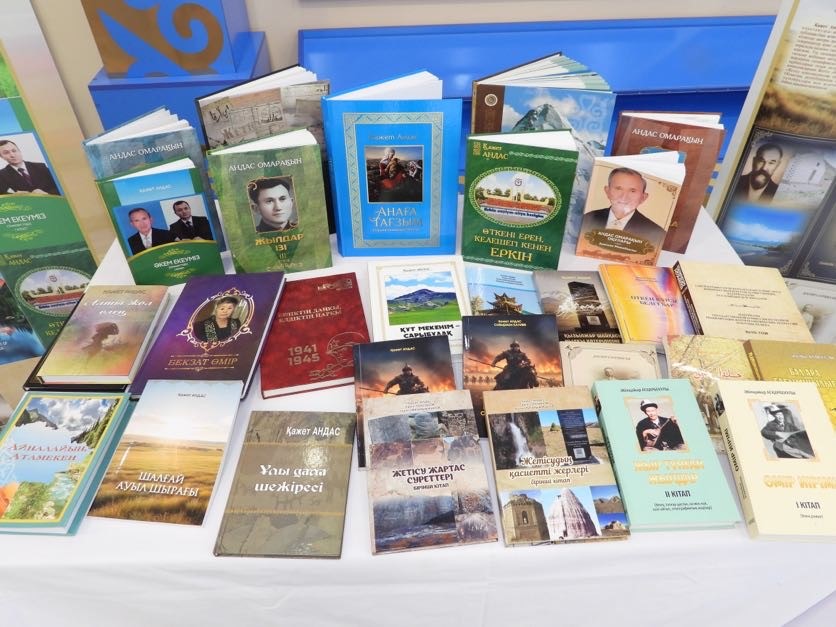
The association also pays great attention to publishing books.
In 2024, 12 books were published, and another 10 books were published in 2025. This means that 22 local history books were released over two years.
These books cover the history of Zhetysu, famous and lesser-known people, settlements, nature, culture, and important historical events.
As part of the “Donate a Book!” campaign, these books were given to the National Academic Library of the Republic of Kazakhstan, regional libraries in Almaty and Zhetysu, and libraries in Taldykorgan.
The aim is to make the materials collected by local historians available not only in private collections, but also to researchers and ordinary readers.
Today, the association brings together around 80 local historians.
They include professional researchers as well as hunters, fishermen, shepherds, foresters, local history experts, and other people who know their native land well.
Посмотреть эту публикацию в Instagram
Important information about the past is not found only in books and archives.
It can also be preserved in the memories of older people, local stories, place names, old roads, forgotten burial grounds, mountains, rivers, and even trees that have been growing in the same natural environment for hundreds of years.
That is why the study of the Sievers apple is closely connected with local history.
Natural heritage and historical and cultural heritage cannot be separated. The history of the land is the history of its people.
Rivers, lakes, forests, mountains, steppes, wild apple forests, ancient trees, burial grounds, archaeological sites, and sacred places are all part of the shared history of the people.
Academician Aymak Zhangaliuly Zhangaliyev made an important contribution to the study of the Sievers apple.
His research showed the importance of protecting its natural genetic resources and created a strong foundation for future scientific studies.
Continuing his work means studying and protecting the natural populations of the Sievers apple, including its giant and centuries-old trees.
This is where science and local history support each other.
Scientists study the biological and genetic value of the tree, while local historians help explain its historical and cultural importance.
We hope that the scientific recommendations made at this conference will help protect the unique giant Sievers apple tree and support the proposal to grant it the status of a “Scientific Natural Object – National Heritage.”
This is not only about protecting one tree.
It is about preserving the natural heritage of Zhetysu, scientific knowledge, and historical memory.
Only by bringing together science, local history, and nature conservation can we fully understand the value of our native land and preserve it for future generations.
I wish all conference participants productive discussions, successful work, new scientific projects, and valuable initiatives.
Kazhet Andas
Director of the
Zhetysu Local Historians Center Public Association.